
A bill has been submitted to the Rada that should help lift Hungary's veto on EU negotiations
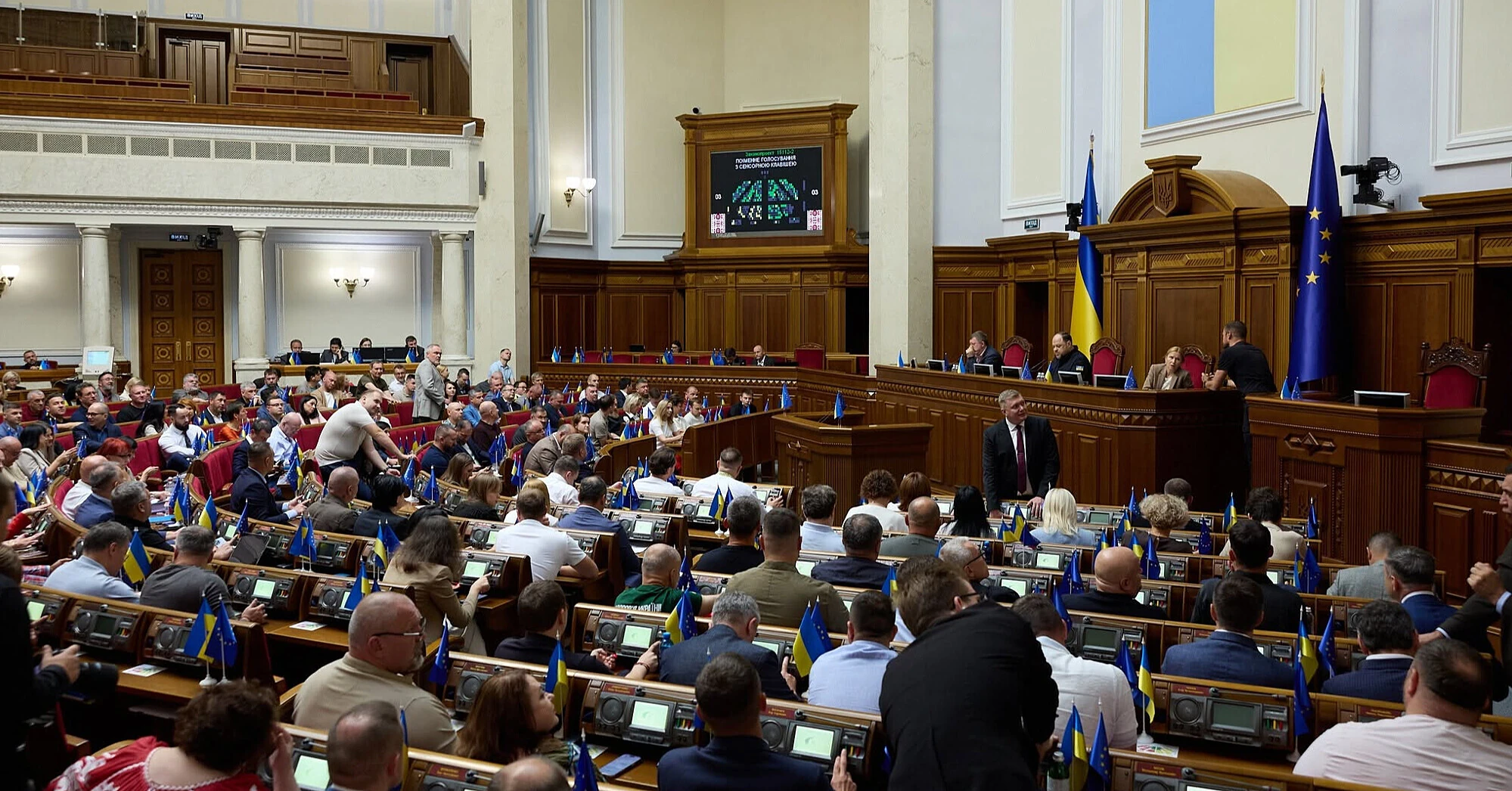
A bill No. 16119 has been registered in the Verkhovna Rada that expands the educational rights of indigenous peoples and national minorities whose languages are official languages of the European Union. The adoption of the document is expected to be one of the steps to unblocking Hungary's further negotiations on Ukraine's accession to the EU.
The bill was registered on October 1. Among its authors are Chairman of the Verkhovna Rada Ruslan Stefanchuk, his deputies Oleksandr Korniienko and Olena Kondratiuk, Chairman of the Education Committee Serhiy Babak and other deputies. As of October 2, the document has been sent to the relevant committee and has not yet been considered by the parliament.
At the same time, the state language remains the language of the educational process. However, in schools where classes or groups teach in the language of an indigenous people or national minority that is an official language of the EU, it is proposed to guarantee the use of that language alongside Ukrainian during instruction and other communication in the educational institution.
Thus, the changes will apply, in particular, to Hungarian, Romanian, Polish and other languages of EU countries. Russian does not fall under this mechanism, as it is not an official language of the European Union. This principle is directly embedded in the text of the bill.
One of the key innovations is the possibility to obtain a separate status for a general secondary education institution of a national minority. It can be obtained by a school, gymnasium or lyceum if more than 50% of students receive education in the language of the respective national minority that is an official EU language.
In such institutions, educational documents and their supplements can, upon parents' request, be duplicated in the language of the national minority. Similarly, it is proposed to allow duplication of signage, certain official documentation and other information related to the educational process. The curriculum may also include the study of national history, culture, traditions and symbols of the respective community.
For schools that already have the right to such status at the time the law enters into force, a transitional rule is provided: they will be able to retain it if at least 20% of students are taught in the national minority language.
Separately, it is proposed to allow students studying in the language of the respective national minority or indigenous people to receive, upon request, a translation of tasks of the external independent evaluation in that language, with the exception of subjects in the language and literature field.
At the same time, parents will be able to initiate an increase in the number of subjects taught in Ukrainian. This requires a written application from the parents of at least two-thirds of the students in the respective class or group.
The bill is related to the negotiations between Kyiv and Budapest on the rights of the Hungarian minority in Transcarpathia. Foreign Minister Andrii Sybiha stated previously that Ukraine expects to unblock further progress in EU accession negotiations after the adoption of the changes. He specifically emphasized that the changes will apply not only to the Hungarian community, but to all relevant national minorities in Ukraine.
Hungarian Prime Minister Péter Magyar on October 2 already welcomed the registration of the bill and said he expects stronger legal guarantees for education in Hungarian. At the same time, the lifting of the Hungarian veto has not yet occurred - it will depend on the further passage of the bill and the implementation of agreements between the two countries.
Previously, Kurs Ukrainy wrote that the issue of education and language rights of the Hungarian minority was one of the key issues in Kyiv's negotiations with Budapest on lifting the blockade of negotiation clusters.
Based on materials: Verkhovna Rada of Ukraine, European Pravda, European Pravda
