
Diesel in Europe hits record high: why it matters even for those without a car
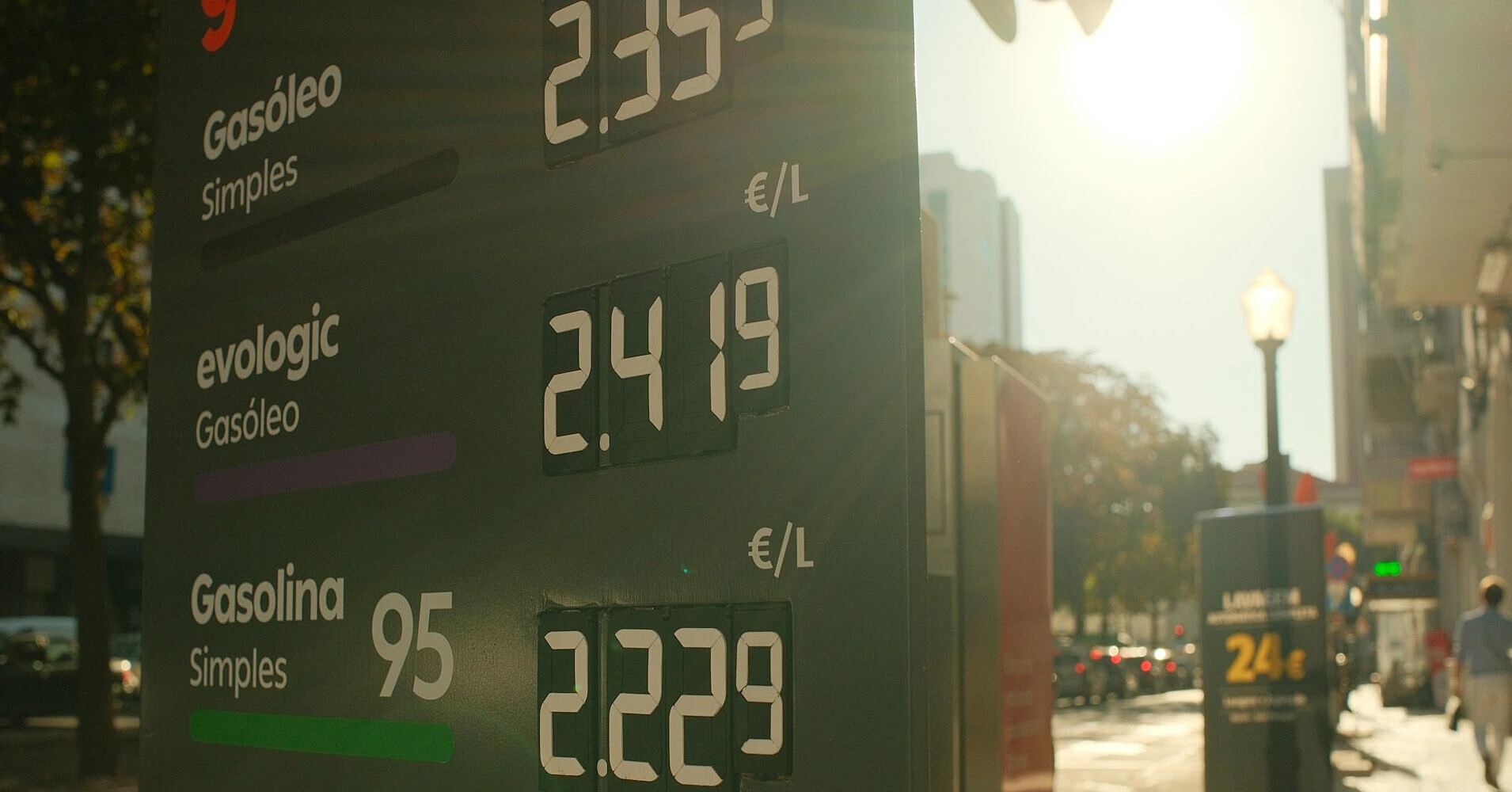
Diesel fuel in the European Union (EU) has surged to a historic high. By October 1, its average price reached €2.24 per liter compared to around €1.59 in February, and as many as 12 EU countries set their own records.
At first glance, the problem primarily concerns motorists. But diesel is the fuel for trucks, agricultural machinery, construction equipment, generators, and a significant share of commercial transport.
Therefore, its price increase gradually spreads far beyond gas stations: to shipping costs, groceries, construction, and services.
The scale of the problem has already forced governments to intervene. The Group of Seven (G7) countries agreed to release 100 million barrels of oil and petroleum products from reserves, and Poland, from October 3, cut fuel taxes and introduced maximum retail prices.
Why diesel specifically is under such pressure
Several factors are behind the current surge.
The global oil products market remains tight due to the Middle East war, supply disruptions, and persistent risks to shipping in the Persian Gulf area.
Crude oil flows through the Strait of Hormuz have partially recovered, but logistics for petroleum products, especially diesel, remain more complex.
Additional pressure comes from refining problems and reduced shipments from Russia.
At the same time, the European Commission emphasizes that there is no physical shortage of diesel in the EU yet. Supplies remain stable, but the global market itself is very tight, so fuel is expensive.
Refinery margins also remain high – the difference between the price of crude oil and the price of petroleum products derived from it.
Why expensive diesel affects groceries and delivery
Diesel plays a special role in the European economy precisely because a large part of freight transport runs on it.
When gasoline becomes more expensive, a driver primarily notices an increase in his own bill at the pump.
With diesel, the chain is longer.
It becomes more expensive for a carrier to deliver products to a warehouse and a store. A farmer pays more for tractor and other equipment operation. A construction company pays more for excavators, trucks, and generators.
Logistics companies may try to pass on some of the additional costs to customers, and businesses may include them in the price of goods and services.
This does not mean that expensive diesel automatically and immediately raises the price of every product. Much depends on carrier contracts, competition, inventories, and the cost structure of a particular company.
But the longer fuel remains expensive, the more likely some of these costs will gradually reach the final consumer.
G7 decided to release 100 million barrels from reserves
On October 2, G7 leaders agreed to accelerate the use of strategic reserves to stabilize the energy market.
In coordination with the International Energy Agency (IEA), the countries intend to ensure the release of 100 million barrels of oil and petroleum products over four months.
At the same time, a substantial volume of diesel should enter the market in the first 20 days.
There is an important nuance: this decision is related to fulfilling obligations on the use of reserves agreed back in March. Therefore, these 100 million barrels cannot automatically be considered entirely a new volume on top of previously announced measures.
The countries also agreed to coordinate refinery maintenance so that large capacities do not halt simultaneously if possible, and to temporarily increase refinery utilization where feasible.
In addition, the G7 reaffirmed its commitment not to impose restrictions on energy exports among the group’s countries.
This is especially important for Europe after discussions in the US about a possible limit on diesel exports.
The market reacted immediately
The threat of US export restrictions was painful for Europe, as the US remains one of the significant external suppliers of petroleum products.
The G7 decision simultaneously increased the expected fuel supply from reserves and reduced fears that countries would start holding energy resources within their own markets.
After the announcement of the agreement, European gasoil futures – one of the main exchange benchmarks for diesel prices – fell by more than 7%.
This does not mean that the price at a European gas station will drop by the same amount. Retail prices include taxes, logistics, refining, and dealer margins, and wholesale market changes are passed on to the consumer with a delay.
But the reaction showed how sensitive the market has become to any signals of additional supply.
Poland introduced a fuel price cap
While the G7 tries to increase supply on the global market, Poland chose a different path – directly lowering the fuel cost for consumers.
From October 3, a new version of the state program Ceny Paliwa Niżej – “Lower Fuel Prices” (CPN) took effect there.
From October 3 to 5, maximum retail prices are set at:
- diesel – 7.88 zł per liter;
- Pb95 gasoline – 6.73 zł per liter;
- Pb98 gasoline – 7.59 zł per liter.
Gas stations are not allowed to sell fuel above the set limit.
The program is to run until the end of 2026, and maximum prices will be adjusted as market conditions change.
At the same time, the state reduced the value added tax (VAT) on fuel from 23% to 8% and lowered excise duties to the minimum allowed by the European Union.
The price reduction is paid for by the budget
The Polish example clearly shows that administratively lowering the fuel price is possible, but the economic cost does not disappear.
According to the impact assessment of the new rules on the budget, the VAT reduction until the end of the year will lead to about 3.2 billion zlotys in lost revenue.
The excise reduction will decrease budget revenues by about another 2.1 billion zlotys.
The combined effect is estimated at around 5.3 billion zlotys.
That is, part of the difference that the driver no longer pays directly at the pump is effectively borne by the state through lower tax revenues.
Moreover, even the current state cap shows how much the market has changed.
In early June, the maximum diesel price under the previous Polish program was 6.48 zlotys per liter. Now it is 7.88 zlotys.
The increase is about 22%.
Why releasing reserves will not bring back old prices instantly
100 million barrels is a significant volume for the short-term market, especially if a substantial part of the diesel comes quickly.
But strategic reserves can primarily smooth out a temporary shortage and reduce price pressure. They do not eliminate the reasons that made the market tight.
Geopolitical risks, supply route restrictions, high refinery utilization rates, and uncertainty about future fuel flows persist.
The G7 has already stated that it may discuss additional measures if necessary.
The European Commission also continues to monitor the diesel situation and coordinate actions of EU states.
What this means for an ordinary consumer
For a person without a car, a record diesel price may seem to be someone else's problem.
But diesel connects the fuel market to everyday expenses much more tightly than it appears.
Products need to be delivered to the store. Construction materials – to the site. An online store needs to bring an order to the buyer. A farmer needs to refuel equipment, and some businesses – backup generators.
So far, businesses may partially absorb these increased costs. But if high prices persist for a long time, more and more companies face a choice between reducing their margins and raising the prices of goods and services.
That is why European governments are trying to address both sides of the problem at once: increase the physical supply of fuel and protect consumers from the sharpest price spike.
Record diesel prices are becoming a problem not only for those who see €2.24 on the gas station screen. The longer fuel remains expensive, the higher the likelihood of seeing its cost in the delivery bill, groceries, or other services.
Sources: European Commission, G7 / European Council, Ministry of Energy of Poland, Reuters.
