
Merz came to Kyiv not empty-handed: what Germany will give €1.35 billion for and why it needs joint production with Ukraine
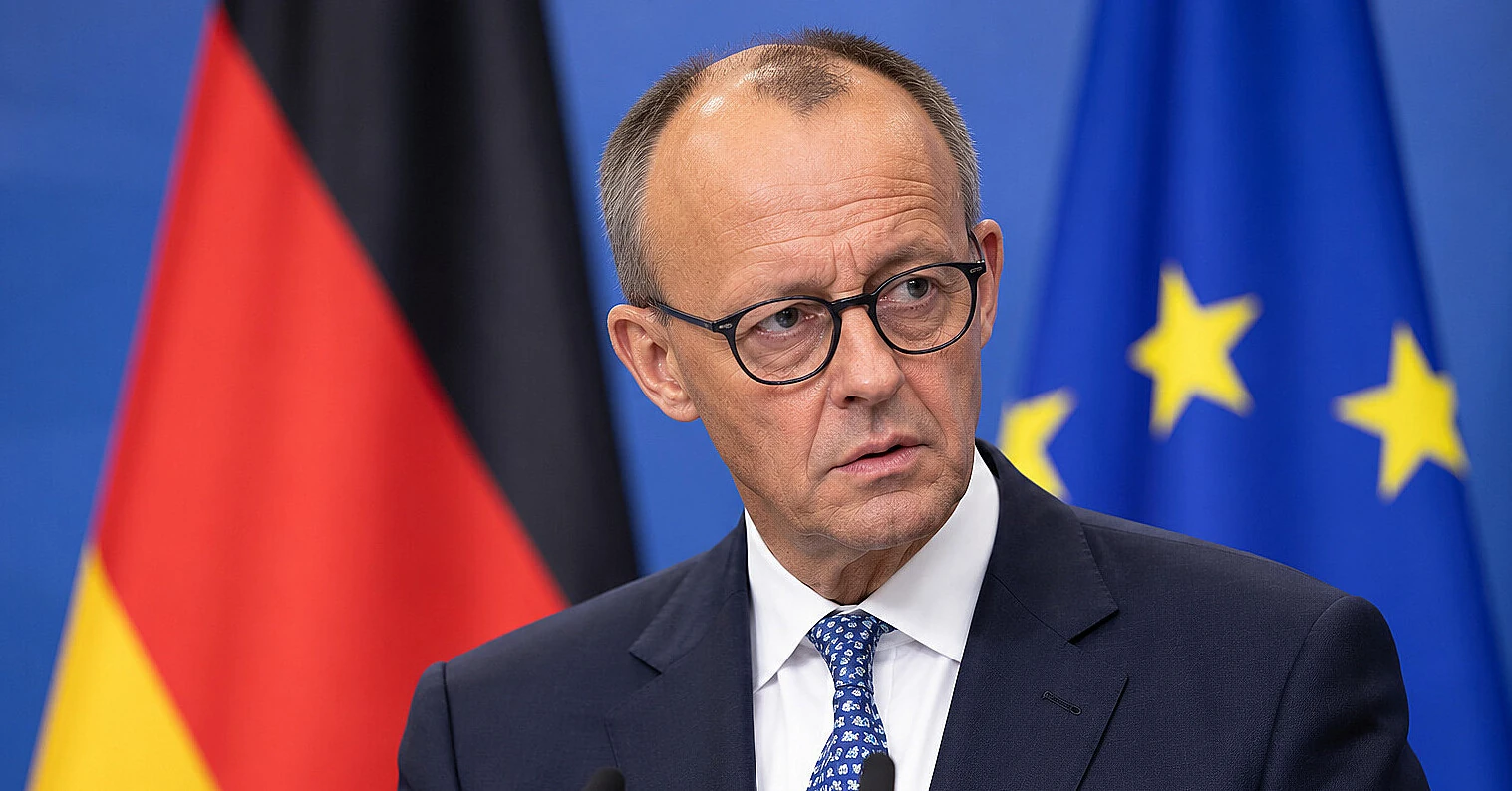
German Chancellor Friedrich Merz arrived in Kyiv on the morning of October 4 for an unannounced visit with a new support package for Ukraine. Berlin is preparing €1 billion in military aid and another €350 million for repair and restoration of damaged energy infrastructure.
One of the key topics of the visit will also be cooperation on drones. Germany expects to accelerate the delivery of thousands of interceptor drones to Ukraine and advance agreements on joint production of various types of unmanned aerial vehicles.
An important nuance: €1 billion in military aid does not mean a completely new billion in the German budget. According to the German government, it is about unblocking funds that were already earmarked for support to Ukraine.
Why Merz came right now
Merz arrived in the Ukrainian capital by train together with Germany's Minister for Economic Affairs and Energy, Katharina Reiche, and a delegation of German business.
The trip takes place against the backdrop of intensified Russian strikes on Ukrainian cities and infrastructure before winter.
“I came to Kyiv today because Ukraine needs all our support in the coming weeks,” the chancellor said after arrival.
Merz also stressed that he intends to personally assure President Volodymyr Zelenskyy of continued German assistance.
This is Merz's second visit to Ukraine since taking office as chancellor. The previous time he came to Kyiv in May 2025 together with the leaders of France, the United Kingdom, and Poland.
€1 billion will go to military support
According to information from German government circles, Berlin intends to unblock another €1 billion in military aid for Ukraine.
The funds will come from already approved financing intended for Ukrainian defense.
One of the most concrete elements of the package should be thousands of interceptor drones. They are intended, among other things, to counter new high-speed Russian attack drones.
In recent months, this task has become increasingly urgent: Russia is more actively using jet-powered drones that fly faster than the usual Shaheds and create additional difficulties for existing air defense systems.
The use of relatively cheap interceptors allows not to expend an expensive anti-aircraft missile on each such target.
Germany and Ukraine expand joint drone production
Another important part of the talks is the transition from ordinary arms supplies to joint production.
During the current visit, the parties expect to advance an agreement on manufacturing various types of drones in Germany and Ukraine.
This is a continuation of earlier agreements. In spring, Ukraine and Germany began work on a separate Drone Deal — long-term cooperation on drones, missile technology, and other modern weapon systems.
Ukrainian and German companies have already signed a number of documents on establishing joint production. Partners include Quantum Systems, Helsing, Diehl, and several Ukrainian defense companies.
Kurs previously reported on joint production of BARS drones, the first stage of which is funded by the German side.
Now cooperation should expand, including in the direction of interception systems and long-range средств.
Another €350 million will be directed to energy
A separate part of the new package is €350 million for repair and restoration of damaged energy infrastructure of Ukraine.
The funds are expected to be used, among other things, for restoring destroyed power plants and other energy system facilities.
Energy is becoming an especially important topic on the eve of winter. Russian troops continue to attack generating capacities, substations, and other infrastructure on which electricity and heat supply of cities depend.
Germany has already allocated additional funds to Ukraine for urgent repairs of the energy system. In September, Berlin announced about €250 million in assistance before the heating season.
The current €350 million is already part of the new package that the German side is announcing in connection with Merz's visit.
Leaders of German defense and energy companies arrived in Kyiv
The composition of the German delegation shows that the visit concerns not only state aid.
Along with the chancellor, representatives of major companies from the defense and energy sectors arrived in Kyiv, including Siemens Energy, Hensoldt, Diehl Defence, and Quantum Systems.
Berlin increasingly links support for Ukraine with industrial cooperation: joint weapons production, energy system restoration, and investments by German business.
Already in spring, Germany and Ukraine announced a strategic partnership and agreed to develop joint ventures in the defense industry, exchange technologies, and expand cooperation in energy.
Why the amount of €1.35 billion is important specifically before winter
The two parts of the package solve different but related tasks.
€1 billion is intended to strengthen defense — primarily against the background of a growing number of Russian air attacks. Another €350 million should help restore facilities that become targets of these strikes.
Thus, Germany simultaneously finances protection of Ukrainian infrastructure and its restoration after attacks.
However, details of individual defense projects and delivery schedules are not yet fully disclosed. Merz's visit continues, and part of the agreements should be finally formalized during meetings in Kyiv.
The current visit shows a change in the model of German support: besides weapons supplies and money, Berlin is increasingly betting on joint drone production and long-term restoration of Ukrainian energy.
Based on materials from: Reuters, Tagesschau, Federal Government of Germany.
