
EU doubts Ukraine's swift membership, discusses separate accession for Moldova - media
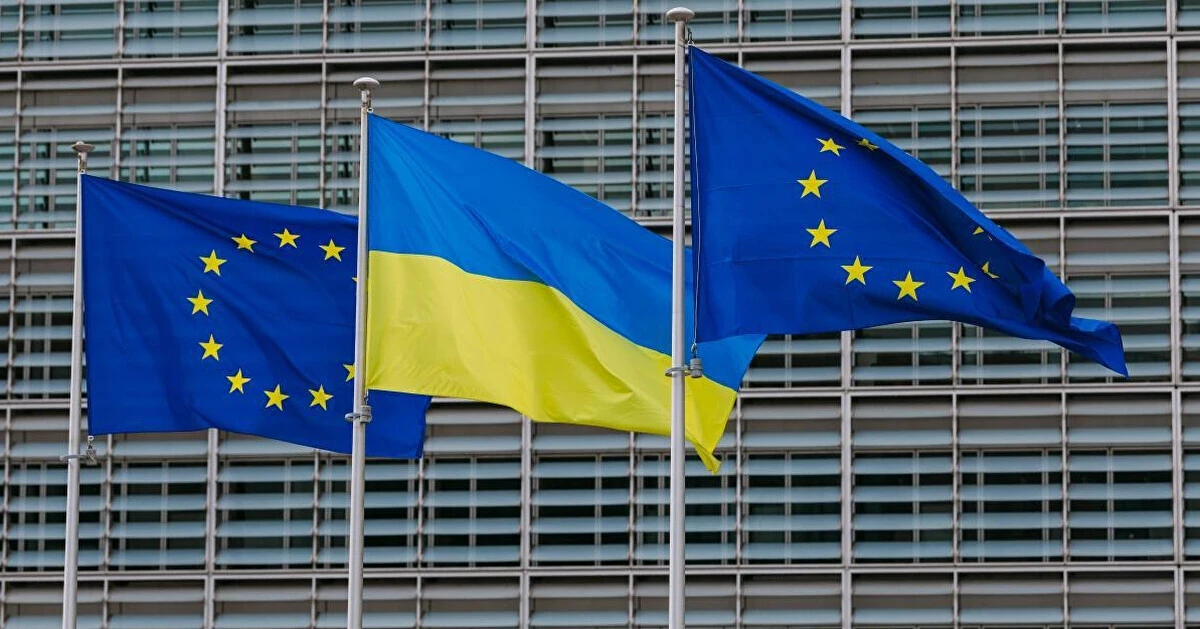
The European Union is increasingly discussing the possibility of separating the negotiation processes for Ukraine and Moldova regarding EU accession. European diplomats believe that Chisinau could move toward membership independently of Kyiv, although until now both countries have progressed through the main stages of European integration in parallel.
These sentiments in Brussels were reported by Rapporteur, citing several EU diplomats who agreed to speak on condition of anonymity.
The trigger for the new discussions was a statement by EU Commissioner for Enlargement Marta Kos on October 7th during a speech before MEPs.
"I really see the possibility that by 2030 we will have at least two or three new member states if they fulfill their commitments", Kos stated.
Montenegro and Albania are currently considered the closest to EU membership. Meanwhile, the question of a third potential enlargement participant remains open. According to Rapporteur, diplomatic circles increasingly view Moldova as a country that could join the EU before Ukraine.
After the start of Russia's full-scale invasion in 2022, the applications of Kyiv and Chisinau were effectively considered together. Both countries received candidate status and began accession negotiations, with the opening of main negotiation clusters happening in parallel.
However, according to Rapporteur's sources, separating these processes is now increasingly seen not as a matter of principle but as a matter of time.
One diplomat expressed doubt that Ukraine could become an EU member before the end of the decade. He believes that European partners should focus on other ways to ensure Ukraine's security, including military support and cooperation with NATO.
Another source stressed that it would be unfair to delay Moldova's accession if negotiations with Ukraine slow down due to political or other obstacles.
A third diplomat highlighted the risks of increasing Russian influence in Moldova. In his view, the lack of tangible progress in European integration could create additional opportunities for Russian influence operations in the country.
There is currently no official decision to separate the negotiations of Ukraine and Moldova. Both countries remain among the leading candidates for EU membership, and formally their pace of progress depends on implementing necessary reforms and decisions by member states.
Notably, on October 7th, Hungary agreed to unblock further progress for Ukraine in two negotiation clusters - "Internal Market" and "Competitiveness and Inclusive Growth".
After this, EU member states agreed to send letters to Ukraine and Moldova inviting them to present negotiation positions in these areas. It is expected that on October 12th, member countries will be able to agree common positions, and on October 13th officially open the respective clusters.
The further lifting of Hungary's veto depends on the Verkhovna Rada adopting amendments to legislation on education in languages of national minorities. This issue has long been used by Budapest to block negotiations with Kyiv.
The European Commission is meanwhile preparing individual accession roadmaps for four countries - Ukraine, Moldova, Montenegro, and Albania. They are planned to be presented on October 28th together with a new package of documents on EU enlargement.
The roadmaps are expected to include indicative timelines and concrete stages of further integration. At the same time, the Commission emphasizes that accession will remain a process based on individual achievements of each country.
Separately, Brussels proposes changing the procedure for adopting interim decisions during negotiations. In particular, the Commission recommends using qualified majority voting for opening negotiation clusters, so that no single state can permanently block candidates' progress.
This could reduce the dependence of Ukraine's negotiation process on Hungary's stance. However, to introduce such a mechanism, EU member states would still need to agree on relevant changes.
Ukraine's President Volodymyr Zelenskyy may visit Brussels next week, when EU leaders are expected to discuss further enlargement of the bloc. One of the central issues is expected to be accelerating negotiations with candidate countries.
Thus, although Ukraine and Moldova continue to move toward the EU in parallel for now, further synchronization of their negotiations is no longer seen as unconditional by some European diplomats. At the same time, the European Commission's official position remains unchanged: both countries are part of the leading group in enlargement, and their progress will be assessed based on reforms.
Source: Rapporteur, "European Pravda", European Commission
