
US and Russia negotiate American investors' involvement in 'Nord Streams' - media
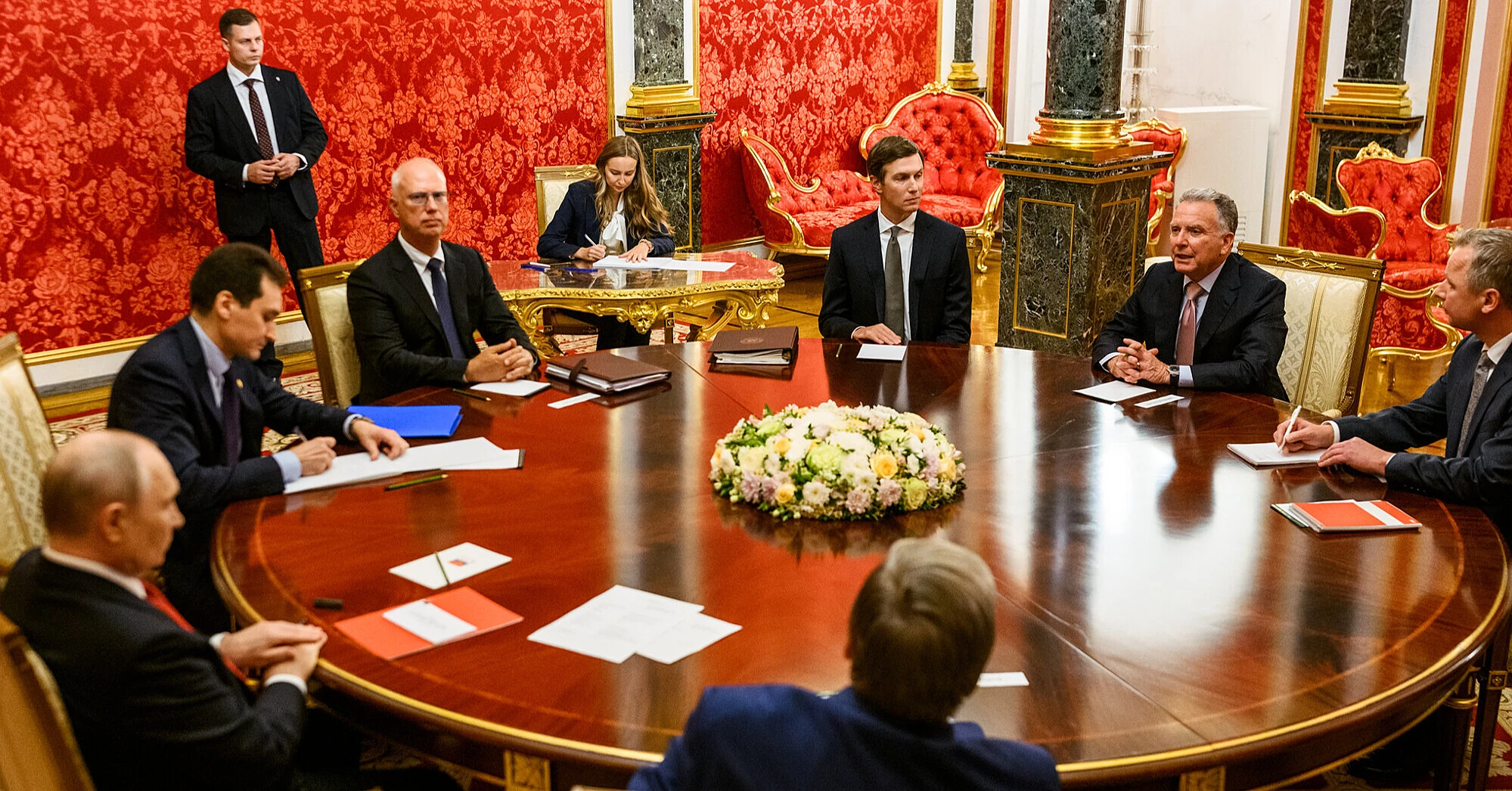
Representatives of the US and Russia held talks on the possible involvement of American investors in the Nord Stream gas pipelines, which previously supplied Russian gas to Germany. The initiative could become part of broader plans for economic cooperation between Washington and Moscow, which are being discussed in parallel with diplomatic efforts to end the war against Ukraine.
This was reported by Reuters on October 8, citing five interlocutors familiar with the talks.
According to the agency, the discussions involved US Special Envoy Jared Kushner, who is the son-in-law of President Donald Trump, and Kirill Dmitriev, the head of the Russian Direct Investment Fund, who is close to Vladimir Putin.
The parties considered the possibility of an American investor entering the gas transportation project, which could potentially create conditions for the resumption of Russian gas supplies to Europe.
At the same time, there is no information about the signing of an agreement, the identification of a specific investor, or the approval of the resumption of the pipelines' operation. So far, it is only about talks.
This is not the first attempt to bring the Nord Streams back to the economic agenda of US-Russia relations. Back in March 2025, the Financial Times reported that the former head of the Nord Stream 2 operator, Matthias Warnig, a longtime associate of Putin, had been trying to arrange the resumption of the pipeline's operation with the participation of American investors.
The idea envisaged using one of the intact strings of Nord Stream 2, which remained after the underwater explosions in the Baltic Sea in September 2022. American capital could receive a stake in the project and influence over gas supplies to Germany.
At that time, the German authorities were considering ways to prevent such a scenario. Berlin emphasized that returning to dependence on Russian gas contradicts its energy policy. In addition, Nord Stream 2 never received the necessary certification to begin commercial operation.
In November 2025, Bloomberg reported on a much broader economic component of the US-Russian negotiations. According to the agency, Dmitriev and US President's Special Representative Steve Witkoff discussed a long-term economic cooperation project between the two countries.
Among the possible areas mentioned were energy, rare earth metals mining, and the construction of data centers. The idea of creating a joint US-Russian investment fund was also considered.
According to the authors of the proposal, common commercial interests were supposed to create additional incentives for reaching peace agreements and reducing the risk of a new conflict. However, these provisions remained part of negotiating proposals, not an approved cooperation program.
In February 2026, Ukrainian President Volodymyr Zelenskyy said that Ukrainian intelligence had received information about a large-scale package of economic proposals from Russia to the US. According to him, it was about documents that he called the "Dmitriev package," with a claimed value of potential projects of about $12 trillion.
Zelenskyy stressed that some of the possible agreements could concern Ukraine, and therefore Kyiv would not agree to decisions on Ukrainian interests being made without its participation.
Later, Dmitriev himself gave a different estimate: over $14 trillion of potential joint projects. At the same time, he denied reports that Moscow was offering $12 trillion in investments precisely in exchange for the lifting of sanctions.
These figures are claimed estimates of possible cooperation, not confirmed investments or concluded contracts. The White House at that time did not publicly confirm the existence of an economic agreement of such scale.
A separate example of American capital's interest in Russian energy assets was the attempt to sell the international business of Lukoil.
In late January 2026, the Russian company announced the signing of an agreement with the American investment group Carlyle on the sale of Lukoil International GmbH, which owns the foreign assets of the oil concern.
However, the agreement was subject to regulatory approvals, in particular from the US Treasury Department's Office of Foreign Assets Control (OFAC).
According to OFAC clarifications published in September, US permits allow for negotiations and entering into conditional agreements, but do not automatically grant the right to complete the sale of assets. A separate permit is required for the actual transfer of ownership.
The main obstacle to the restoration of the Nord Streams remains sanctions and the current energy policy of the European Union.
In July 2025, the EU introduced a ban on operations related to the use, maintenance, and financing of the Nord Stream and Nord Stream 2 gas pipelines. Thus, the mere appearance of an American investor does not remove these legal restrictions.
In addition, on January 26, 2026, the EU Council finally approved a regulation on the gradual phasing out of imports of Russian natural gas. For long-term contracts for pipeline supplies, a complete ban is to take effect on September 30, 2027, and under certain conditions no later than November 1, 2027.
The European Commission notes that the share of Russian gas in EU imports has decreased from about 45% at the start of the full-scale invasion to 12% in 2025.
Thus, even with interested American investors, the return of Russian gas via the Baltic Sea would require not only a commercial agreement but also changes in legal restrictions and the consent of Germany.
So far, discussions of economic projects between Washington and Moscow have led neither to the resumption of the Nord Streams' operation nor to the conclusion of a comprehensive economic cooperation agreement. New reports of negotiations demonstrate that the topic of returning Russian energy resources to the European market remains a subject of contacts between representatives of the two states, despite the war against Ukraine and the EU's course toward energy independence from Russia.
Based on: Reuters, Financial Times, Bloomberg
