
Estonian Foreign Ministry warned about Russia's attempts to weaken Europe's unity
Russia is already carrying out attacks against European states, gradually increasing pressure on NATO and testing the allies' readiness for a joint response. At the same time, Moscow is trying to act so that its actions do not reach the threshold required for the application of the Alliance's collective defense principle.
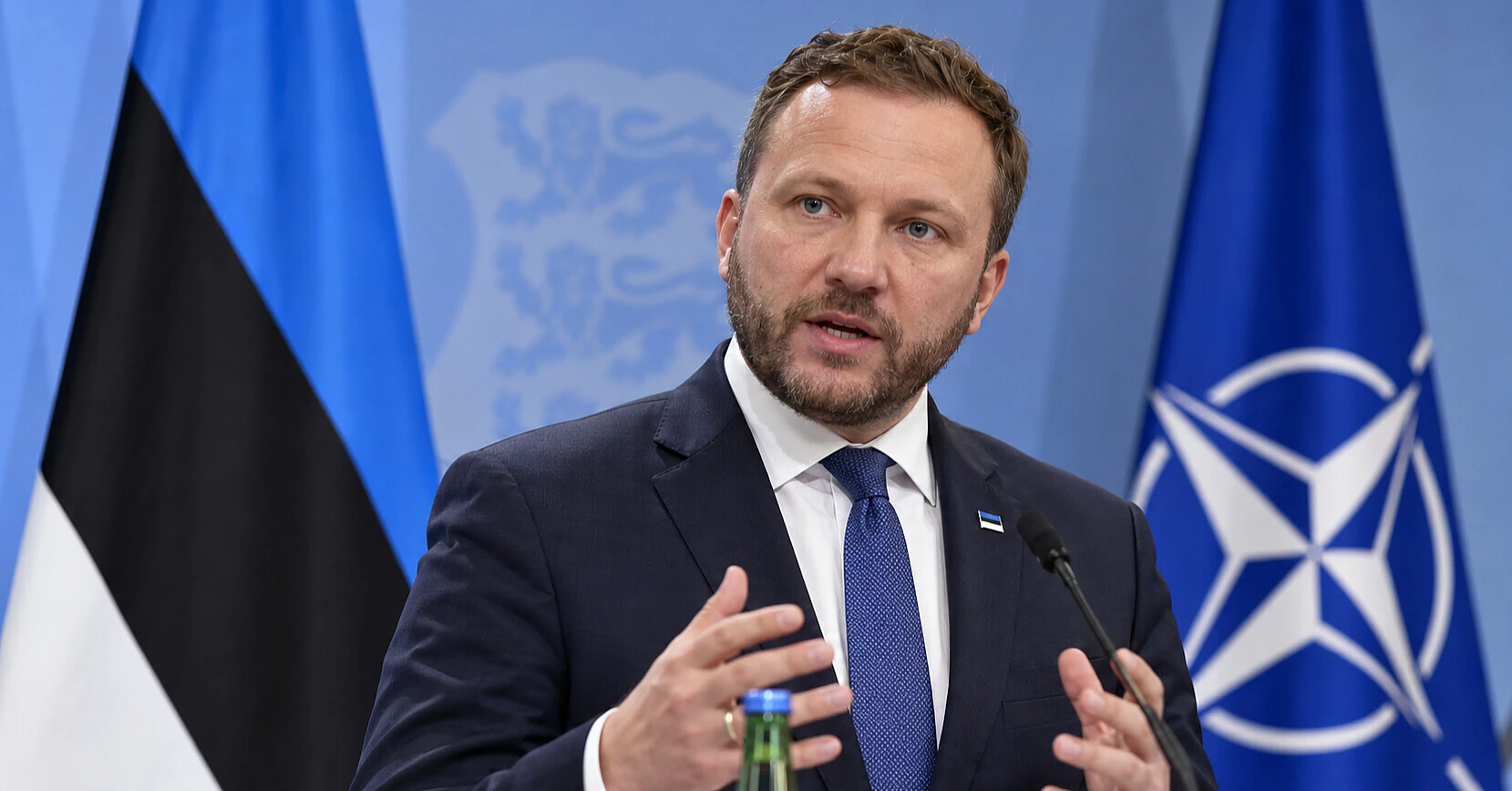
This was stated on October 8 by Estonian Foreign Minister Margus Tsahkna in an interview with the program Mornings with Ridge and Frost on Sky News.
According to the head of the Estonian Foreign Ministry, European countries are facing a growing number of hostile actions that cannot be viewed solely as isolated incidents or manifestations of hybrid warfare.
"We cannot simply ignore them and say that this is just an incident or a hybrid attack," — the minister stressed.
Tsahkna believes that the allies need to openly point out Russia's involvement in such actions so that European society realizes the scale of the existing threat.
The minister compared Russia's strategy to the gradual heating of water in which a frog is placed. According to him, Moscow expects European states to get used to the consistent increase in pressure and stop perceiving individual actions as a serious threat.
"They are gradually raising the temperature, trying to boil Europe like a frog, and then test our unity and seek to destroy it," — Tsahkna said.
At the same time, the Estonian Foreign Minister does not believe that Russia is capable of launching a full-scale invasion of one of the NATO countries in the near future. He called the increase in the number of sabotage and other hostile operations a more likely threat.
Russia is testing the limits of NATO's collective defense
According to the Estonian minister, Moscow's actions often remain below the threshold at which the allies could invoke Article 5 of the North Atlantic Treaty.
This article provides that an armed attack on one of the Alliance members is considered an attack on all. However, its application does not mean automatic initiation of a military operation: each state independently determines the necessary assistance measures.
The problem is that cyberattacks, sabotage, interference with critical infrastructure and other covert operations do not always allow to unambiguously establish the circumstances of the attack and choose an appropriate response.
Against this background, new incidents with drones are being recorded in European countries, including violations of the airspace of NATO states.
Sky News military analyst Deborah Haynes notes that such actions create a difficult situation for the Alliance. The large-scale consequences of a cyberattack or sabotage could theoretically become grounds for invoking Article 5, but less obvious incidents can cause disagreements among allies.
In her assessment, Russia is trying to exploit this uncertainty, gradually expanding the limits of what is permissible and testing the reaction of European states.
Estonia calls for increased pressure on Moscow
Tsahkna stated that European states need to respond more actively to Russian actions and increase pressure on the Kremlin.
One possible tool the minister named is the use of frozen Russian assets. This issue remains a subject of discussion among European countries, as it requires coordination of legal and financial mechanisms.
In the opinion of the head of Estonian diplomacy, allies need not only to strengthen their own defense, but also to demonstrate a coordinated position regarding Moscow's actions.
Tsahkna's statements came against the background of the ongoing Russian war against Ukraine and growing concern among European states about the security of airspace, transport infrastructure and strategic objects.
Based on materials from: Sky News.
