
Switzerland responds to Russian attack on buses in Kramatorsk
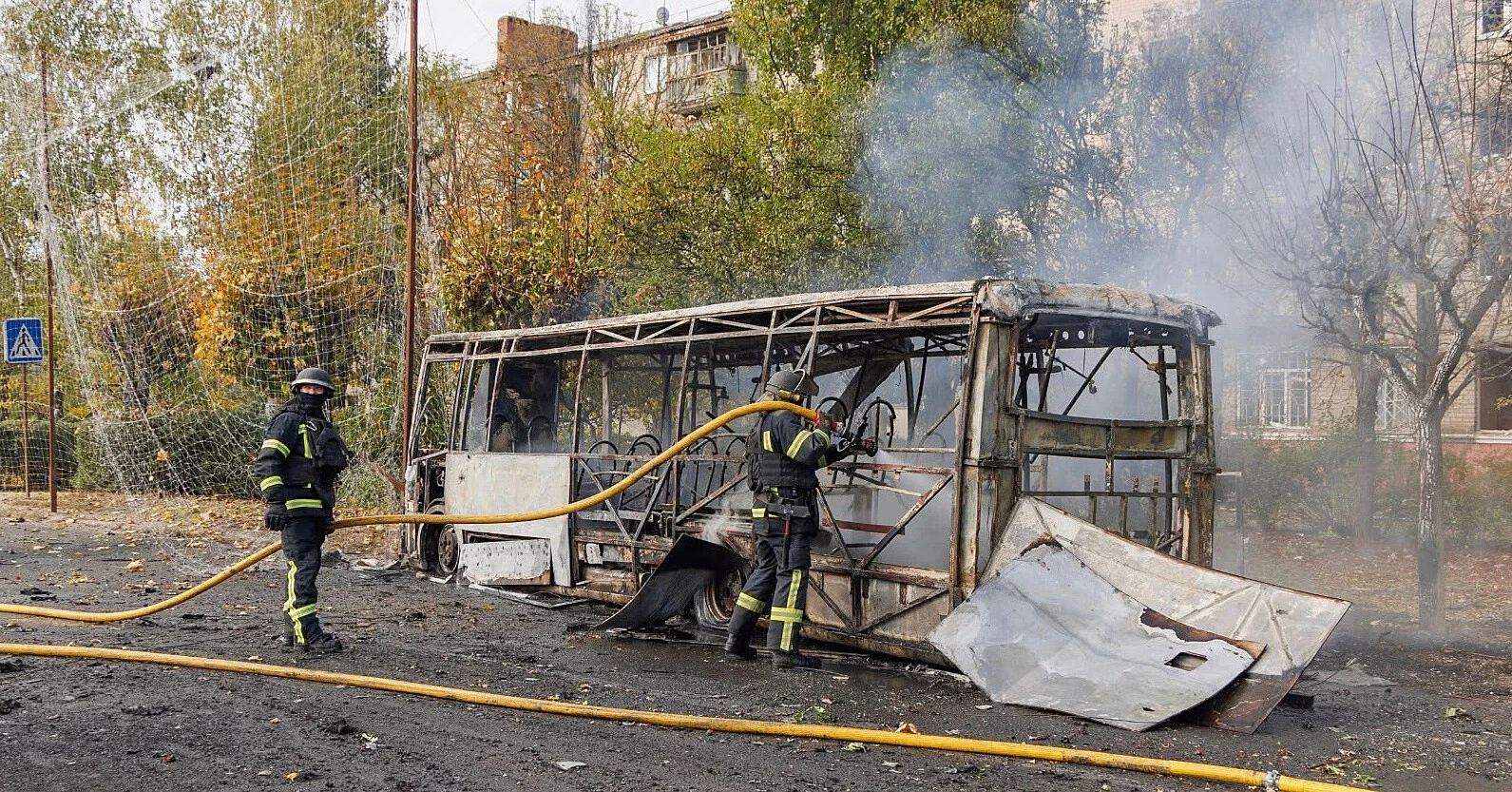
The Swiss Federal Department of Foreign Affairs has condemned the Russian attack on passenger buses in Kramatorsk, Donetsk region, which killed dozens of civilians. However, in its statement, the Swiss foreign ministry stressed that international humanitarian law must be strictly observed by "all parties."
The relevant statement was published by the Swiss Foreign Ministry on October 8 on the social network X.
Swiss diplomats expressed condemnation of the Russian attack that caused numerous civilian casualties and reminded the parties to armed conflicts of their obligations to respect international humanitarian law.
Notably, while condemning the specific Russian strike, the ministry used the wording about the need for all parties to the conflict to comply with these rules.
Russia attacked passenger buses in Kramatorsk
On the morning of October 8, Russian troops launched an air strike on Kramatorsk. Two scheduled buses carrying civilian passengers came under fire.
According to Ukrainian authorities, at least 30 people were killed in the morning attack, and dozens more were injured.
The strike hit a district of the city where civilian infrastructure facilities were located. Rescuers, medics and law enforcement officers worked at the scene.
Later, Russian troops attacked Kramatorsk again. In the evening, a drone hit a civilian car in the central part of the city, killing two more people.
Thus, according to the Kramatorsk City Council, by the evening of October 8 the death toll in the city had reached 32.
In addition, three more people died in the village of Belenke, which is part of the Kramatorsk urban hromada.
International humanitarian law prohibits attacks on civilians
International humanitarian law provides for mandatory protection of civilians during armed conflicts.
Under the Geneva Conventions and additional protocols, parties to a conflict must distinguish between military objectives and civilian objects. Deliberate attacks on civilians are prohibited.
Indiscriminate attacks and strikes where expected civilian casualties would be excessive in relation to the concrete and direct military advantage are also prohibited.
These rules are binding on all parties to an armed conflict, regardless of the circumstances of its outbreak.
However, the requirement that all parties comply with humanitarian law does not mean equal responsibility for specific violations. In each case responsibility is determined by the actions of the relevant party and the circumstances of the attack.
Switzerland adheres to a policy of neutrality
Switzerland traditionally pays special attention to compliance with international humanitarian law. Geneva hosts the headquarters of the International Committee of the Red Cross, one of the key humanitarian organizations working in armed conflict zones.
Bern adheres to a policy of military neutrality, but has repeatedly condemned Russia's full-scale invasion of Ukraine and supported international efforts to protect civilians.
Switzerland has also joined a significant portion of European sanctions against Russia and provided humanitarian assistance to Ukraine.
At the same time, the Swiss authorities consistently emphasize the need for all parties to armed conflicts to respect international law.
The new Foreign Ministry statement came amid intensified Russian attacks on Ukrainian cities, including Kramatorsk, Pryluky and Kyiv, which in recent days have caused numerous casualties and damage to civilian infrastructure.
Sources: Swiss Foreign Ministry, The Guardian, Swiss Federal Department of Foreign Affairs.
