
Only a quarter of EU strategic raw material projects to reduce dependence on China are on schedule
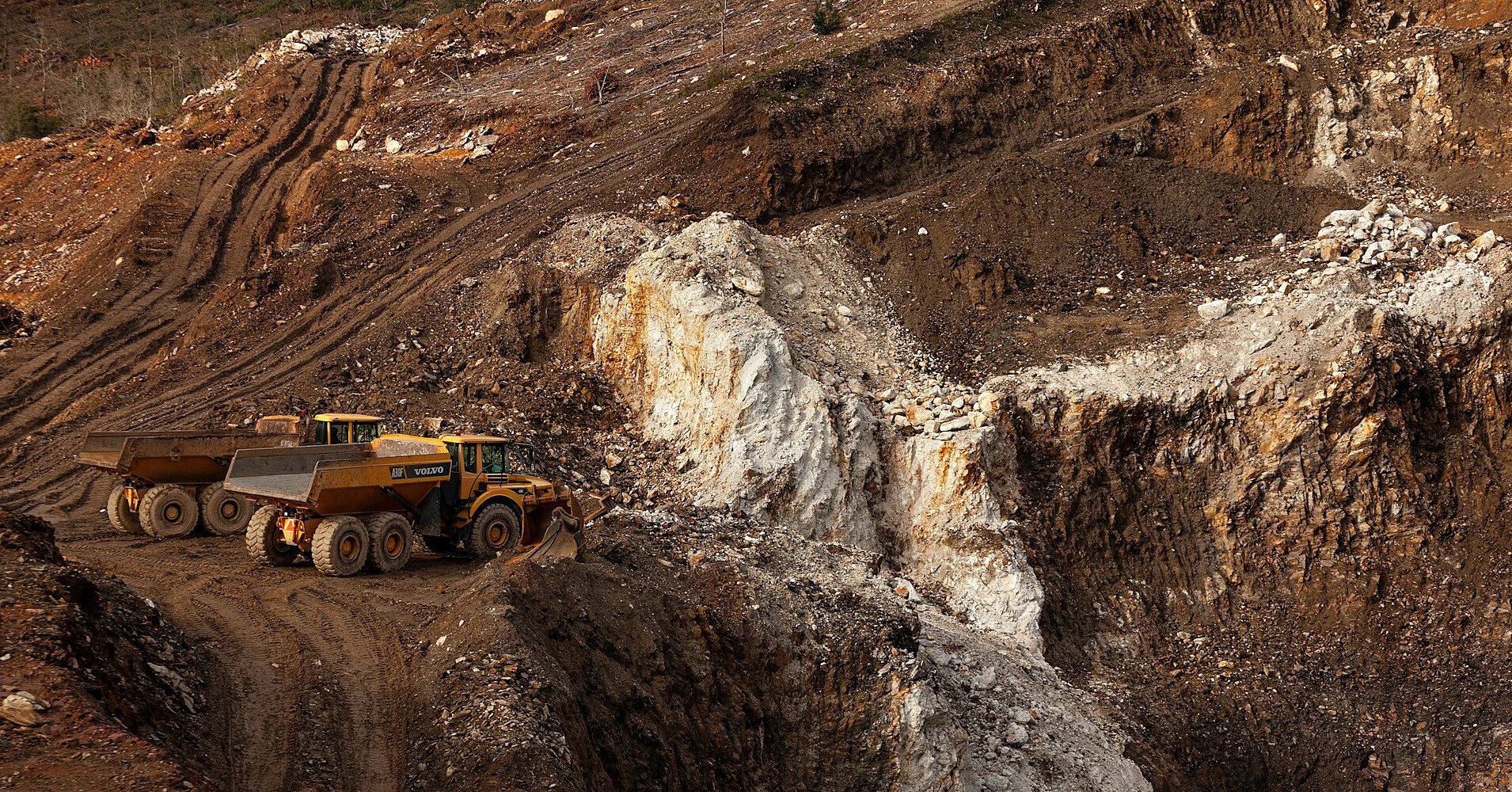
The European Union has faced serious delays in implementing projects for the extraction and processing of critical raw materials. Only about a quarter of the previously selected strategic projects are progressing on schedule. This jeopardizes the EU's plans to reduce dependence on Chinese suppliers of materials needed for the automotive, technology, and defense industries.
Politico reports this, citing an analysis by the European Environmental Bureau (EEB) obtained by the outlet.
According to the audit results, only about 25% of EU strategic raw material projects are being implemented on time. At the same time, at least a third of initiatives in raw material extraction and processing are already behind schedule, suspended, at risk, or effectively ceased to exist.
Among the main obstacles are lack of financing, lengthy approval procedures, difficulties in attracting investors, and insufficient demand for the products of future facilities.
These problems arise at a time when the European Union is trying to accelerate the creation of its own supply chains for strategic materials and strengthen economic independence from China.
Some projects may not be operational by 2030
In 2025, the European Commission granted strategic status to 60 raw material projects. Of these, 47 are located within the EU, and another 13 are in partner countries outside the bloc.
The program covers extraction, processing, and recycling of waste to obtain lithium, nickel, cobalt, graphite, rare earth elements, tungsten, and other materials.
However, a study by the ODI Europe think tank, published back in June, revealed significant problems with the implementation of this program.
ODI estimates that 14 of the 60 projects are unlikely to provide noticeable raw material supplies by 2030, as their planned launch is scheduled for 2029-2031.
Among projects slated to start production in 2025-2027, about three-quarters are either behind schedule or lack sufficient up-to-date public information to verify their status.
Analysts emphasize that the lack of available data does not necessarily mean a project has stopped. At the same time, it complicates assessing the real progress of the European raw material strategy.
Some strategic companies have already gone bankrupt or abandoned investments
One example of trouble is the French company Viridian Lithium, which planned to build a lithium processing plant in Lauterbourg.
The European Commission granted the project strategic status in March 2025. The facility was expected to secure lithium raw material production for the battery industry.
However, on March 9, 2026, Viridian Lithium entered judicial liquidation proceedings, having failed to raise the necessary financing for plant construction. Planned investments were estimated at about 295 million euros.
A similar situation arose in Portugal, where the José de Mello group abandoned a lithium plant project in Estarreja worth about 492 million euros.
The company attributed the decision to the impossibility of entering long-term sales contracts for future products and unfavorable conditions in the European electric vehicle and battery market.
These cases demonstrate that obtaining EU strategic status by itself does not guarantee financing, the availability of buyers, or successful completion of construction.
EU risks retaining dependence on China
In 2024, the European Union adopted the Critical Raw Materials Act. The document provides for expanding domestic production capacities and diversifying imports.
By 2030, the EU aims to cover at least 10% of its strategic raw material needs through extraction, 40% through processing, and 25% through recycling.
A separate goal is to reduce supply concentration so that no non-EU country accounts for more than 65% of the EU's needs for each strategic material at the relevant processing stage.
The biggest problem lies in the European industry's dependence on China, which holds leading positions in global rare earth processing and production of battery components.
These materials are used in the production of electric vehicles, wind turbines, semiconductors, aviation equipment, radars, and defense equipment.
A European Commission representative quoted by Politico acknowledged that if the planned projects are implemented, the EU could achieve its targets for lithium, cobalt, and rare earth elements. However, prospects for other materials remain uncertain.
In particular, Europe lacks capacity for processing and recycling nickel, and there are problems at various stages of the manganese supply chain.
European Commission announces new wave of raw material projects
Against the backdrop of problems with the previous program, the European Commission on October 9 presented another 46 strategic raw material projects in 16 EU states.
As El País reports, the new initiatives cover extraction, processing, and recycling of raw materials. They are intended to accelerate the creation of European production chains and reduce dependence on external suppliers.
Thus, the number of strategic projects within the EU has increased to 93. Another 13 first-wave projects are located outside the bloc.
It is important that the new 46 initiatives are not included in the previous delay analysis, which concerned projects selected earlier.
Strategic status allows companies to apply for accelerated permitting procedures and support in raising financing. For mining projects, the maximum timeframe for permitting procedures is 27 months, and for processing and recycling facilities it is 15 months.
However, the experience of the first wave shows that even simplified regulatory procedures do not eliminate the main economic obstacles - lack of investment and guaranteed demand.
ODI Europe estimates that the European Union needs not only to increase the number of strategic projects but also to create conditions for their actual launch and ensure long-term supply contracts for European producers.
Source: Politico, ODI Europe, El País
