
ICC Accuses US of Attempting to Obstruct Justice and Appeals to Other Countries for Help
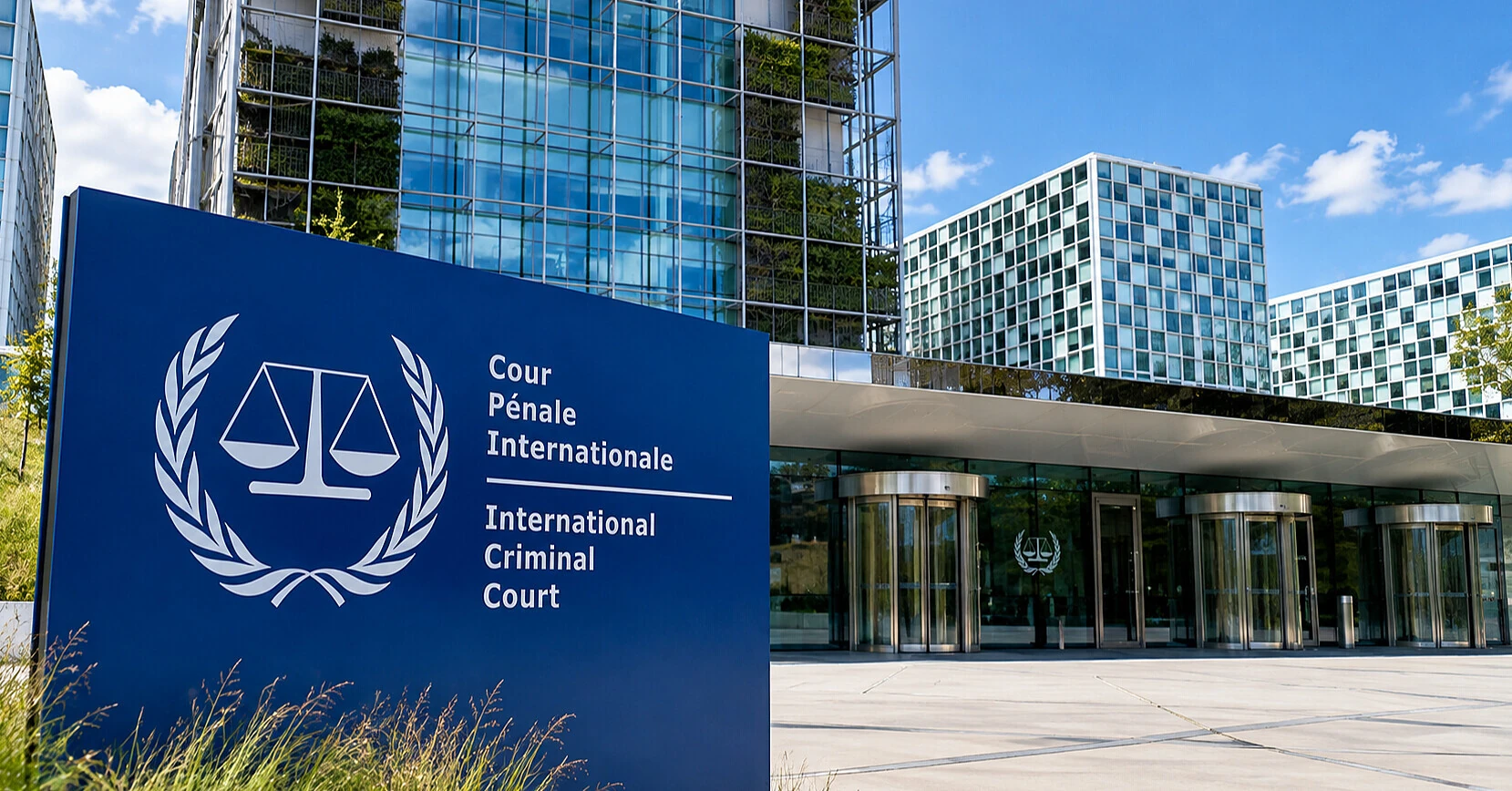
The International Criminal Court (ICC) has firmly rejected the new US sanctions imposed against the institution as a whole. The Court regards Washington's decision as an unprecedented attempt to obstruct international justice, intimidate staff, and hinder the investigation of the most serious crimes.
This is stated in an official ICC statement published on 9 October 2026.
"This measure targets an independent judicial institution established by international treaty and mandated by 125 States to investigate and prosecute genocide, crimes against humanity, war crimes and the crime of aggression," — the statement says.
The ICC called the American sanctions an assault on the rule of law and the foundations of the international legal order. In the Court's assessment, Washington is attempting to block its activities and create obstacles to holding perpetrators of international crimes accountable.
The institution stressed that the current decision is a continuation of the US sanctions campaign, under which restrictions were previously imposed on 13 ICC judges and prosecutors.
International Criminal Court intends to continue its work
ICC President Tomoko Akane said that the new sanctions will not force the Court to abandon its duties.
"The Court will continue to fully carry out its mandate independently and impartially, guided solely by law and evidence, for the sake of the countless victims of grave crimes," — she emphasized.
The ICC noted that the American restrictions target not only the institution itself, but also people who work in it or cooperate with it.
The Court called on States Parties to the Rome Statute to take concrete measures to ensure its continued functioning.
The statement emphasizes that the States that created the International Criminal Court bear collective responsibility for preserving its independence and ability to investigate international crimes.
The ICC recalled that the parties to the Rome Statute committed to preventing impunity for the most serious crimes of concern to the international community.
At the same time, the Court acknowledged that the new restrictions could create serious difficulties for its work. The institution has already taken steps, jointly with States Parties, to ensure the continuity of its operations.
In concluding the statement, the ICC stressed that international justice officials should not be punished for performing their professional duties.
"History will judge this moment," — the Court stated, calling on the international community to protect the principles on which the international justice system is founded.
What restrictions did the US impose
On 9 October, the Office of Foreign Assets Control of the US Department of the Treasury (OFAC) officially added the International Criminal Court to the SDN sanctions list.
This means the blocking of the institution's assets that fall under US jurisdiction, and restrictions on financial and commercial transactions involving US persons and entities.
At the same time, the US Treasury issued a special license No. 13 permitting certain operations necessary for the continuation of the ICC's activities until 7 April 2027.
The document allows payments by States Parties to the Rome Statute, salary payments to staff, payment for health insurance, rent, utilities, and a number of other current expenses.
Separate licenses are also provided for telecommunications and software services, pension payments, and operations related to certain individuals held in ICC custody.
However, the existence of temporary exemptions does not mean the lifting of sanctions. After the transition period ends, conducting relevant operations may require additional authorization from US authorities.
Sanctions may affect assistance to victims of war crimes
A separate statement was published on 9 October by the Trust Fund for Victims at the International Criminal Court.
The organization warned that US sanctions could disrupt financial channels, service delivery, and international cooperation necessary to support victims of grave crimes.
This concerns, in particular, programs of medical and psychological rehabilitation, educational assistance, social support, and payments of compensation to victims.
The Fund stressed that the possible consequences of the restrictions could affect people who have survived abductions, torture, sexual violence, persecution, and other crimes.
Thus, the new stage of the conflict between Washington and the International Criminal Court affects not only the work of judges and prosecutors, but also mechanisms for providing assistance to victims.
For Ukraine, the ICC's activities are of particular importance: in March 2023, the Court issued arrest warrants for Vladimir Putin and Russia's Commissioner for Children's Rights Maria Lvova-Belova in connection with alleged war crimes related to the unlawful deportation and transfer of Ukrainian children.
As of 9 October, the ICC leadership states its intention to continue investigations and judicial proceedings despite the American sanctions.
Based on materials from: International Criminal Court, ICC Trust Fund for Victims, US Department of the Treasury, OFAC.
