

Climate change threatens famous waves at top surf spots: where beaches risk being left as mere bathing spots
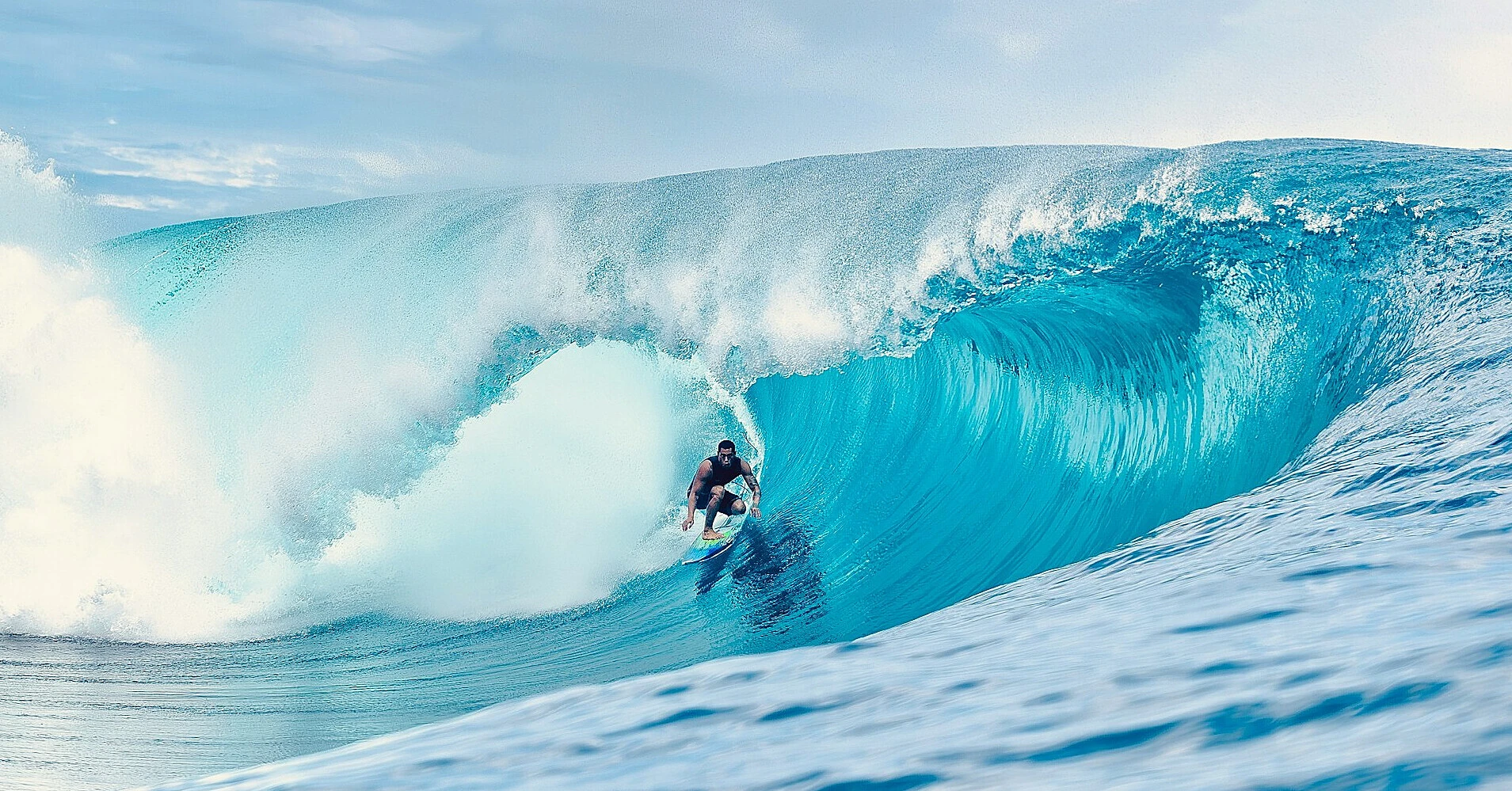
To destroy one of the famous surf spots, you don't have to flood the entire beach. Sometimes it's enough to slightly change the sea level, move the sand on the bottom, or build a protective wall along the shore — and the wave, for which people have been coming here from all over the world for years, starts breaking in a completely different way.
A new study has shown that most of the world-class surf spots studied are vulnerable to climate change and coastline modification. Scientists, together with local experts, assessed 57 famous waves in eight countries — from California and the UK to Australia, Peru, and El Salvador.
According to several key parameters, the share of places with medium or high risk reaches three quarters or more. And the consequences may affect far more than just surfers.
Why does the same wave exist for years
From the outside, it seems that waves simply come from the ocean and break on the shore.
In fact, a famous surf spot arises from a very precise combination of conditions: the direction of ocean swell, water depth, shape of the seabed, location of reefs or sandbars, tide, and configuration of the coastline.
That is why in one place a wave can gradually peel and form a long smooth wall, while just a few hundred meters away it crashes erratically.
If one of the elements of this system changes, the wave itself changes.
Therefore, it is not necessarily the beach as a geographical place that is under threat. People may continue coming to the same stretch of coast, but the famous wave that made it known will no longer exist in its previous form.
Studied 57 waves in eight countries
The work was carried out by researchers from California State University Channel Islands in collaboration with the conservation organization Save The Waves.
The results were published in the scientific journal Climatic Change.
For the study, 57 surf spots included in the World Surfing Reserves were selected. This status is given to places of particular cultural, historical, and natural significance for surfing.
Nearly 200 local specialists with good knowledge of specific coasts and how waves have changed over many years took part in the assessment.
The study covered Australia, Brazil, the UK, Costa Rica, Peru, Portugal, El Salvador, and the USA.
Among the studied places are the famous Malibu and Santa Cruz in California, Noosa in Australia, Croyde and Saunton Sands in the UK, as well as other well-known surf zones.
The biggest problem — the shore can no longer change freely
One of the most notable results of the study is related not only to sea-level rise but also to what people have already built on the coasts.
According to scientists, 89% of the studied surf spots have medium or high risk related to the ability of the coastline to adapt to changes.
A natural shore can gradually retreat, sand can move, and the beach can change shape following sea level.
But if there is a road behind the beach, buildings, dams, breakwaters, or a concrete sea wall, the beach often simply has nowhere to retreat.
The ocean keeps advancing, and the sandy strip becomes squeezed between the water and structures.
As a result, not only part of the beach may disappear — the bottom relief, which determines wave shape, also changes.
Sea-level rise changes where the wave breaks
Another 79% of the studied places received medium or high risk due to sensitivity to sea-level rise.
Even a relatively small change in depth can affect where and how a wave begins to break.
In one place it may stop breaking over the familiar reef, in another — start breaking too close to the shore, and somewhere surfing conditions may shift along with the sand.
Moreover, changes do not necessarily occur uniformly everywhere. Some waves can adapt to the new sea level much better than others.
That is why the researchers do not claim that all these places will necessarily disappear. They assess their vulnerability and the likelihood that familiar conditions will change.
Underwater sand is no less important than the ocean itself
Another factor is almost invisible to a person just standing on the beach.
75% of the studied waves have medium or high risk related to the composition and stability of the seabed.
The sandy bottom constantly moves under the influence of currents, storms, and the influx of new sediment from land.
If dams block rivers or the coast is reinforced with structures, the natural sand supply may decrease. At the same time, stronger storms can carry it away faster.
And then the underwater relief changes — the actually invisible surface that shapes the wave.
In Malibu changes can already be seen
One of the most famous examples is Surfrider Beach in Malibu.
This place played a huge role in popularizing surfing in the USA and is known for long waves suitable for longboarding.
But local surfers already notice that the beach has narrowed and the familiar wave shape has changed.
The problem is not only related to global sea-level rise. For decades, dams, roads, and coastal structures have limited the natural supply of sand to the shore.
Climate change amplifies the existing vulnerability of such a coast.
Why this concerns even those who have never been on a board
For many coastal towns, a good wave is as much a tourist resource as a beautiful beach, ski slope, or historical landmark.
Surfers come for specific conditions, stay in hotels, rent accommodation, eat in local cafes, buy equipment, and use the services of surf schools.
In some small coastal communities, a significant part of the tourist economy is built around this.
Therefore, the disappearance of the famous wave can mean not only the loss of a sports location but also a decline in visitor numbers and local business income.
The researchers also emphasize another side of the problem: natural beaches and dunes also serve as coastal protection from storms and sea-level rise.
Preserving space for the natural movement of sand can therefore protect both surf spots and nearby cities.
Sometimes protecting a wave is possible not by building but by the opposite
The usual response to the sea advancing is to reinforce the shore with a concrete wall, breakwater, or other structure.
But for a surf zone, such a solution can sometimes accelerate the problem.
If the coast is rigidly fixed, the beach loses the ability to naturally migrate inland. Waves start reaching the structures directly, sand is washed away, and the familiar underwater relief changes.
Therefore, the study authors believe that when adapting coasts to climate change, it is necessary to consider not only buildings and roads but also the natural movement of beaches.
In some countries, such waves have already received special legal protection. Similar mechanisms operate, in particular, in Peru and New Zealand, and individual measures are applied in Australia.
The famous wave turns out to be much more fragile than it seems
The ocean is usually associated with something permanent: waves came to this shore long before humans appeared and, it seems, should always come.
But the famous wave is not just water. It is the result of a precise interaction of ocean, tide, sand, rocks, and coastline.
Changing even a few elements can turn a world-renowned surf spot into a completely different place.
And that is why the study's results are important not only for surf enthusiasts. They show how subtly the familiar coast can change: the beach remains on the map, the sea is still before your eyes — while the natural feature that attracted people there for decades gradually disappears.
Based on materials from: The Guardian, Climatic Change, Save The Waves.