

Ukrainian manufacturers named the main obstacle to countering Russian jet-powered 'Shaheds' - The Guardian
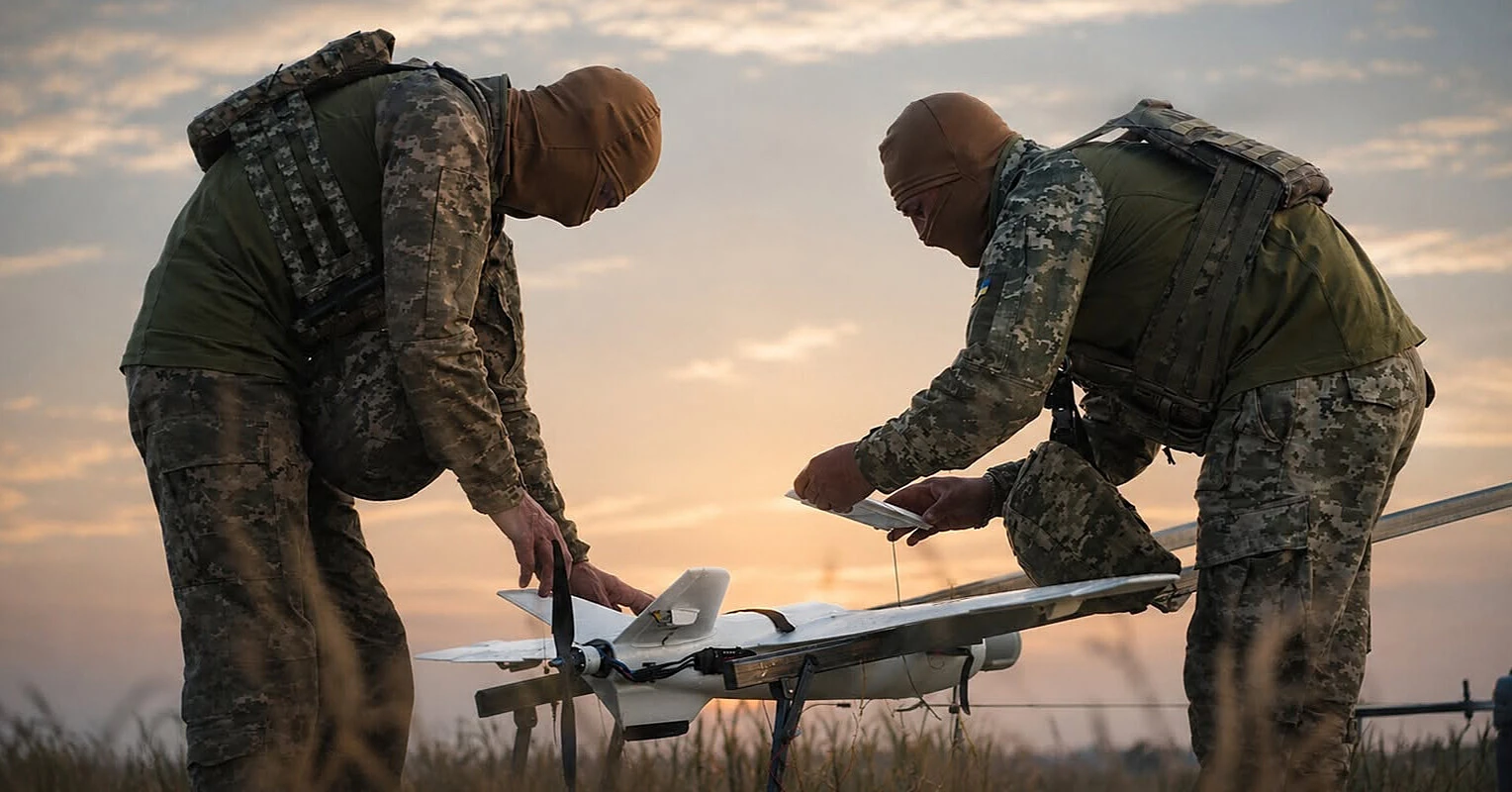
Russian jet-powered strike drones have significantly complicated the work of mobile fire groups defending Kyiv from air attacks. Due to the much higher speed and altitude of the new drones, traditional countermeasures are less effective. Ukrainian manufacturers are trying to accelerate the development of high-speed interceptors, but face a shortage of necessary components.
This was reported by The Guardian, whose journalists spent three days with the volunteer air defense unit "Mriya", which participates in the defense of the capital.
According to the soldiers, mobile groups previously successfully destroyed Russian "Shaheds" using large-caliber machine guns. However, since summer, Russia has increasingly used jet-powered drone modifications capable of speeds of about 600 km/h and altitudes up to 10 km.
With these characteristics, some Russian drones become unreachable for ordinary machine gun weaponry. The commander of the volunteer unit with the call sign Sensei said that new drones are often heard but not seen or hit in time.
The scale of the problem is confirmed by official Ukrainian data. In an address on 28 September, President Volodymyr Zelensky reported that at that time the interception rate of jet-powered "Shaheds" was only 57%, while the overall destruction rate of Russian drones of various types reached 70%.
A significant part of jet-powered drones Ukrainian forces have to intercept with combat aviation, including F-16 fighters. At the same time, using aircraft requires significantly more resources and creates additional risks for pilots.
One of the main countermeasures is the development of Ukrainian jet-powered interceptor drones. These devices must be fast enough to catch up with new Russian drones and destroy them without involving expensive air defense systems.
Co-founder of the Ukrainian company General Cherry Stanislav Hryshchenko told The Guardian that the main limitation for mass production of new interceptors remains the shortage of small jet engines.
According to him, Russia purchases such engines in large quantities from China, while Ukraine and European countries do not yet have sufficient domestic production capacity. Hryshchenko estimates necessary time to build up Ukrainian interceptor production at about three to four months. This is a manufacturer's forecast, not an approved state supply schedule.
Meanwhile, new Ukrainian developments are already being used in practice. According to volunteers, individual high-speed interceptors can develop speeds over 600 km/h and successfully destroy Russian drones.
Ukraine is also involving international partners in countering the new threat. On 8 October, the Ministry of Defense reported that during negotiations with Germany, they discussed strengthening defense against jet-powered drones, supplying ammunition for F-16s, and developing joint production of unmanned systems. Special attention is paid to electronic warfare means.
According to Ukrainian developers, even mass introduction of new interceptors will not guarantee long-term advantage. Russian military constantly change characteristics of their drones, so Ukrainian manufacturers are forced to continuously improve countermeasures.
Materials used: The Guardian, Office of the President of Ukraine, Ministry of Defense of Ukraine