

New investigation reveals suspected forgeries in Abramovich's offshore empire
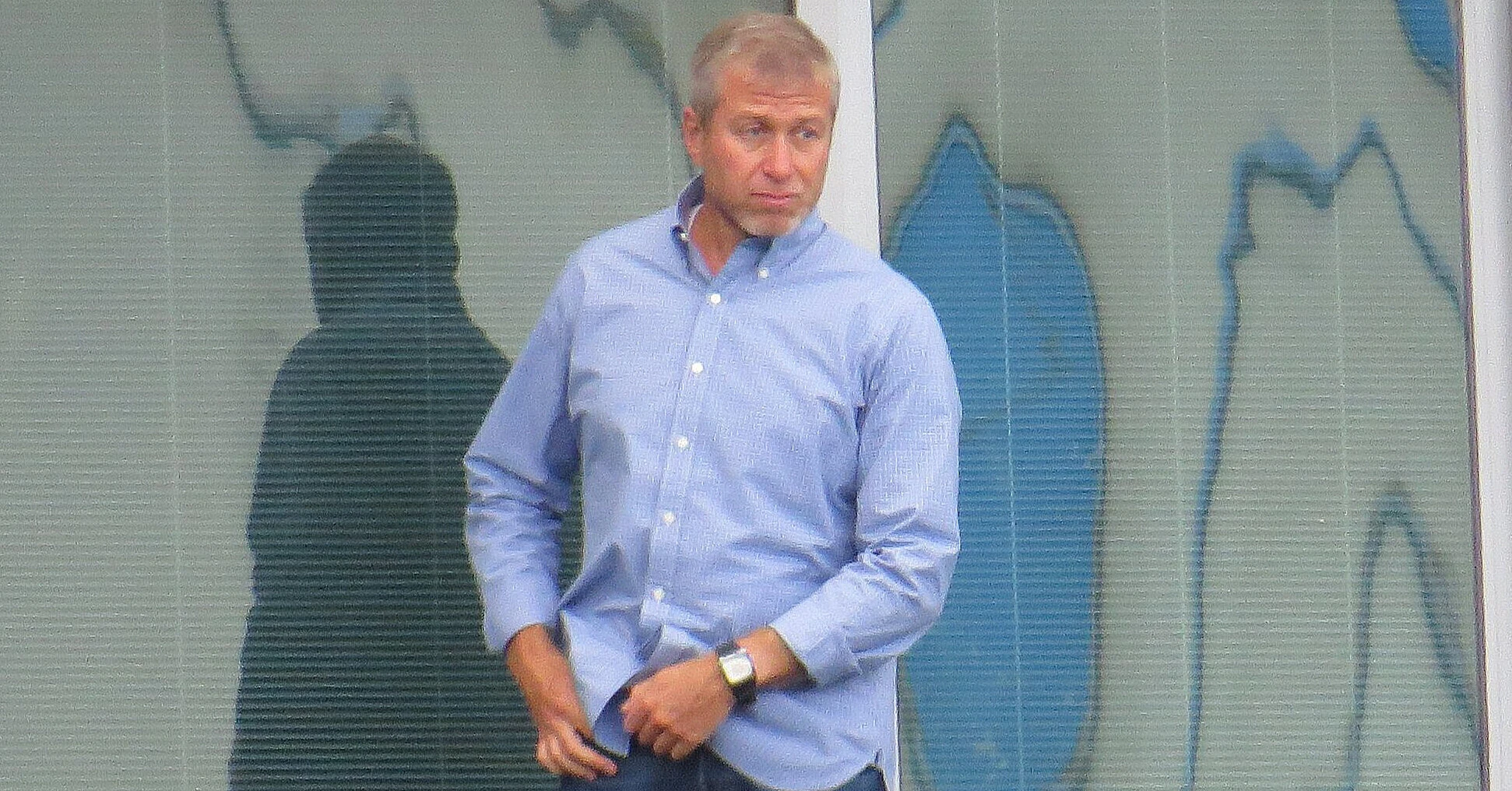
Employees of the Cypriot branch of the international auditing company Deloitte and financial advisors to Russian billionaire Roman Abramovich may have falsified corporate documents for many years to conceal his assets and avoid paying taxes. Journalists discovered over a thousand documents that were likely backdated.
This is stated in a joint investigation by The Guardian, The Bureau of Investigative Journalism and BBC Panorama, published on October 12.
The journalists analyzed materials from the large-scale Cyprus Confidential leak, which contains more than 500,000 corporate documents. According to their findings, representatives of Deloitte Cyprus and its associated consulting company Meritservus may have systematically altered dates on contracts, payment documents and business correspondence from 1999 to at least 2013.
The investigators identified more than a thousand documents with false dates, relating to more than 100 companies. In some cases, the papers were dated five years earlier than the time they were actually created. According to estimates by The Bureau of Investigative Journalism, these operations may have helped conceal Abramovich's assets worth at least $10 billion and avoid tens of millions of dollars in taxes.
One key episode concerns the Cypriot company Kravin Investments, through which funds from the sale of shares in the Russian oil company Sibneft passed. In 2003, Kravin received about $3 billion, of which approximately $2 billion remained in its accounts or was used to lend to other companies.
Interest income from these funds may have been subject to taxation in Cyprus. However, in 2005, as journalists established, Abramovich's advisors prepared documents that created the impression that the money had belonged since 2003 to a company called Kelvedon Worldwide, registered in the British Virgin Islands. This change in documentary formalization allowed removing the relevant assets from Kravin's balance sheet and avoiding the associated tax obligations.
The investigation claims that representatives of Deloitte Cyprus participated in discussions of these changes, and subsequently the auditing company approved financial statements prepared using the relevant documents.
A similar mechanism, according to the journalists, was used to conceal expensive real estate and other property. In particular, the reports of the Cypriot company Amiscan Investments previously included assets worth about $650 million, including UK real estate, a French castle, yachts, airplanes and other luxury items. Later, their reflection in the reports was changed on the basis of contracts that investigators believe were also backdated.
Separately, the journalists found possible discrepancies between internal correspondence of Abramovich's entourage and evidence presented in the High Court of Justice in London during a corporate dispute regarding Sibneft-Yugra. In particular, the documents cast doubt on certain claims by the billionaire's long-time associate Eugene Tenenbaum about his ignorance of certain operations.
Financial crime experts who reviewed the materials believe that the described schemes may have signs of tax fraud. At the same time, the mere documentary formalization of a previously concluded agreement is not necessarily a violation: the decisive factor is whether the documents reflect the real agreements and dates of signing.
Representatives of Abramovich categorically denied involvement in illegal document processing and tax evasion. His lawyers stated that the billionaire did not know about possible forgeries and relied on professional consultants, in particular Deloitte.
Eugene Tenenbaum also denied participation in unlawful operations and providing false testimony to the court. In Deloitte Cyprus they said that the company complies with current legislation, but cannot comment in detail on the documents, as it does not have access to correspondence more than twenty years old. The journalists found no data on the involvement of other national branches of Deloitte in the described operations.
The United Kingdom and the European Union imposed sanctions on Abramovich in 2022 after Russia's full-scale invasion of Ukraine. In 2023, British sanctions were also extended to Meritservus and its director Demetris Ioannides, who helped Russian oligarchs manage assets.
The new investigation raises questions about the role of international auditing and consulting companies in creating offshore structures that may be used to conceal ownership and reduce tax obligations. At the same time, the journalists' conclusions are not a judicial determination of guilt of Abramovich or the mentioned financial advisors.
Based on materials from: The Guardian, The Bureau of Investigative Journalism, The Bureau of Investigative Journalism