

Trump responded to criticism of the deal with Russia, reminding about Europe's purchases
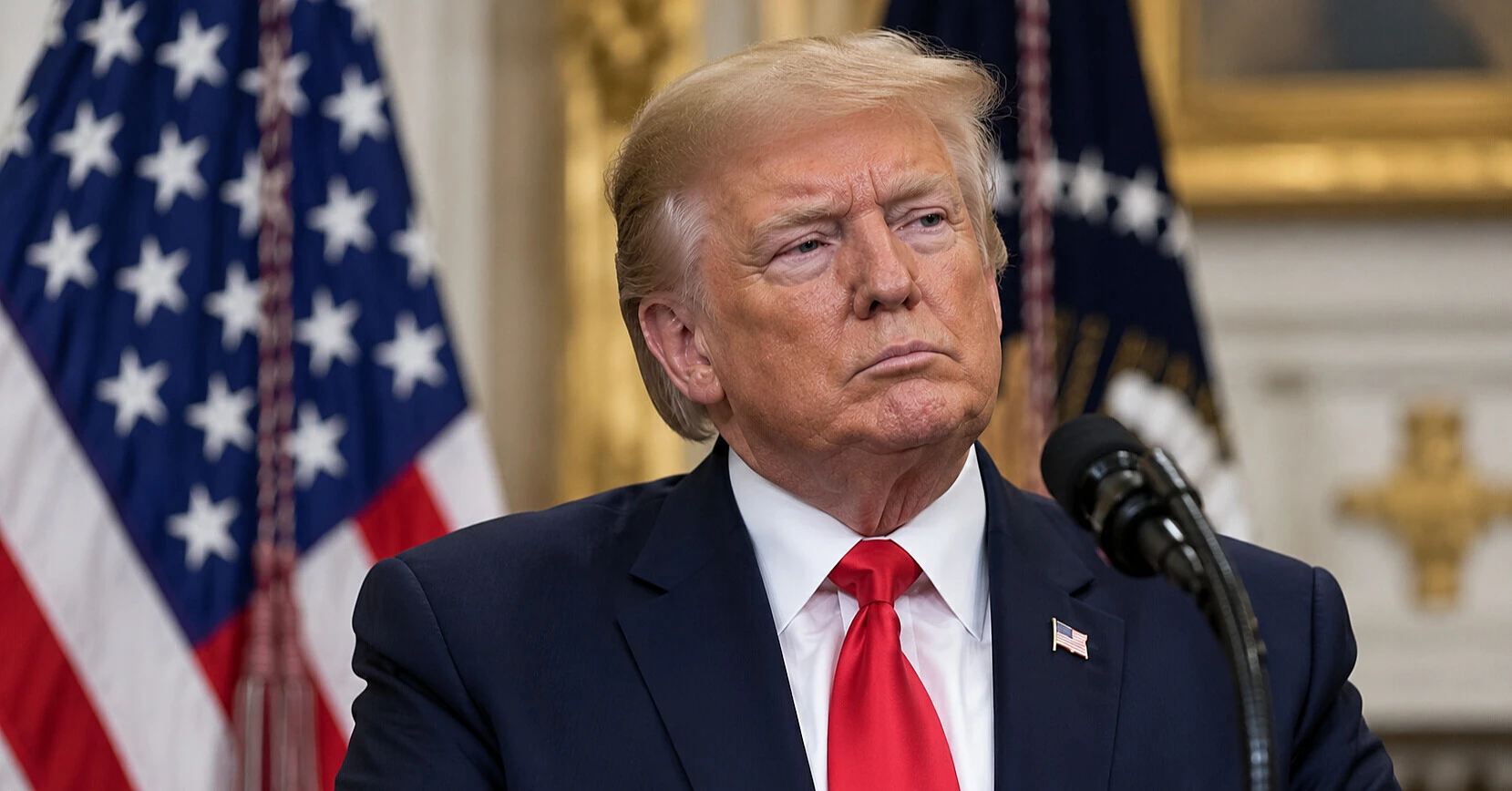
US President Donald Trump defended the agreement with Russia on supplying diesel fuel to the American and global markets. Amid criticism of this decision, he accused European countries of continuing to purchase Russian energy resources and stated that he is acting in the interests of Americans.
Trump published the corresponding statement on Monday, October 12, on his social network Truth Social.
The American president claims that the European Union paid Russia $250 billion for energy resources. He expressed dissatisfaction that the media, in his opinion, do not pay enough attention to European purchases.
"The European Union paid Russia 250 billion dollars for energy resources, and the fake media don't even want to get close to this topic. I made the right choice in the interests of the American people. America always comes first!" — wrote Trump.
The US president did not specify for what period the EU, according to his calculations, spent the indicated amount. No independent confirmation of exactly this assessment is provided in his publication.
USA agreed with Russia on diesel fuel supplies
Trump's new statement came after his agreement with Vladimir Putin, which the American leader announced on October 9.
According to the announced terms, Russia must supply more than 300 thousand tons of diesel fuel to the American and global markets in the near future. Another 500 thousand tons are expected to be exported during November, and then an additional 1 million tons.
Trump also spoke about the possibility of supplying another 3 million tons of diesel fuel taking into account the production capacities of Russian oil refineries.
To implement the agreement, the American authorities temporarily eased certain sanctions restrictions related to operations for the supply of Russian diesel.
The US administration expects that the additional volumes of fuel will help reduce prices on the domestic and international markets. However, the actual impact of the deal will depend on the supply volumes, the state of Russian refineries, and the situation on the global energy market.
Europe continues to purchase Russian energy resources
Trump's statement about European purchases has a factual basis: some EU states indeed continue to import Russian energy resources. However, the volumes of these supplies have significantly decreased after the start of Russia's full-scale invasion of Ukraine.
According to the European Commission, in 2025 Russian oil accounted for about 2% of the total oil imports of the European Union compared to 20% in 2022. Purchases of Russian oil continued only in two EU countries.
At the same time, the share of Russian gas in the imports of the European Union decreased from 45% in 2021 to 12% in 2025. Despite this, last year European countries imported about 36 billion cubic meters of gas and 9.7 million tons of crude oil from Russia.
In February 2026, new European rules entered into force, providing for a gradual phase-out of Russian gas. Imports of liquefied natural gas are planned to be stopped by the end of 2026, and pipeline gas no later than November 30, 2027.
Thus, the European Union has not yet completely given up Russian energy resources, but it is pursuing a policy of gradually reducing such purchases.
Deal with Russia drew criticism in Ukraine and the USA
Trump's agreement with Putin on diesel fuel supplies drew objections from the Ukrainian leadership, European politicians, and some American legislators.
In particular, seven US senators from the Republican and Democratic parties urged the American president to revoke the permit for importing Russian diesel fuel. The legislators believe that the decision may contradict current legislation and provide Moscow with additional revenues to finance the war against Ukraine.
Ukrainian President Volodymyr Zelensky also questioned the economic feasibility of the agreement. According to his assessment, the additional supplies of Russian diesel in the volume of several hundred thousand tons per month are unlikely to significantly change the situation on the global fuel market.
On October 12, Zelensky proposed that Washington negotiate with Ukraine regarding the operation of Russian oil refineries. Kyiv is ready to discuss halting strikes on Russian oil infrastructure on the condition that Moscow stops attacks on the Ukrainian energy system and that compliance with the agreement is guaranteed.
In the European Union, despite ongoing purchases of Russian energy resources, they stated their intention to continue sanction pressure on Moscow. EU High Representative for Foreign Affairs Kaja Kallas emphasized that it is not the time to ease restrictions against Russia.
Based on materials from: Truth Social Дональда Трампа, European Commission之, Kurs Ukrainy, Axios.