

NATO Supreme Commander Warns Russia of Tough Response to Attack
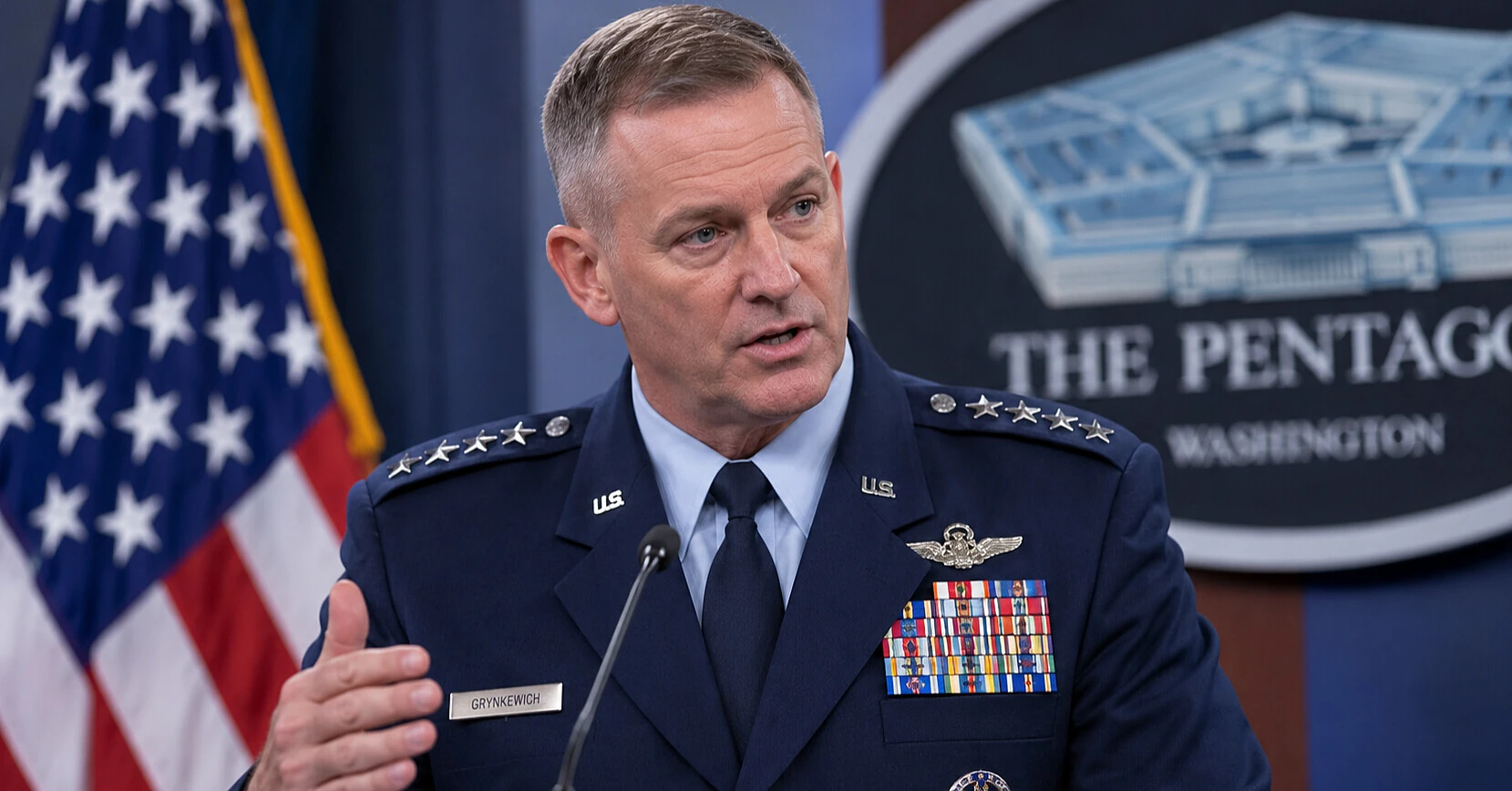
Supreme Allied Commander Europe, American General Alexus Grynkewich, warned Russia about the consequences of a possible attack on the territory of Alliance countries. He stated that NATO is ready to immediately repel an attack and destroy the enemy's military capabilities necessary to continue the offensive.
This was reported by Financial Times, citing the general's speech on October 12 at the Warsaw Security Forum in Poland.
Grynkewich emphasized that NATO remains a defensive alliance and does not seek war. At the same time, the Alliance intends to demonstrate to Moscow that any attempt at military aggression against its members will not succeed.
"If someone is so reckless as to attack us, we will fight," the general stated.
According to him, the Alliance's military forces are ready to enter combat immediately if necessary. At the same time, Grynkewich noted that he does not consider a direct armed conflict with Russia inevitable or imminent.
NATO Presented a Strategy to Repel a Possible Attack
During his speech, Grynkewich outlined a new defense concept called "Theory of Victory." It provides for three successive stages of response to military aggression: blocking the attack, weakening the attacking forces, and destroying the enemy's military capabilities.
NATO's main task is to prevent the seizure of Alliance territory and deprive the enemy of the ability to continue military operations.
In the first stage, allied forces must stop the initial attack. Ground units on NATO's eastern flank will ensure the protection of territory, while air and naval forces will create conditions for repelling further offensive.
If the enemy continues the offensive or involves reserves, the Alliance intends to strike at its military infrastructure, including logistics facilities, command and control systems, and means of supporting combat operations.
Grynkewich explained that this involves not only destroying units directly involved in the attack but also neutralizing capabilities that allow the enemy to continue fighting.
He said that NATO will develop long-range precision strike capabilities, sensor networks, unmanned systems, and digital infrastructure for managing military operations.
As a result, an attack on any Alliance member should become obviously futile for the enemy.
NATO Does Not Consider War with Russia Inevitable
Despite the tough warnings, the general emphasized that the new concept is primarily aimed at deterring potential aggression.
He noted that the North Atlantic Alliance does not seek the strategic defeat of Russia or the expansion of military conflict. Its task is to protect the population and territory of member states.
"We do not seek war. We exist to preserve peace," Grynkewich stressed.
According to him, demonstrating readiness to repel an attack should convince a potential adversary to abandon the use of force.
The general also stated that daily military exercises, personnel training, and investments in defense capabilities enhance the credibility of deterrence.
Europe Concerned About Russian Sabotage
The Supreme Commander's warning came amid rising tensions between Russia and European countries. As Financial Times notes, European governments increasingly accuse Moscow of organizing hybrid operations targeting states that support Ukraine.
These include sabotage, arson, cyberattacks, airspace violations, and attempts to damage critical infrastructure.
Among such incidents, European authorities have investigated an attempted attack on a Ukrainian aircraft at a German airport, sabotage of transport infrastructure in Poland, and attacks on defense industry enterprises.
According to FT, European intelligence services have also reported alleged Russian plans to assassinate leaders of defense companies.
In European capitals, there are fears that such actions may be aimed at weakening NATO unity and testing the readiness of Alliance states to respond to threats that do not reach the level of a full-scale military attack.
At the same time, the Russian side denies involvement in a number of such incidents. Individual episodes continue to be investigated, so not all accusations have received final legal confirmation.
Support for Ukraine Remains Part of Russia Deterrence Strategy
Grynkewich also called on European states to strengthen support for Ukraine, viewing it as an important element of countering Russian aggression.
In his assessment, Moscow's hybrid operations are aimed, among other things, at undermining the collective will of Western allies and weakening assistance to Kyiv.
The general positively assessed the actions of European countries that, in response to hybrid threats, are increasing military support for Ukraine.
He emphasized that such decisions demonstrate to Russia the futility of attempts to force European governments to abandon support for Ukrainians.
At the same time, NATO's new defense concept takes into account the experience of the full-scale war in Ukraine, including the widespread use of drones, precision weapons, and modern reconnaissance means.
As noted by the Polish newspaper Rzeczpospolita, Grynkewich's speech also served as a signal to allies amid changes in the distribution of defense responsibilities between the United States and European states.
Washington expects European NATO members to take on a larger share of responsibility for conventional defense of the continent, while American nuclear deterrence guarantees should remain.
The concept presented by Grynkewich is intended to show that the Alliance has the capabilities to repel an armed attack and intends to maintain unity in the face of growing threats to European security.
Based on materials from: Financial Times, TVP World, Rzeczpospolita.