

German Labor Minister Resigns After Conflict with Coalition Partners
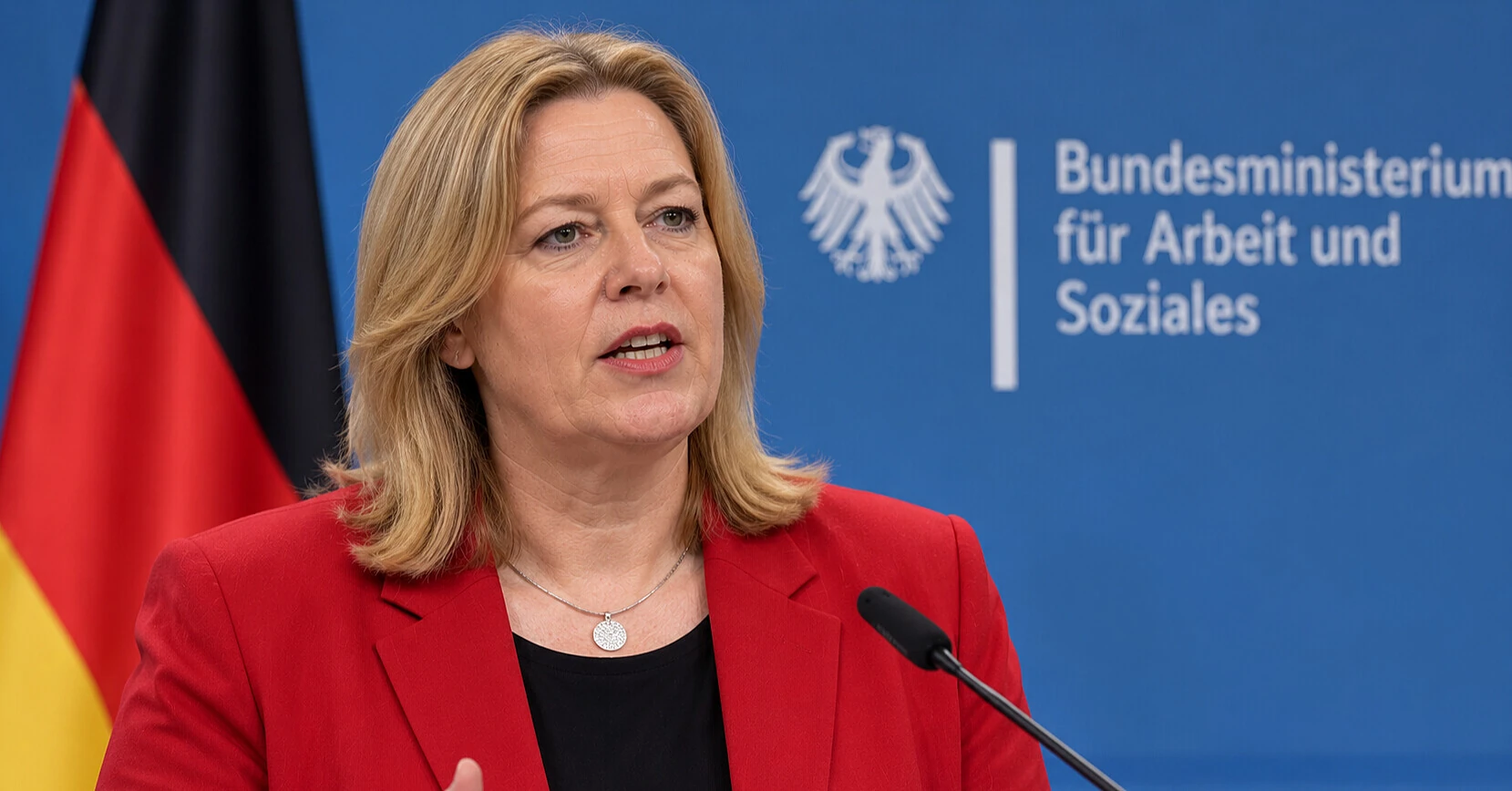
Germany's Minister of Labor and Social Affairs, Bärbel Bas, has announced her resignation from the federal government and from her position as co-chair of the Social Democratic Party of Germany (SPD). The politician explained her decision by a family tragedy and intensified public criticism from partners in the ruling coalition.
This became known on Monday, October 12, from an official statement by Bas published by the SPD leadership.
According to the 58-year-old politician, after the death of her stepdaughter, she needs time to cope with the heavy loss. At the same time, public attacks on her continued even during this period.
"After the death of my stepdaughter, I realized that I need time to grieve. I want to allow myself enough time for this," — the statement by Bas reads.
She also noted that "public attacks on me, unfortunately, including from a coalition partner, continued to intensify."
Bas explained that she currently does not have the necessary strength to fully perform her duties as minister and party leader.
In this regard, she informed SPD co-chair and Vice Chancellor Lars Klingbeil of her immediate resignation from party duties and asked Chancellor Friedrich Merz to release her from her ministerial post.
At the same time, Bas intends to keep her parliamentary mandate in the Bundestag.
Who Will Head Germany's Ministry of Labor
Alexander Schweitzer, former Minister-President of the federal state of Rhineland-Palatinate and deputy chairman of the SPD, is set to become the new Minister of Labor and Social Affairs of Germany.
Schweitzer's candidacy was confirmed by representatives of the Social Democrats. The planned appointment was previously reported by German media, including ARD and Deutschlandfunk.
The 53-year-old politician headed the government of Rhineland-Palatinate from 2024 to 2026. Prior to that, he served as Minister of Labor and Social Affairs at the state level.
Schweitzer will have to continue implementing reforms of social protection, the pension system, and the labor market, which remain a subject of disagreement between the CDU/CSU and SPD.
SPD Announces Leadership Re-elections
Bas's departure has led to personnel changes not only in the government but also in the leadership of the Social Democratic Party.
Lars Klingbeil announced on October 12 that the SPD plans to hold early elections of the entire party leadership at a congress in December 2026 or January 2027.
According to him, the party's presidium unanimously supported this decision. It is intended to provide clarity regarding the leadership personnel and the further political course of the Social Democrats.
Thus, Klingbeil himself will also have to be re-elected. Who will take the vacant position of the second co-chair of the party has not yet been determined.
Resignation Heightens Disagreements in Ruling Coalition
Bas's decision sparked a new discussion about relations between the Social Democrats and the conservative CDU/CSU bloc, which jointly form Germany's federal government.
In recent months, CDU representatives have criticized the labor minister for insufficiently rapid progress on bills concerning pension reform, the labor market, and the social support system.
Bas, representing the Social Democrats, opposed certain proposals to cut social spending. Disagreements on these issues became one of the sources of tension within the coalition.
After the resignation announcement, Minister-President of the federal state of Mecklenburg-Western Pomerania Manuela Schwesig accused Chancellor Friedrich Merz and CDU representatives of inappropriate treatment of Bas during her family tragedy.
In turn, Merz rejected accusations of personal attacks. According to him, he discussed with Bas exclusively work-related issues and called on representatives of his party to show respect for her personal circumstances.
The chancellor expressed regret over the minister's resignation but stressed the need to continue the planned reforms.
Consequences for Social Reforms and Ukrainians in Germany
Personnel changes occur against the backdrop of preparations for large-scale transformations of the German social protection system.
The Merz government intends to review the mechanisms of basic social security, stimulate employment of benefit recipients, and carry out pension reform.
A separate direction of state policy concerns Ukrainian refugees.
As early as November 19, 2025, the federal government approved a bill providing for changes in social payments for Ukrainian citizens who arrived in Germany after April 1, 2025.
According to the government initiative, the relevant category of Ukrainians was planned to be transferred from the Bürgergeld system to payments under the Asylum Seekers Benefits Act. Such payments are generally lower than the previous level of Bürgergeld.
However, Bärbel Bas's resignation itself does not mean changes in benefit amounts or conditions for receiving them. The application of new rules depends on current legislation and further decisions of competent state bodies.
For Ukrainians living in Germany, the further social policy of the new minister will matter primarily in matters of state support, employment, and integration into the German labor market.
Alexander Schweitzer will have to continue working on these reforms amid persistent contradictions between coalition partners.
Based on materials from: Deutschlandfunk, Tagesschau, ARD, Tagesschau — government reaction, Deutschlandfunk — appointment of successor, German government.