

Zelensky prepares management decisions due to problems with Kyiv's preparation for winter
Kyiv is significantly lagging behind other regions of Ukraine in implementing the resilience plan for the 2026–2027 heating season. Even in border and frontline regions, preparedness is at a higher level. President of Ukraine Volodymyr Zelensky announced the start of consultations on urgent security measures and possible changes in the capital's governance.
The head of state reported this on Tuesday, October 13, in his Telegram channel after discussing the results of regional resilience plans at a meeting of the Supreme Commander-in-Chief's Staff.
According to Zelensky, the situation in Kyiv is of particular concern amid ongoing Russian attacks on energy infrastructure. The President noted that even individual hits by strike drones cause large-scale power and water outages in the capital.
Zelensky emphasized that by mid-October almost all regions of Ukraine have made more progress in implementing resilience plans than Kyiv. This includes regions located directly near the front line and state border, which are also regularly subjected to Russian shelling.
The head of state linked the capital's insufficient preparedness to the problems its residents are already experiencing. In his assessment, the consequences of even single hits by Russian drones can affect a significant part of the city, causing electricity and water supply outages.
However, the President did not provide specific figures on the implementation of the capital's plan and did not specify how far Kyiv lags behind other regions in percentage terms.
Zelensky begins consultations on changes in Kyiv's governance
Against the backdrop of the identified problems, the President announced the preparation of urgent decisions aimed at increasing the capital's security, accelerating the resilience plan, and improving support for the population.
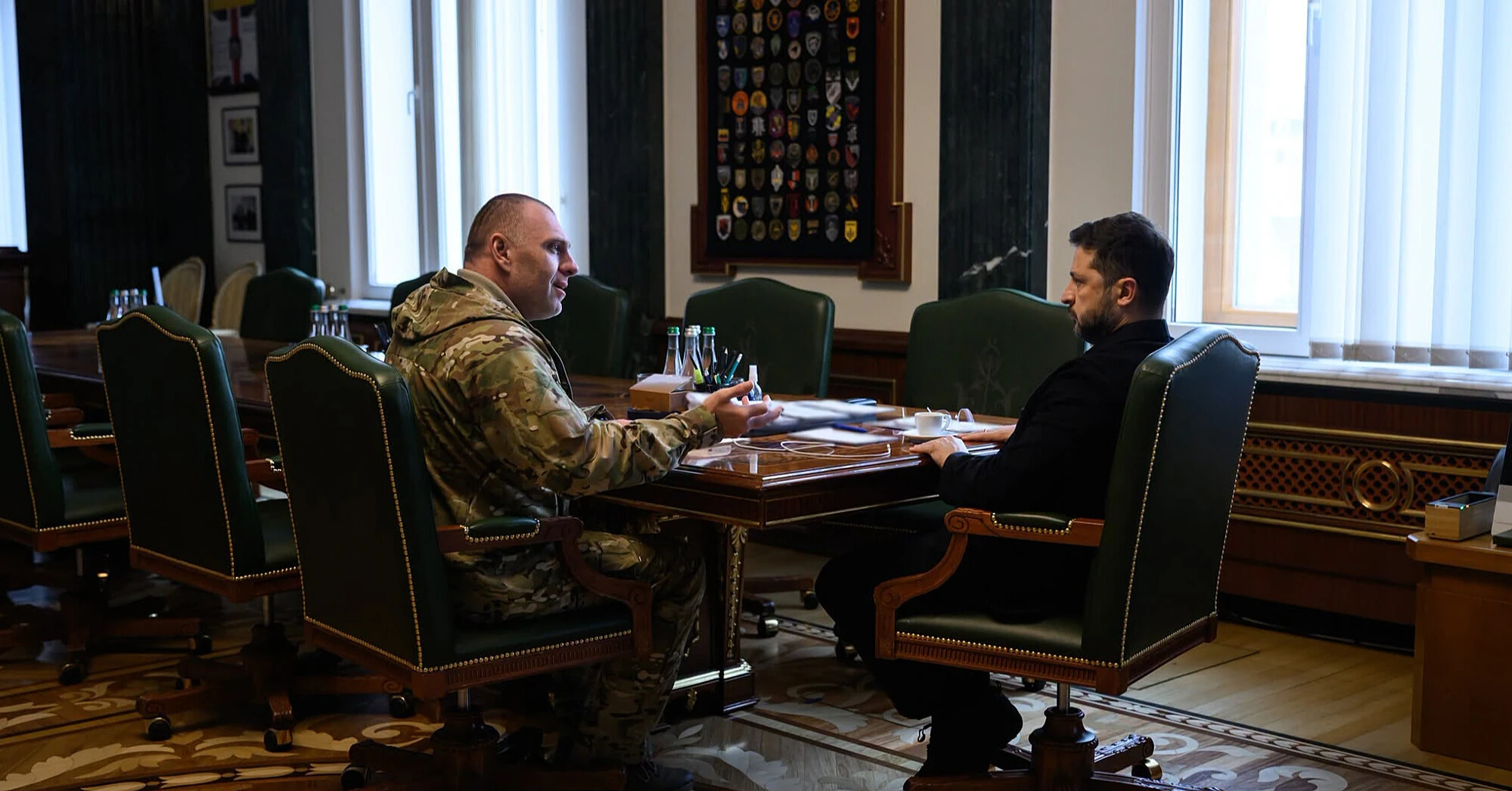
For this purpose, Zelensky began consultations with representatives of the security sector, local government, and business. Among the participants, he named Vasyl Malyuk, Ivan Fedorov, Ihor Terekhov, Kostyantyn Yefimenko, and Maksym Yefimov.
The President reported that he has already received substantive proposals from the consultation participants. The discussion of necessary measures is planned to continue in the near future.
In particular, the issues under consideration include the protection of energy facilities and critical infrastructure, strengthening interaction with the government and the military, as well as changes to the current governance algorithms for Kyiv.
According to the head of state, the decisions should allow faster response to threats, fulfillment of set tasks, and provide residents with necessary support under conditions of Russian attacks.
Zelensky did not specify which changes might affect the capital's governance system. No personnel decisions or specific appointments were reported in his statement.
Kyiv authorities have already received warnings
This is not the first public statement by the President about problems with the capital's preparation for winter. As early as October 9, Zelensky reported that the city government had almost completely failed to implement the necessary measures under the resilience plan.
Then, following a meeting with the military and government representatives, the President demanded acceleration of work in the regions. Separate tasks were defined for Kyiv, and the head of state called the responsibility of the Ministry of Infrastructure and regional administrations for the delays personal.
Preparation for the heating season is regulated, among other things, by the decision of the National Security and Defense Council of August 5, 2026, enacted by presidential decree No. 838/2026 of August 31.
The document provides for the implementation of comprehensive regional resilience plans and separately approves the corresponding plan for Kyiv. Responsibility for its implementation rests with city authorities together with relevant ministries, state institutions, and energy companies.
According to the NSDC decision, before the start of the heating season, the volume of backup power supply for life support facilities must be increased by 20% compared to the indicators provided by regional resilience plans. This primarily concerns ensuring the operation of heat supply and water supply systems.
Local governments must also provide physical fuel reserves for life support facilities for at least two weeks and take measures to increase the autonomy of apartment buildings.
In addition, it provides for the creation of stockpiles of equipment, components, and materials for prompt repair of energy facilities. Responsible bodies must inform the NSDC and the Cabinet of Ministers on the progress of comprehensive plans monthly, by the 10th.
The document separately specifies the personal responsibility of the Kyiv mayor for the capital's preparation and stable passage of the heating season.
Electricity and water outages continue in Kyiv
Problems with the resilience of communal infrastructure emerged in October amid Russian shelling of energy facilities. The city introduced emergency electricity restrictions, which were accompanied by disruptions in water supply systems.
In particular, on October 8, Kyivvodokanal reported a drop in pressure in the water supply network of the right-bank part of the capital due to problems with power supply to certain facilities. In some buildings, water supply was temporarily cut off.
On October 13, hourly power outages were also scheduled in Kyiv and Kyiv region to stabilize the power system after Russian attacks.
Meanwhile, the Kyiv City State Administration previously stated that about 700 generators have been installed at heat and water supply facilities in the capital. They provide backup power for boiler houses, heating points, local pump stations, and other small-capacity facilities.
However, as acting first deputy head of the KMДА Petro Panteleev explained, autonomous supply for large facilities requires separate power plants or cogeneration units. Some of these projects have already been implemented, others are due by the end of the year.
Klitschko rejects accusations of failure in winter preparation
Against the backdrop of claims against the capital authorities, on October 13 the Verkhovna Rada supported summoning Kyiv mayor Vitali Klitschko to report on the situation in the city. The proposal was supported by 151 MPs. The hearing is scheduled for October 14.
Klitschko himself called accusations of failure in preparing the capital for the heating season unfounded. According to him, the city administration provides reports on completed measures, but the consequences of intense Russian shelling cannot be fully blamed on local leadership.
The mayor stressed that the city authorities are not responsible for air defense, and damage to energy infrastructure occurs as a result of Russian attacks. He also linked the events to attempts to change the capital's governance system.
Thus, amid ongoing power outages and problems with communal infrastructure, disagreements between central and city authorities remain regarding responsibility for preparing Kyiv for winter. The President announced the preparation of new decisions, but their final content and implementation timeline have not yet been presented.
Based on materials from: Volodymyr Zelensky, Presidential decree No. 838/2026 and NSDC decision, Suspilne, Suspilne Kyiv, Kyivvodokanal.