

A New Wave of Mass Protests by Schoolchildren and Students Has Swept France
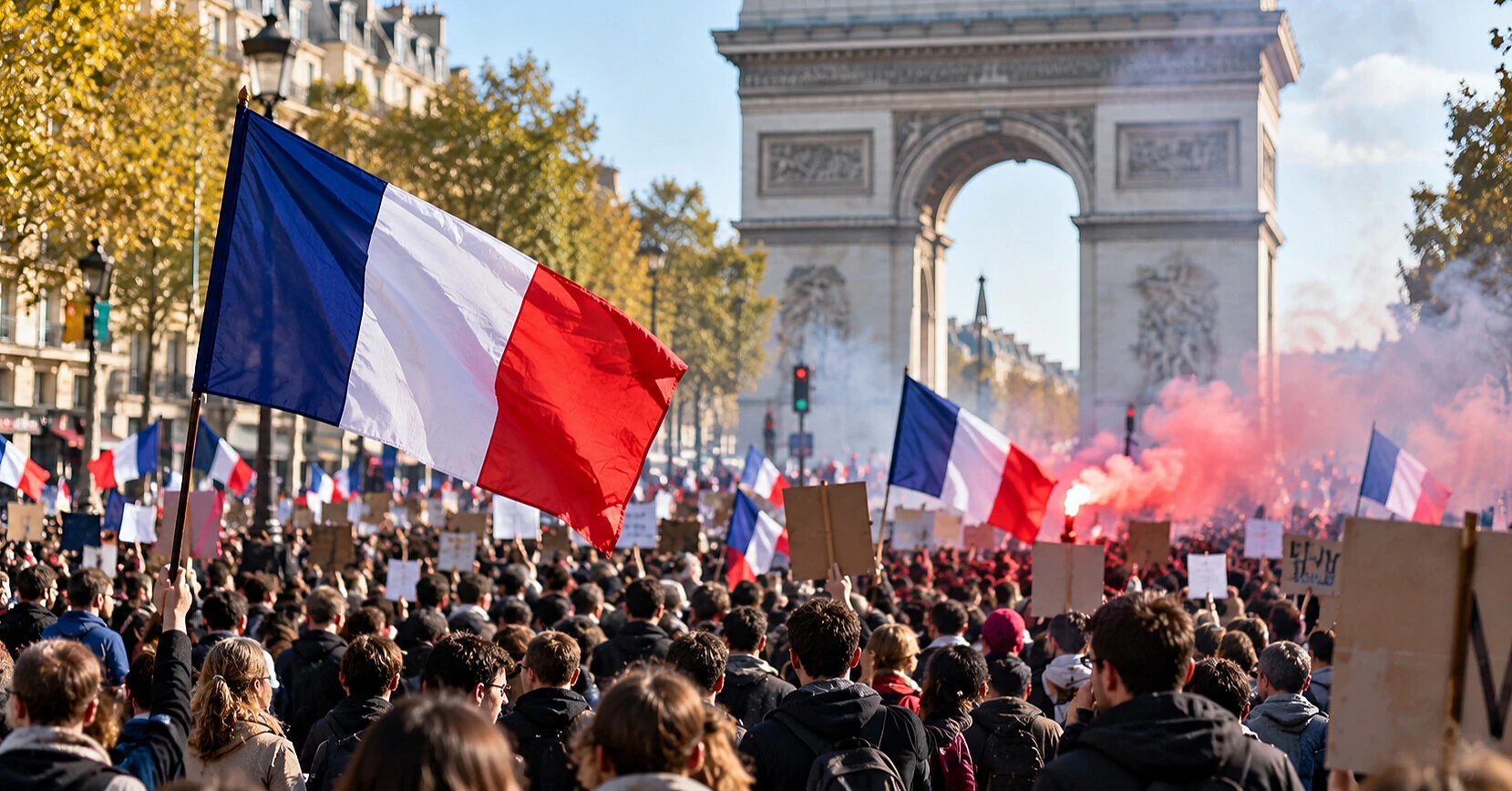
On Tuesday, October 13, France saw a new wave of mass protests by schoolchildren, students and trade unions dissatisfied with the state of the education system. The demonstrations have been going on for three weeks now, accompanied by blockades of educational institutions, clashes with police and demands to increase state funding for schools.
This was reported by the British newspaper The Guardian, citing data from French authorities and protest organizers.
According to the French Interior Ministry, 161,500 people took part in the protests across the country, including 41,500 in Paris. Organizers cite a significantly higher estimate — about 480,000 participants.
Demonstrations took place in Paris, Lyon, Marseille, Lille, Nantes and other cities. Most of the actions were peaceful, but clashes with law enforcement, who used tear gas, occurred in the capital and Nantes.
Protesters demand an end to the chronic shortage of teachers, a reduction in overcrowded classes and repairs to school buildings. They also oppose inequality in access to quality education and excessive academic workload.
On Tuesday, the well-known Swedish environmental activist Greta Thunberg joined the protesters. She attended an action near the Lycée Paul Éluard in the Paris suburb of Saint-Denis and supported the students' demands.
According to Thunberg, the authorities do not sufficiently take into account the opinions of young people when making decisions that directly affect their future.
"Our future is being taken away from us, and as we see here, schools are not receiving the necessary investment," — the activist said.
During the action near the lycée, lawyers in professional robes formed a human chain to protect students amid numerous accusations of excessive police force.
The protest movement is increasingly spreading to higher education institutions. According to the student organization Union Étudiante, on October 13 the work of approximately 90% of French universities was disrupted by blockades or other protest actions. There is no independent confirmation of this estimate yet.
French Education Minister Édouard Geffray said that on Tuesday 214 of the country's approximately 3,700 lycées were completely closed. In a much larger number of institutions, classes were disrupted or partially moved online.
The government announced the deployment of three thousand substitute teachers to schools experiencing the most severe staff shortages.
However, student representatives and trade unions consider the measures insufficient and insist on additional investment in the education system.
The protests are accompanied by serious disagreements over police actions. According to the government, since the start of the demonstrations more than 6,800 people have been arrested, mostly minors. Around 1,500 people have been prosecuted.
French authorities are also investigating reports of excessive force by law enforcement. Students, school staff and police officers have been injured during the protests.
Interior Minister Laurent Nuñez rejected accusations of systematic violence, saying police do not interfere in peaceful demonstrations.
French President Emmanuel Macron called on all sides for restraint and dialogue, emphasizing the need to discuss education problems.
The current wave of protests is taking place against the backdrop of a difficult budgetary situation in France. The government is forced to seek ways to reduce the state deficit, while schoolchildren, teachers and trade unions demand increased spending on education.
Earlier, on October 6, more than 260,000 people participated in demonstrations according to the Interior Ministry. Thus, official data for October 13 indicate a decrease in the number of participants compared to the previous Tuesday, although organizers claim the protest movement is gaining strength.
The authorities hope that the start of the two-week autumn school holidays will reduce the intensity of the actions. However, protesters' representatives have already announced their intention to continue demonstrations.
The next nationwide action is scheduled for Saturday, October 17. It is expected that citizens dissatisfied with rising fuel and electricity prices and the overall increase in the cost of living may join schoolchildren and students.
Sources: The Guardian, TF1 Info, Le Monde.