

Bank of America fined more than $1.2 billion for financial violations
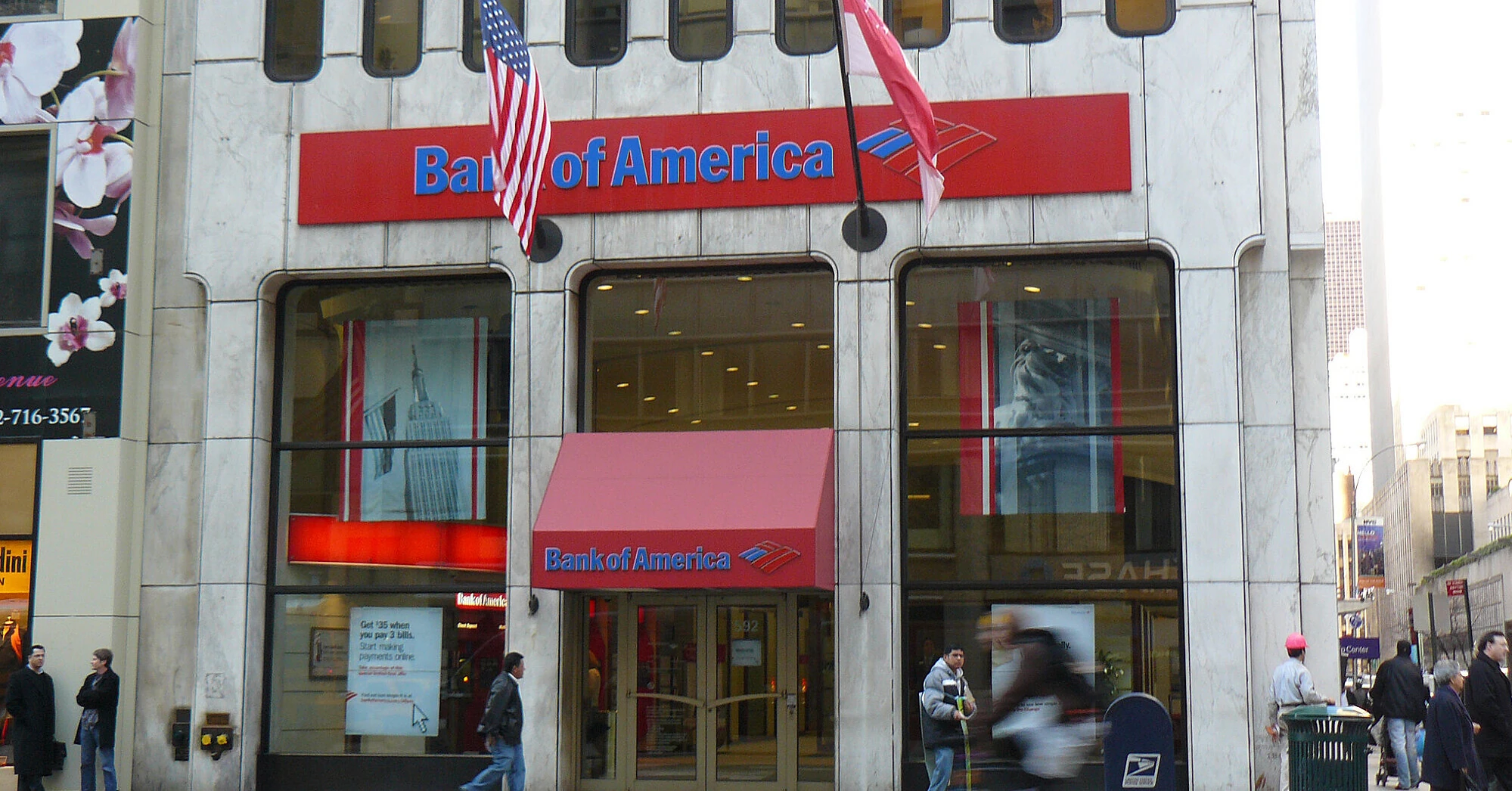
The U.S. Department of the Treasury announced fines totaling more than $1.21 billion for Bank of America — the country's second-largest bank. The reasons were systemic violations of anti-money laundering legislation and non-compliance with international sanctions.
This was reported in an official statement by the U.S. Department of the Treasury dated October 13.
This is the third largest financial penalty in the history of the U.S. Treasury. At the same time, one of the regulators, the Office of the Comptroller of the Currency (OCC), imposed the largest fine in its history.
The main sanction of $1.2 billion was imposed by the Financial Crimes Enforcement Network (FinCEN). The regulator established that Bank of America for a long time did not ensure proper control over suspicious financial transactions, in particular, those related to Chinese money laundering networks and illegal financial activities near the southwestern border of the United States.
According to FinCEN, the bank did not timely report suspicious transactions totaling more than $5 billion. Of these, more than $1 billion were operations with increased risks, including possible money laundering through trade operations, fraud, and the activities of Chinese financial networks.
The investigation found that the bank for years did not address the deficiencies of internal control, although its employees knew about the problems. The monitoring systems did not ensure proper verification of transactions, and certain suspicious operations remained without investigation for a long time.
As part of the settlement, Bank of America admitted willful violations of the U.S. Bank Secrecy Act, including failure to meet requirements for anti-money laundering and filing suspicious transaction reports.
Separately, the OCC fined the bank $750 million for ineffective financial control systems. This amount is credited within the FinCEN penalty of $1.2 billion, so it is not added to it again.
The regulator noted that back in December 2024, it ordered Bank of America to remedy the violations, but the financial institution has not implemented a significant portion of the required measures. In particular, the bank's management did not ensure proper training of employees responsible for detecting suspicious transactions.
Another $11.6 million the bank agreed to pay for possible violations of U.S. sanctions. The Office of Foreign Assets Control (OFAC) identified 475 cases of non-compliance with restrictions related to Russia, Belarus, Iran, Myanmar, Somalia, drug trafficking, and international terrorism.
According to the U.S. Treasury, the bank executed payments through sanctioned financial institutions, allowed transfers of funds by individuals on sanctions lists, and failed to timely update internal restriction databases. Among the reasons for the violations, technical deficiencies and employee errors were cited.
As part of the agreements with regulators, Bank of America undertook to hire independent experts to review its financial monitoring system. The bank must also re-analyze previously undetected suspicious operations and report them to FinCEN.
Bank representatives stated that they have already invested significant funds in modernizing financial control technologies, increasing the number of specialized staff, and improving transaction review procedures.
According to Bank of America's estimate, the financial consequences of the settlement will reduce its profit for the third quarter of 2026 by approximately 17 cents per share.
Based on materials from: U.S. Department of the Treasury, FinCEN, OCC