

The National Bank expanded banks' opportunities to finance the defense industry and energy
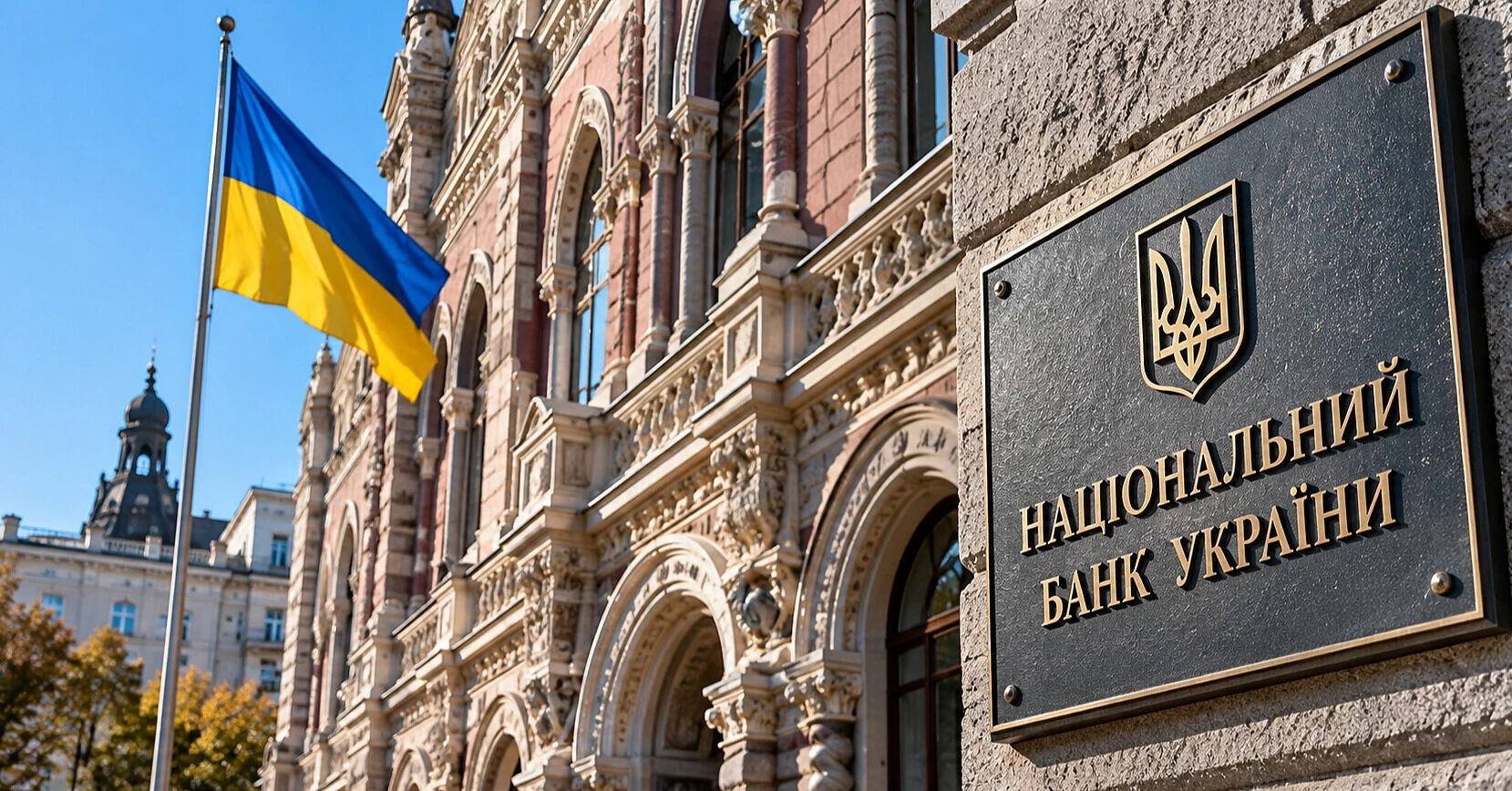
The National Bank of Ukraine adopted a third package of regulatory changes to expand business lending amid intensifying Russian attacks. The new rules are primarily aimed at enterprises of the defense-industrial complex (DIC), energy, and companies whose property suffered as a result of hostilities. Banks were allowed to consider a higher value of certain types of collateral and more flexibly assess the financial condition of affected borrowers.
This was reported by the press service of the National Bank of Ukraine on October 14.
The changes are provided by NBU Resolution No. 118 dated October 11, 2026 and included in the rules for banks during martial law.
The regulator explains the new measures by the need to support enterprises that ensure the country's defense capability, the functioning of the energy system, and the restoration of damaged infrastructure.
Enterprises of the defense industry and energy will be able to attract more loans under state contracts
One of the main changes was an increase in the liquidity coefficient for collateral in the form of property rights to future revenue from fulfilled contracts.
The NBU increased this coefficient from 0.3 to 0.75 - by 2.5 times.
This concerns contracts for the supply of goods, performance of works, or provision of services, where counterparties and payers are entities of the security and defense sector, a guaranteed buyer of electricity, or a transmission system operator.
In practice, this means that banks will be able to consider a larger part of the value of such property rights when assessing loan collateral.
For example, if previously a coefficient of 0.3 was applied for the respective type of collateral, now it will be 0.75. This increases the acceptable calculated collateral value for the bank, though it does not imply an automatic increase in the loan by 2.5 times.
The NBU emphasizes that state contracts play a key role in the operations of defense industry and energy enterprises. At the same time, such companies often do not have sufficient real estate or other property traditionally used as bank collateral.
The new rules should facilitate attracting financing for the fulfillment of defense orders, production of critical products, and implementation of energy projects.
They will also contribute to the implementation of the memorandum on expanding access of defense enterprises to lending, which the largest Ukrainian banks signed in May 2026.
Banks will be able to more actively lend against inventory collateral
Another change concerns companies that use goods in circulation or processing as collateral for loans.
For loans with a term of up to 18 months, banks received the right to consider the value of such collateral in accordance with the actual inventory balances as of the date of credit risk assessment.
This will allow enterprises to use existing inventory to obtain financing without the need to provide additional traditional collateral.
For businesses that constantly purchase, process, and sell products, the new approach may simplify the attraction of working capital.
The NBU expects that the changes will also allow enterprises to manage inventory more flexibly without losing access to bank financing.
Financial condition assessment simplified for companies affected by shelling
A separate set of changes is aimed at enterprises that lost part of their production capacities or other property as a result of Russian attacks.
Banks received the opportunity to assess the ability of such borrowers to service debts based on projected operating results.
This approach will be applied to legal entities whose property has suffered significant damage, destruction, or mining.
Previously, the relevant possibility was provided for enterprises in territories close to the front line. Now the NBU has expanded the scope of its application due to the growing scale of destruction in other regions of Ukraine.
The new rules allow banks to consider not only the company's current financial results, which may significantly deteriorate after shelling, but also prospects for restoring production and future incomes.
Combined with the possibility of loan restructuring, this should help affected enterprises maintain access to financing during reconstruction.
Meanwhile, the decision to grant or restructure a loan is still made by the bank based on an assessment of the risks of a specific borrower.
The NBU changed rules for loans under government programs
The regulator also introduced additional relaxations for banks participating in government credit support programs.
In particular, they were allowed not to terminate group or simplified credit risk assessment and not to initiate procedures for managing non-performing assets merely due to delays in revenues subject to partial compensation by the National Development Institution.
This concerns situations when the bank does not receive timely due compensation of interest income within the government program.
According to the NBU's explanation, long delays in such payments create additional operational burden on banks. The new rules are intended to reduce this impact and ensure more stable operation of lending programs.
Third package of business support since early August
The current decision is a continuation of the National Bank's measures to support economic lending amid intensifying Russian attacks.
The first package of regulatory changes, adopted in early August, was aimed, in particular, at restructuring debts of affected borrowers and expanding access to financing for enterprises of the agro-industrial complex.
The second package, approved in September, simplified lending to producers and trading companies that do not have sufficient traditional collateral, as well as enterprises implementing infrastructure projects under local government guarantees.
The third package focuses on financing the defense industry, energy, and the recovery of war-damaged businesses.
The NBU expects that the relaxation of regulatory requirements will give banks more opportunities to lend to such enterprises even under conditions of increased military risks.
Based on materials from: National Bank of Ukraine, NBU Resolution No. 118