

Hungary ready to let Ukrainian corn transit to Western Europe — what Prime Minister Peter Magyar promised Zelensky
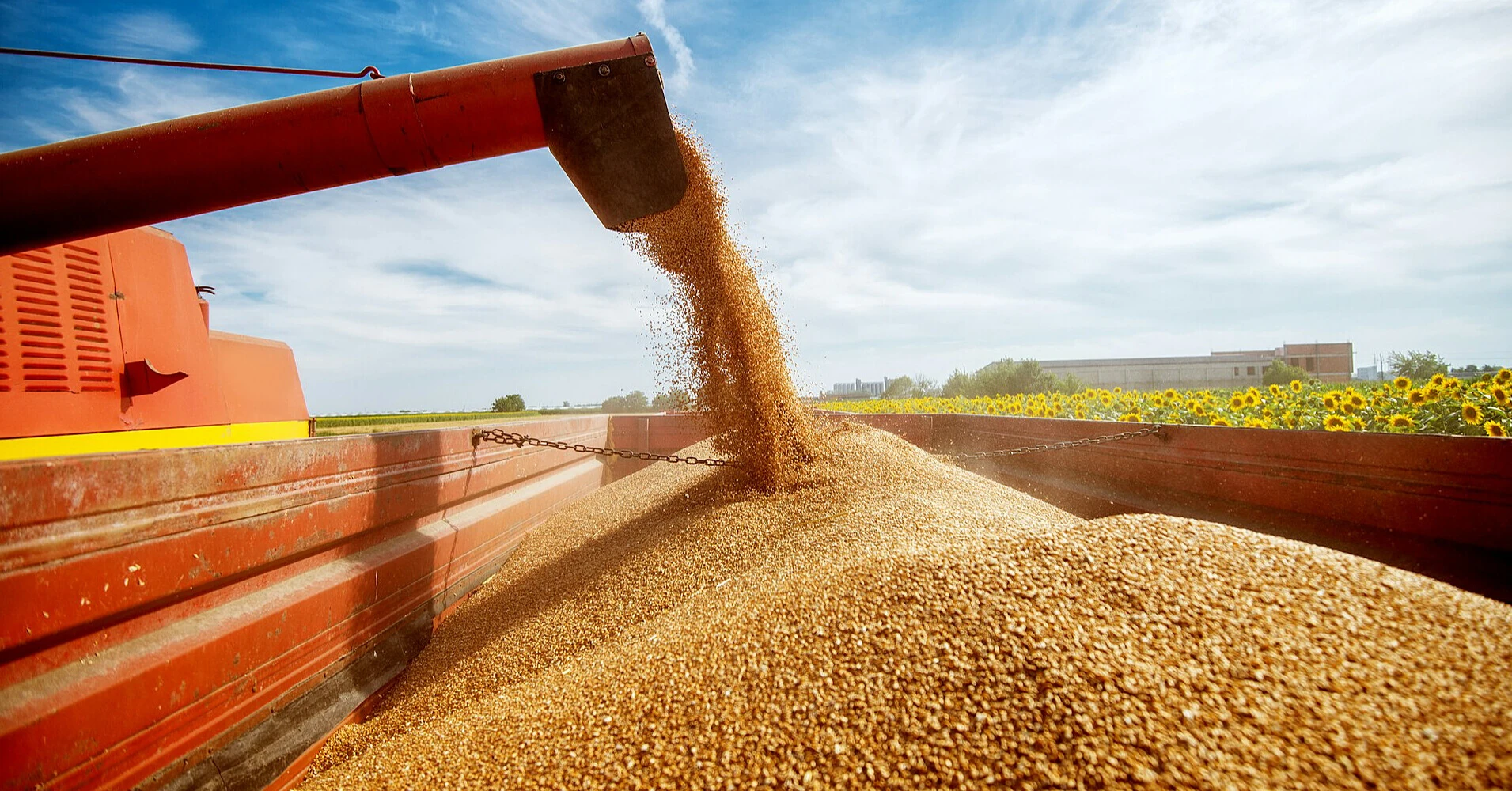
Hungary is ready to allow Ukrainian corn to transit by rail to Western Europe. This was announced on October 17 by Prime Minister Peter Magyar after talks with Ukrainian President Volodymyr Zelensky. The main condition is that cargo must pass through the country in sealed wagons without entering the Hungarian market. The statement came amid a sharp reduction in Black Sea shipments: according to European Commission data, by August about 90% of Ukrainian exports of grains, oilseeds and related products were carried by alternative "Solidarity Lanes".
According to Reuters, Zelensky asked four neighboring states—Poland, Romania, Slovakia and Hungary—to facilitate the transport of Ukrainian grain through their territories. The reason was Russian attacks that severely complicated operation of Black Sea export routes.
So far the matter involves Hungary's political readiness to ensure transit. The parties did not announce agreed additional supply volumes, launch of new trains, or specific start dates for shipments.
What Magyar promised Zelensky
The President of Ukraine and the Prime Minister of Hungary met on October 16 on the sidelines of the European Union summit in Brussels. It was their first official bilateral meeting after the change of the Hungarian government.
The next day Magyar told Hungarian television channel RTL that Zelensky asked neighboring countries to again facilitate transit of Ukrainian agricultural products, as happened in the first years of the full-scale war.
Separately, the Ukrainian president raised the issue of transporting corn through Hungary to Western Europe.
It was proposed to use sealed railway trains that would cross the country without unloading and selling grain on the local market.
Magyar said he saw no obstacles to such a solution provided Hungary would be exclusively a transit territory.
According to the Prime Minister, a similar mechanism existed three or four years ago. However, later the relevant transport practice ceased.
Current negotiations may contribute to restoring or expanding transit, but the mere announcement does not yet mean the appearance of additional regular freight routes.
Why Hungary is ready to let grain pass, but retains import restrictions
It is important to distinguish two concepts: import of Ukrainian corn for sale in Hungary and its transport through the country to buyers in other states.
Hungary maintains restrictions on imports of a number of Ukrainian agricultural goods to its domestic market. These measures are linked to concerns about competition for local farmers.
However, current Hungarian regulation No. 91/2026 of May 22 provides a separate regime for transit cargo.
According to the document, Ukrainian agricultural products subject to import restrictions may cross Hungary if they leave its territory no later than the 15th day after entry.
Upon entry, the vehicle must be sealed by authorized bodies. The carrier is responsible for preservation of the seal and timely removal of cargo.
Corn is included in the list of products covered by this procedure.
Consequently, Magyar did not announce a full lifting of the ban on Ukrainian agricultural products and did not present a fundamentally new legislative permission.
His statement indicates the Hungarian government's readiness to facilitate transport within the already provided transit regime.
For Ukrainian exporters this is a substantial distinction: grain may go to European buyers without entering free sale on the Hungarian market.
How Ukraine changed grain export routes: 90% by sea in spring and only 10% in August
The scale of changes in Ukrainian export logistics is clearly visible in European Commission statistics.
As recently as April 2026, about 90% of Ukrainian exports of grains, oilseeds and related products went through the Black Sea. Alternative land and river routes accounted for approximately 10%.
But by August the ratio had reversed.
According to European Commission data published on October 12, about 90% of Ukrainian exports of this category of agricultural products were carried via the so-called “Solidarity Lanes” in August. Only about 10% passed through Black Sea ports.
Thus, within several months the export structure changed significantly.
Importantly, this refers to monthly exports of grains, oilseeds and related products, not all Ukrainian goods and not exclusively corn.
Such data show how much the role of alternative routes has increased amid ongoing Russian strikes on maritime infrastructure.
However, from the change in shares alone it is impossible to determine how much the physical volume of transport through a particular country grew. Separate tonnage data is needed for this.
Why Ukraine again depends on European railways
After the start of the full-scale Russian invasion in February 2022, traditional export routes through the Black Sea were severely limited.
The European Union, together with Ukraine and Moldova, organized the “Solidarity Lanes”—a system of alternative transport routes using railways, road transport and inland waterways.
They allowed Ukraine to continue supplies of agricultural products, metals and other goods, as well as to receive necessary imports.
In August 2023, Ukraine opened a new maritime corridor for commercial vessels, despite Russia's withdrawal from the international grain initiative. Gradually a significant part of exports returned to Black Sea ports.
However, intensification of Russian strikes on port infrastructure, energy facilities and vessels again complicated sea shipments.
Under such conditions additional capacity of land routes gains particular importance.
In this regard, rail export is more complex than simply rerouting cargo from one path to another.
It is necessary to consider availability of wagons, operation of border crossings, terminal capacity, cost of transport and features of railway infrastructure in different countries.
Therefore, even with political consent, increasing exports requires coordination among carriers, customs authorities and logistics companies.
Europe also needs corn: its own harvest turned out weak
The discussion of Ukrainian transit is taking place against the backdrop of an unfavorable corn harvest in the European Union.
According to the August forecast of the European Commission, production of this crop in the EU in 2026 could amount to about 50.1 million tonnes.
It is one of the lowest figures in almost two decades and approximately 20% below the average volume over the previous three years.
Particularly serious damage to crops was caused by heat and drought in France and Hungary.
For the European market this situation increases the importance of imported supplies, including from Ukraine, which remains one of the world's large corn producers.
However, the August harvest forecast does not mean European buyers have already concluded new contracts specifically because of Magyar's statement.
So far neither expected volumes of additional transportation through Hungary, nor possible impact of these supplies on prices are known.
What Magyar's statement means for Ukraine-Hungary relations
The issue of grain transit became one of the practical areas of cooperation discussed after the Zelensky-Magyar meeting in Brussels.
The new Hungarian prime minister took a less confrontational stance toward Kyiv than his predecessor Viktor Orbán.
After the talks the parties declared interest in improving political and economic relations.
At the same time, disagreements between the states persist on certain issues. Magyar earlier stressed that Hungary does not intend to send weapons to Ukraine, and continued to raise the topic of rights of the Hungarian minority in Zakarpattia.
Against this backdrop, discussion of grain transit represents a concrete issue on which the parties' positions may coincide despite other disagreements.
For Budapest it is essential that Ukrainian products do not enter the domestic agricultural market. For Kyiv—to gain the ability to deliver goods to European buyers through Hungarian territory.
When additional shipments may begin
As of October 17 Ukraine and Hungary have not reported signing of a new transport agreement or approval of a schedule for additional railway shipments.
It is also unknown what volumes of corn are expected to be transported through Hungary and which companies will participate in organizing supplies.
Current Hungarian legislation already allows transit of Ukrainian agricultural products subject to specified conditions. However, expanding actual shipments requires resolving organizational and logistical issues.
For Ukraine this is particularly important given changes in export structure. If in spring the main part of grains and oilseeds was shipped via the Black Sea, by August alternative routes already played the leading role, according to European Commission data.
Additional transit possibilities through Hungary could expand delivery route options and reduce exporters' dependence on particular transport corridors.
But the real economic effect will become clear only after data on actual shipments and their cost appears.
So far the talks have resulted in public confirmation of Budapest's readiness to facilitate transit of Ukrainian corn. Amid continuing Russian strikes on export infrastructure, even such an agreement can become an important step toward expanding alternative trade routes.
Based on materials: Reuters — statement by Peter Magyar on October 17, 2026, RTL — interview with the Hungarian Prime Minister, Telex, National Legislation Database of Hungary — regulation No. 91/2026, European Commission — export statistics for April 2026, European Commission — export statistics for August 2026.