

Trump signed sanctions law against Russia — and himself suspended its key measures without a deadline: what remains on paper
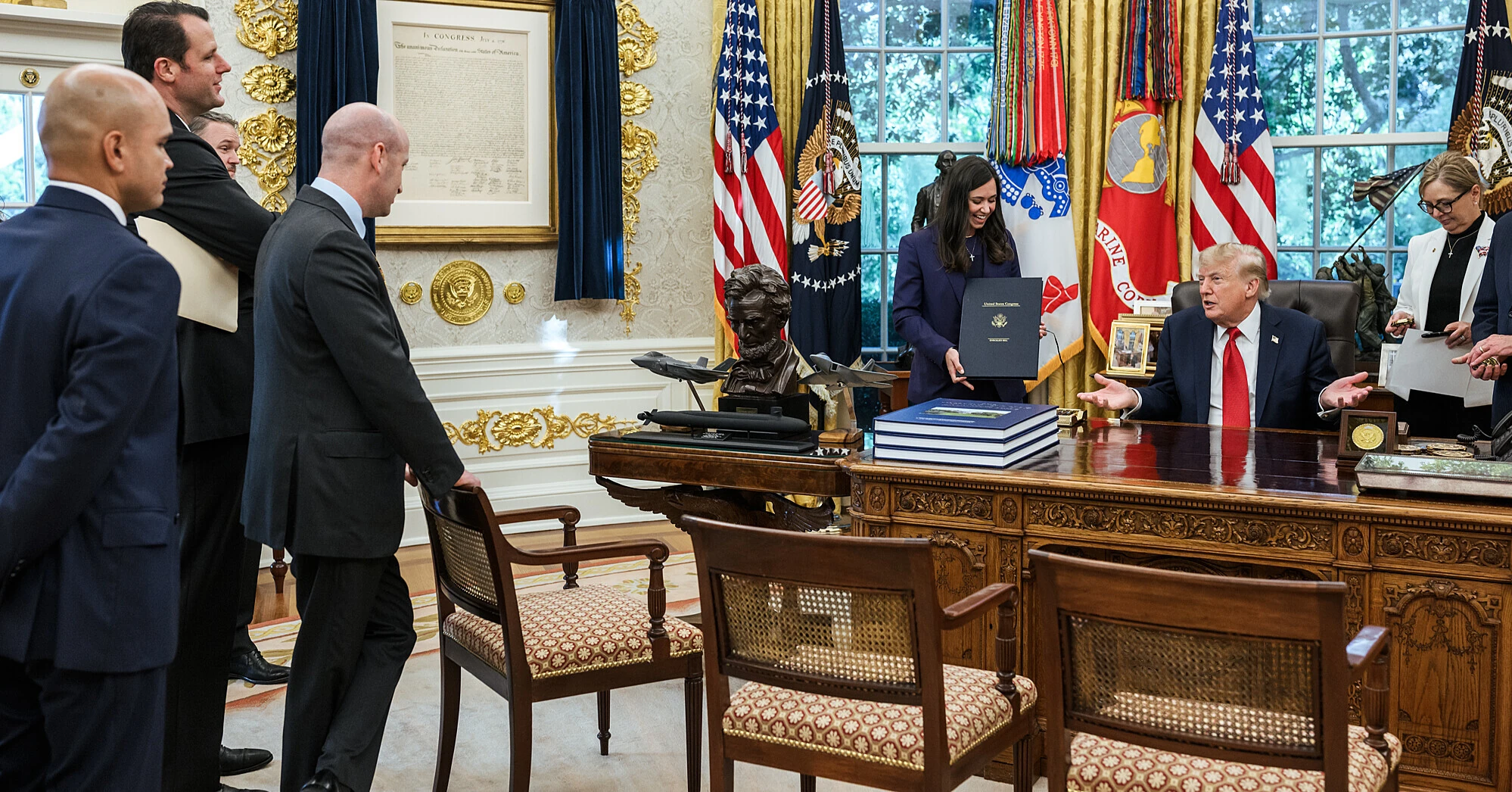
On September 18, Donald Trump signed a law on new sanctions against Russia, providing for tariffs of up to 500% and additional restrictions for buyers of Russian energy resources. But by the first scheduled application date, October 18, the key measures had not begun to take effect. The reason turned out to be a new executive order by the president: he used the exception provided by the law and suspended the restrictions without a fixed date for their resumption.
An unusual detail is found directly in the White House executive order of October 16. In one section of the document, Trump establishes new tariffs, and in another, he exempts them from application. This legal mechanism effectively left a significant part of the sanctions package on paper.
500% and 100% tariffs: which restrictions are suspended
The law named after the late Senator Lindsey Graham was conceived as an instrument to increase economic pressure on Russia and countries that continue to buy its oil and gas.
The second section of the presidential order provides for an increase in tariffs on goods of Russian origin imported into the United States by 500% of their customs value.
A separate measure concerns the five largest importers of Russian oil and natural gas. Goods from these countries are subject to an additional tariff of 100% if the state deliberately makes new purchases of Russian energy resources starting from October 18.
Another 100% tariff is intended for goods from five countries most actively facilitating the circumvention of oil sanctions against Russia.
Thus, the restrictions could affect not only Russian exports, but also U.S. trade with major economic partners, including India and China.
However, the fourth section of the same order suspends the application of the listed tariffs. A similar exemption applies to a number of new sanctions provisions of the law concerning Russian individuals and legal entities, financial transactions, and other areas of economic pressure.
Such a decision was warned about in advance
Most notably, the president did not need to repeal the law passed by Congress or seek a new vote.
Section 115 of the Graham Act initially allowed the head of state to refuse to apply the provided restrictions if he deems it in the national interest of the U.S. To do so, he must send Congress written confirmation and justification of the decision.
Trump used this right on October 16. The order states that the relevant documents have been sent to lawmakers, but detailed reasons for the sanctions exemption are not disclosed in the public text.
Interestingly, such a development was foreseen even before the law was signed. As Kurs.com.ua wrote in September, congressman Gregory Meeks warned: the law provides the president with not only broad sanctions powers, but also the ability to independently make exceptions.
Now the built-in exception mechanism became the basis for suspending a significant part of the new sanctions package.
Rubio speaks of 60 days, but the order has no such deadline
U.S. Secretary of State Marco Rubio said on October 17 that the administration intends to use up to 60 days to assess the impact of sanctions and tariffs on the American and global economy.
According to him, additional restrictions should be considered in light of already-existing trade barriers, high energy prices, and the situation on international markets.
Rubio separately mentioned India — an important U.S. partner that continues to purchase significant volumes of Russian oil despite diversifying supplies.
However, there is a fundamental difference between a political statement and a legal document.
The presidential order does not establish a mandatory 60-day end date for the sanctions exemption. According to its fourth section, the exceptions remain in effect until the president or the secretary of state, after required consultations, decides that further action is necessary.
Thus, after 60 days, sanctions will not automatically resume. Changing the current regime will require a new decision by the U.S. administration.
What this means for Russia and Ukraine
Suspension is not equivalent to lifting all U.S. sanctions against Russia. The White House document separately emphasizes that restrictions previously imposed under other presidential orders remain in effect.
Nevertheless, the additional measures that supporters of the Graham Act had expected are not yet being applied. This applies to both new restrictions against Russian entities and potential trade consequences for the largest buyers of Russian energy resources.
The decision drew criticism from members of both parties in the U.S. Congress. Republicans Rick Scott and Thom Tillis, as well as Democrats Elizabeth Warren and Richard Blumenthal, opposed easing the law’s intended pressure on Moscow.
Ukrainian President Volodymyr Zelensky also criticized the sanctions suspension, warning that abandoning additional economic pressure could encourage Russia to continue the war.
No immediate Congressional review of the decision is expected: both chambers are in recess until the midterm elections conclude on November 3.
As a result, the law passed with broad bipartisan support formally remains in force, but the application of its key instruments is postponed indefinitely. The main question now is not what sanctions Congress provided for, but whether the White House will ever decide to use them.
Sources: The White House, Reuters, Associated Press, Ukrainska Pravda