
Zelenskyy called freezing the war along the front line a real path to peace
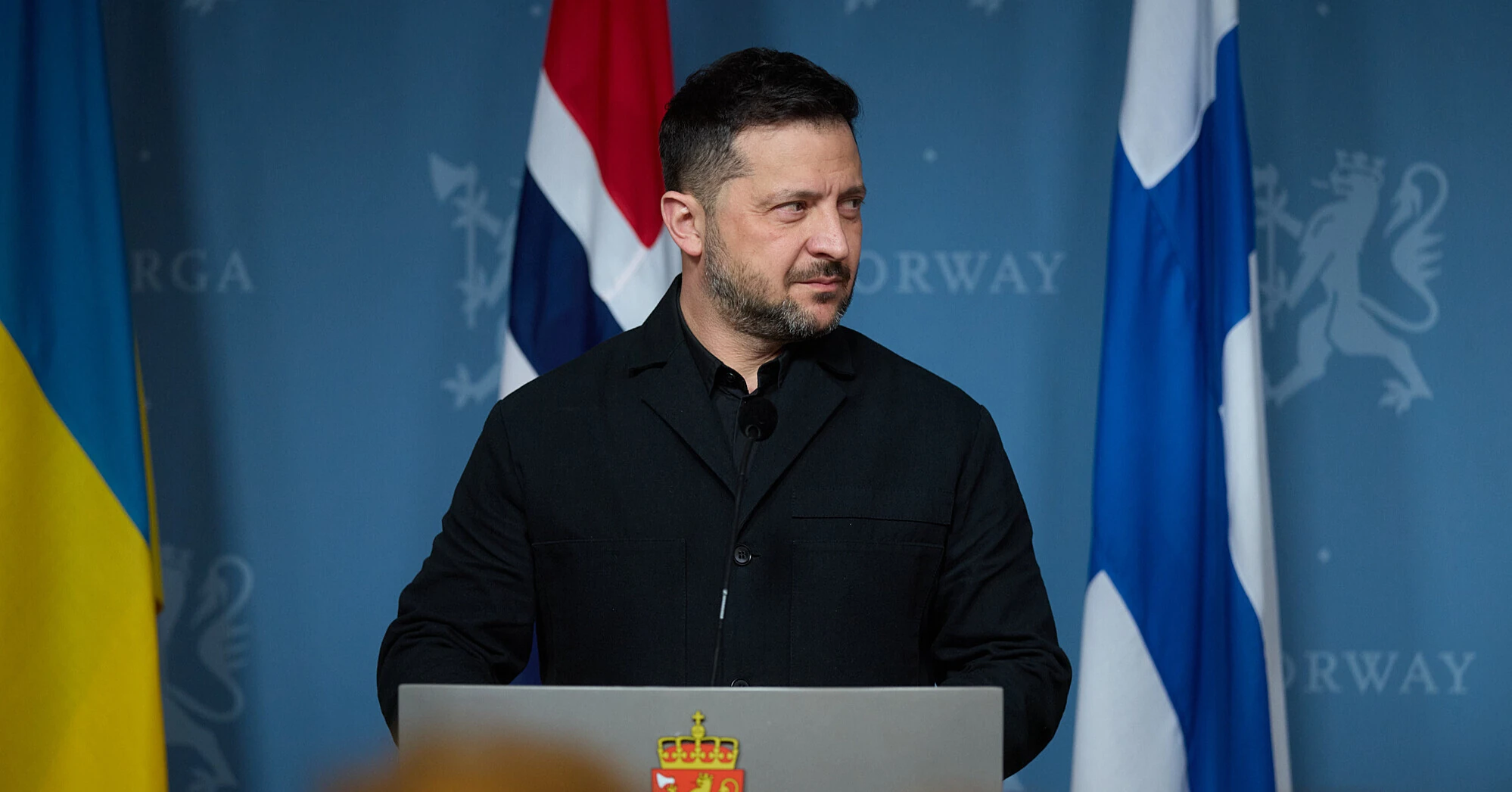
President of Ukraine Volodymyr Zelenskyy confirmed readiness to agree to a cessation of hostilities with the current front line fixed. He called this scenario a realistic way to stop the war against Russia, emphasizing the need for further security guarantees from the United States and European allies.
The head of state said this on October 21 in an interview with Fox News host Brian Kilmeade for the Fox & Friends program.
The journalist asked Zelenskyy whether he would agree to a peace deal under which hostilities would stop and the current front line would remain unchanged. In that case, Ukraine would retain control over most of its territory, while the occupied areas would effectively remain under Russian control.
The president answered affirmatively, calling a ceasefire along current positions a realistic path to ending the war.
"Yes, now we need to freeze the situation. I think this is a real way to end this war", - said Zelenskyy.
According to him, Ukraine supports the approach that US President Donald Trump describes as the need to immediately stop the loss of life.
Zelenskyy stressed that a stop to hostilities is the minimum step that Kyiv expects from Russia today.
The next stage after a ceasefire should be agreements on security guarantees for Ukraine. According to the president, Kyiv will seek such guarantees from Donald Trump and European partners.
Zelenskyy emphasized that Ukraine needs not only a cessation of hostilities but also security that will ensure a sustainable peace.
At the same time, the president did not specify which concrete security guarantee mechanisms the future agreement should include. He also did not speak about legal recognition of Russian sovereignty over occupied Ukrainian territories.
How Zelenskyy's position has changed
During previous stages of the war, the Ukrainian president opposed freezing the conflict along the actual line of contact.
In particular, in February 2024, in a Fox News interview, Zelenskyy rejected the prospect of a new frozen conflict. He explained his position by the experience of the Minsk agreements, which failed to prevent a full-scale Russian invasion.
In July of the same year, Zelenskyy also did not support the proposal of Hungarian Prime Minister Viktor Orbán for an immediate truce. The Ukrainian side feared that Russia would use the pause to accumulate forces and prepare a new offensive.
However, after Donald Trump's return to the White House, Kyiv's position on a ceasefire along the current front line became more flexible.
In October 2025, Zelenskyy already supported Trump's proposal to stop hostilities on existing positions, calling it a good compromise. At the same time, he expressed doubt about the readiness of the Russian leadership to agree to such a scenario.
In 2026, Zelenskyy also stated Ukraine's readiness for a ceasefire along the current front line with subsequent negotiations, but rejected Russia's demands to transfer territories that remain under Ukrainian control.
Thus, Zelenskyy's current statement does not mean Ukraine's first agreement to such a scenario. It confirms an approach that Kyiv has already voiced earlier, but which differs significantly from the position of Ukrainian leadership in 2024.
Russia has previously rejected ending the war along the front line
Despite Ukraine's readiness to consider a cessation of hostilities on current positions, Russia has previously repeatedly rejected this option.
In particular, in August 2026, Russian presidential aide Yuri Ushakov said that Moscow's position excludes a simple freezing of hostilities. The Russian authorities continued to insist on a broader settlement on their own terms.
Zelenskyy's new statement came amid intensified American diplomatic efforts. The day before, on October 20, representatives of Ukraine, the United States and European countries discussed in Oslo possible conditions for ending the war and security guarantees.
On October 21, US Special Presidential Envoy Steve Witkoff departed for Russia to discuss the developed proposals with Russian leadership.
Meanwhile, no agreement between Ukraine and Russia on a ceasefire has yet been announced.
Sources: Fox News, Fox News, "Ukrainska Pravda"
