
The European Union is ready to cover two-thirds of Ukraine's additional needs for 2027. This amounts to approximately €46.7 billion of the €70 billion that Kyiv has requested on top of already agreed international assistance.
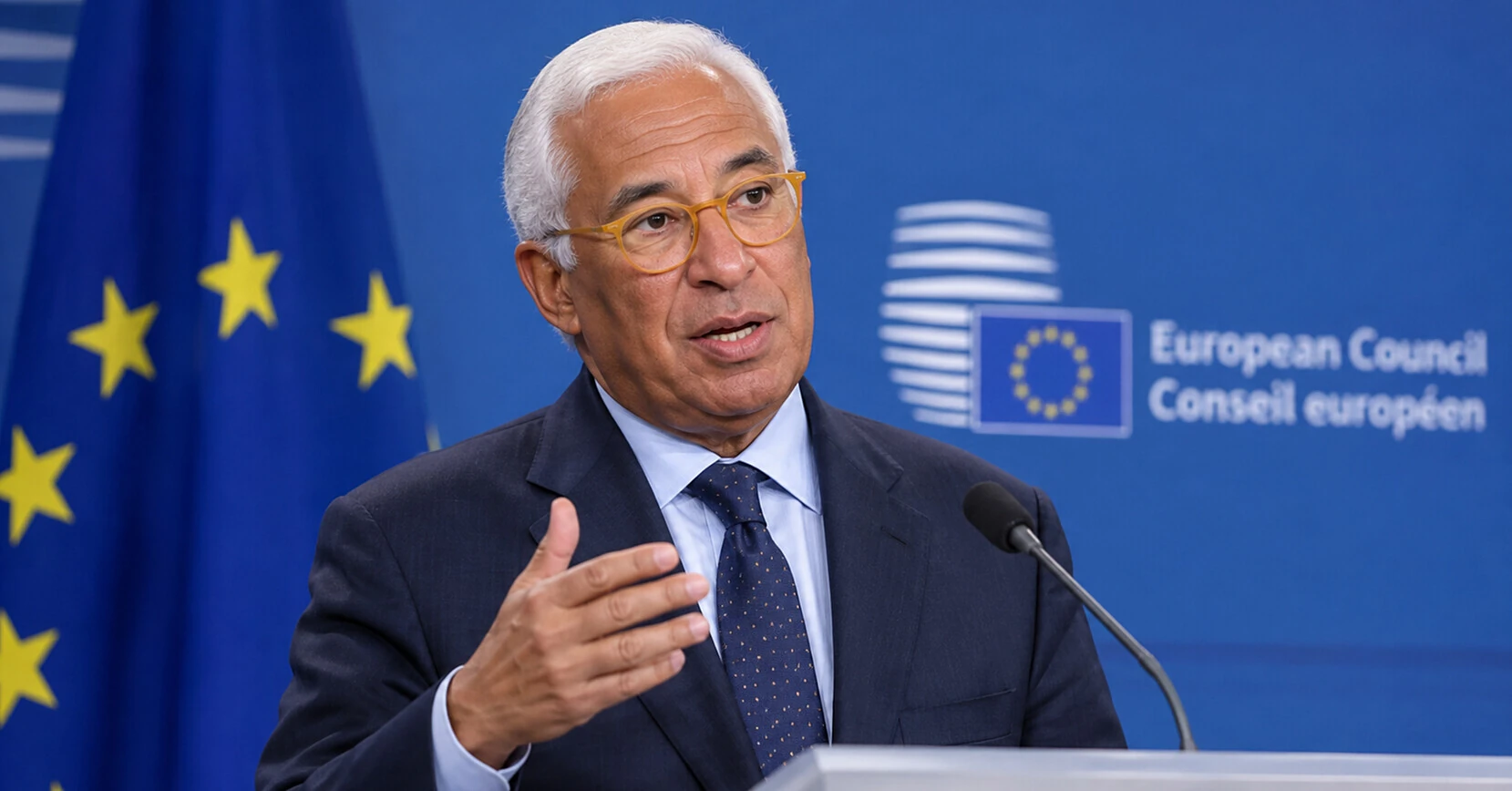
President of the European Council António Costa said this in an interview with Rapporteur, published on 23 October.
According to Costa, the EU traditionally covers about two-thirds of Ukraine's financial needs. This principle is planned to be maintained when forming a new support package.
“We usually cover two-thirds of Ukraine's financial needs,” — said the head of the European Council.
Costa specified that a final decision on additional financing could be made as early as November.
He recalled that at the last European Council meeting, EU leaders agreed to secure Ukraine's additional financial needs and instructed the European Commission to develop concrete proposals.
“The Commission is working, and I assume that in November we will be able to make a decision,” — noted Costa.
The primary deadline for reaching an agreement is seen as the extraordinary EU summit on 26–27 November. If the financing mechanism cannot be agreed upon, negotiations will continue at the next European Council meeting on 17–18 December.
Meanwhile, the new aid package has not yet been officially approved. Its final volume, terms, and sources of funding remain subject to discussion.
Ukraine needs additional financing
President of Ukraine Volodymyr Zelenskyy stated at the EU summit in Brussels on 16 October that the country will require at least €70 billion in additional assistance in 2027 to continue defending against Russian aggression.
Ukraine's president estimated the total cost of continuing the war next year at €155 billion. Additional funds are needed to finance defense, arms procurement, and state resilience.
As Kurs.com.ua previously reported, Zelenskyy called on European partners to take into account the needs of Ukraine's defense industry when planning long-term support.
The new €70 billion are needed on top of funds already provided for by current assistance programs.
In particular, the EU previously agreed to provide Ukraine with a loan of €90 billion over 2026–2027. Of this amount, €45 billion is planned for 2027.
Thus, the potential additional €46.7 billion announced by Costa does not replace the current loan and must provide a new part of financing.
The remaining third of the additional need is expected to be covered by other international partners.
Where the EU intends to get the money
According to Rapporteur, European leaders are considering providing Ukraine with a new loan through joint borrowing by EU countries on financial markets.
Such a scheme is already used within the agreed €90 billion financing program for Ukraine.
However, there is still no unified decision on the sources of new funds.
Prime Minister of Belgium Bart De Wever continues to oppose using frozen Russian assets to finance a new package. At the same time, Chancellor of Germany Friedrich Merz did not rule out the possibility of additional joint borrowings.
As the outlet notes, Hungary, Slovakia, the Czech Republic, and Bulgaria have stated they do not intend to participate in a possible new loan. However, they do not plan to prevent other EU countries from implementing the financial initiative.
The European Commission must prepare options that will allow financing to be agreed upon while taking into account the positions of member states.
EU counts on other partners' help
In addition to its own financial commitments, Brussels intends to seek increased support for Ukraine from countries outside the European Union.
The main partners the EU is addressing are the United Kingdom, Canada, and Norway.
Earlier Kurs.com.ua reported that European officials are preparing talks with London and Ottawa regarding additional financial commitments for 2027.
President of the European Commission Ursula von der Leyen previously stressed that the EU cannot cover all of Ukraine's needs on its own and counts on more active participation by international allies.
According to European Commission estimates, the financing gap for 2027 of around €70 billion remains even taking into account current EU commitments and a portion of already promised international assistance.
The next stage will be preparing a concrete proposal by the European Commission. European leaders plan to consider it at the November summit, where they are to determine the mechanism for allocating additional funds to Ukraine.
Based on materials from: Rapporteur, European Council
