
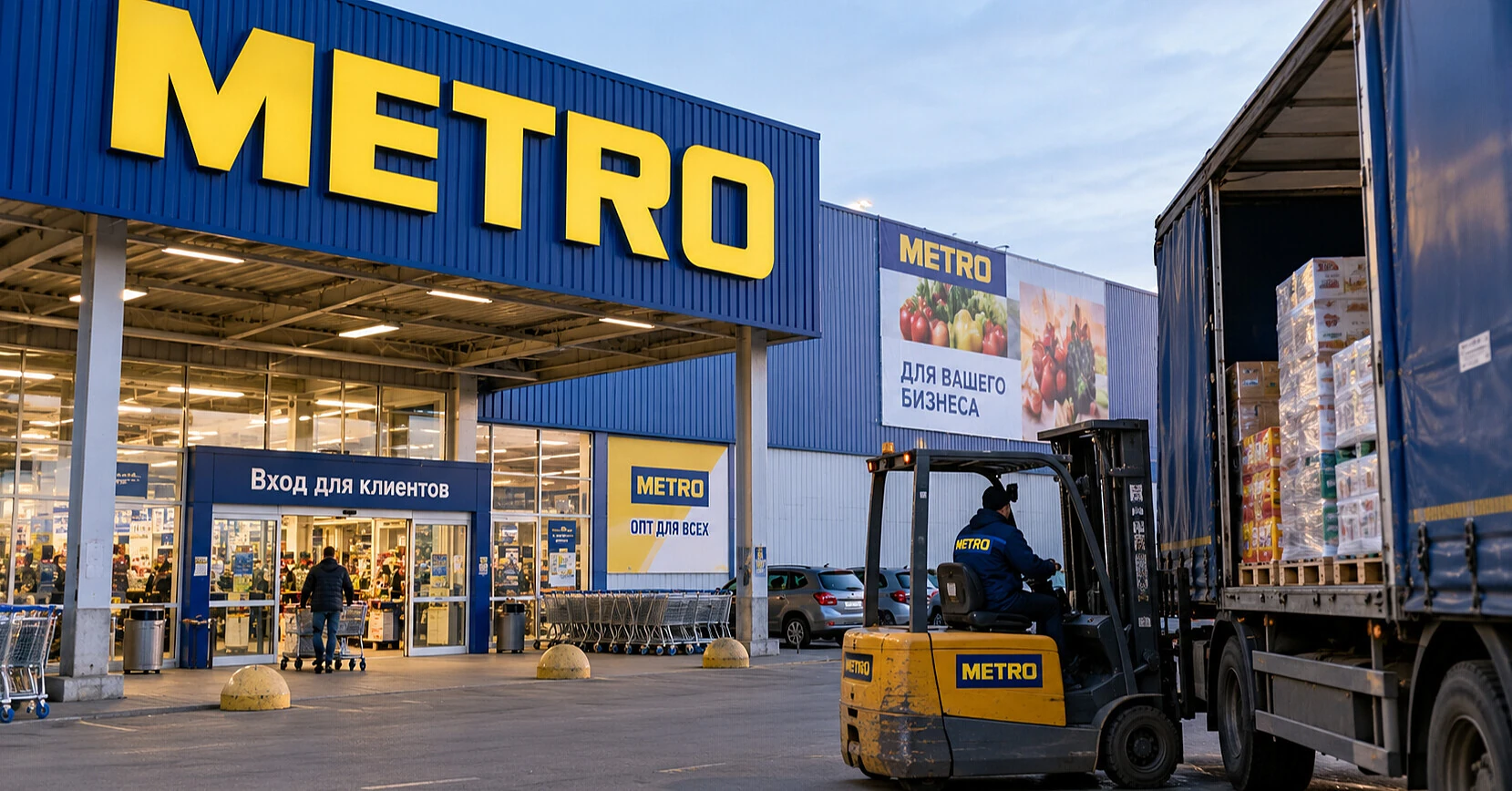
The Russian subsidiary of the German retail chain Metro, transferred in September to the temporary management of a Kremlin-appointed company, transferred 1 billion rubles (about $12.4 million) to a fund that finances support for Russian servicemen participating in the war against Ukraine.
On October 23, The Moscow Times reports, citing a statement from the Russian subsidiary of Metro and representatives of the recipient organization.
The money was transferred to the "People's Front. Everything for Victory!" fund, which is associated with the Kremlin-controlled socio-political movement "All-Russia People's Front". The organization collects funds and purchases equipment for Russian units fighting against Ukraine.
First Deputy Head of the organization's executive committee Sergei Gorbunov said that the funds received will be used to purchase all-terrain vehicles, communication and reconnaissance systems, equipment to counter drones, and other technical equipment for Russian servicemen.
Metro CEO in Russia Johannes Tolay explained the transfer of money by the company's participation in government initiatives. According to him, the Russian subsidiary considers it necessary to support the state's strategic programs.
At the same time, as Vedomosti writes, representatives of the Russian Metro claim that part of the transferred amount is also intended for humanitarian and social purposes. The specific distribution of the billion rubles between the military and other areas is not disclosed.
Russian Metro is no longer controlled by the German company
The transfer of money occurred less than a month after the Russian authorities established temporary management over Metro's local business.
On September 28, Vladimir Putin signed a decree transferring the Russian assets of the German retail group to the management of "UK Torg Rus" company, registered in Moscow shortly before this decision.
The management company is owned by Johannes Tolay, who simultaneously heads the Russian subsidiary of Metro.
As previously reported by Kurs.com.ua, the transfer was carried out on the basis of Russian decree No. 302, which allows establishing temporary management over assets of foreign companies.
German METRO AG officially stated that it lost operational control over its Russian business, although legal ownership of the assets formally remained with it.
In a statement dated September 28, the German group called the imposed regime forced and said it was studying the consequences of the Russian authorities' decision.
Therefore, the transfer of funds by the Russian subsidiary should not be equated with the decision of the German parent company to finance the Russian army. At the time of publication, The Moscow Times had not received a direct comment from METRO AG regarding the new donation.
The German group has been present in Russia since 2001. According to its official data, 91 wholesale shopping centers operated in the country, and the headcount was about 9 thousand people.
Not the first case of financing the army through assets of foreign companies
Metro's donation became another example of large sums being transferred to Russian military funds by enterprises previously owned by foreign owners and transferred under the control of structures appointed by the Russian authorities.
According to Vedomosti, during 2026, similar transfers were made by Russian subsidiaries of packaging manufacturers Canpack, building materials manufacturer Rockwool, and paint and coatings producer AkzoNobel.
In particular, Russian structures of Canpack transferred 1.5 billion rubles to the fund in two payments, and Rockwool's subsidiary transferred 600 million rubles. The funds were also intended for the purchase of equipment and machinery for Russian servicemen.
In September, the Russian authorities established temporary management not only over Metro, but also over the assets of other foreign companies, including Auchan, Nestlé, and logistics operator FM Logistic.
Thus, after the transfer of Metro's Russian business to the management of a Kremlin-appointed structure, part of its funds was directed to supporting the Russian army. At the same time, legal ownership of the assets and actual control over the company's decisions remain separate issues.
