
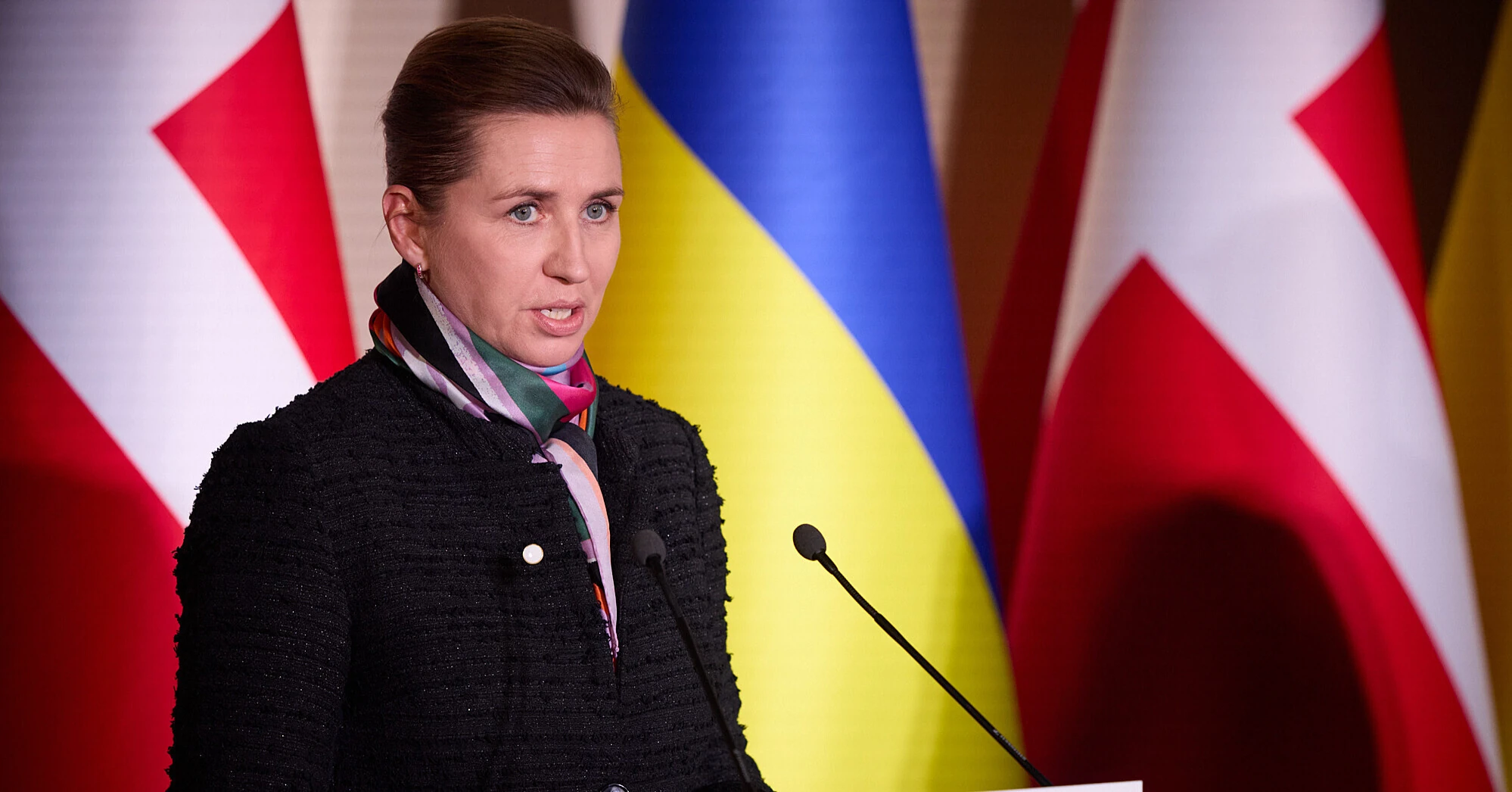
Danish Prime Minister Mette Frederiksen criticized the decision of Finnish President Alexander Stubb and Norwegian Prime Minister Jonas Gahr Støre to independently hold phone talks with Russian President Vladimir Putin. She said the initiative was not coordinated with other European allies. Swedish Prime Minister Ulf Kristersson also expressed caution about such contacts.
Frederiksen made this statement on October 27 in an interview with Danish public broadcaster DR during her stay in Finland. The Swedish prime minister's reaction was reported by SVT.
The head of the Danish government said she was skeptical of the decision by Finland and Norway to establish direct contact with the Russian leadership without prior agreement with other European partners.
"I am very skeptical of this independent initiative by Norway and Finland. It was not coordinated with the rest of us", - said Frederiksen.
According to her, Russia's actions do not indicate readiness for a real peaceful settlement.
The Danish prime minister pointed to Russian hybrid operations against European states and daily attacks on Ukraine. She noted that under such circumstances she sees no signs of Moscow's desire for peace.
Frederiksen also questioned the possible results of a phone conversation with Putin. In her opinion, European states must maintain a common diplomatic position and not hold separate negotiations with the Russian leadership.
She reminded that previously European leaders have already criticized attempts by individual politicians to independently negotiate with Moscow without a coordinated position of the allies.
Sweden warned about the risk of dividing Europe
Swedish Prime Minister Ulf Kristersson also cautiously assessed the talks between Stubb and Støre with Putin.
In a comment to Swedish journalists, he warned against diplomatic initiatives that could weaken the unified position of European states regarding ending the war.
Kristersson called negotiations that could divide European allies risky. At the same time, he clarified that he is not saying that the conversation of the Finnish and Norwegian leaders has already led to such a result, because he does not yet know all the details of its content.
The Swedish prime minister emphasized that he supports diplomatic contacts if they truly contribute to achieving peace on terms acceptable to Ukraine.
However, in his assessment, previous negotiations of European leaders with Putin had very limited results.
"If negotiations lead to peace, that's good", - noted Kristersson, adding that Russia's daily actions do not indicate its readiness to stop the war.
He stressed that Moscow, judging by the continuation of hostilities, seeks not so much a peace agreement as the subjugation of Ukraine.
Finland and Norway explained the purpose of the call
Despite criticism from Denmark and warnings from Sweden, Finland and Norway insist that direct contact with Putin was necessary to advance diplomatic efforts.
On October 27, Stubb and Støre called the Russian president from Helsinki to discuss the prospects for ending the war and the preparation of talks between Ukraine, the US and Russia in Abu Dhabi.
In official statements of both countries, it is emphasized that the conversation was prepared after consultations with Ukraine. At the same time, Stubb and Støre separately noted that they spoke as leaders of their own countries, not as representatives of all of Europe.
The Finnish president explained the necessity of such contacts by the fact that his country and Norway share borders with Russia, and the results of the war will directly affect their security.
Støre emphasized that during the talks with Putin he raised the issue of ending Russian attacks and reducing the scale of hostilities.
After the conversation with the Kremlin, both leaders contacted Ukrainian President Volodymyr Zelenskyy and informed him about the results of the contact.
Zelenskyy thanked Stubb and Støre for supporting Ukrainian diplomacy. According to him, they directly told the Russian leadership about the need for real steps towards de-escalation, in particular ending strikes on Ukrainian energy and infrastructure.
Thus, the main disagreements between European allies concern primarily the format and coordination of negotiations with Moscow. Finland and Norway consider direct contacts a useful tool of diplomacy, while Denmark fears a weakening of the common European position. Sweden does not reject negotiations, but doubts their effectiveness without Russia's real readiness for compromise.
The discussion takes place against the backdrop of preparations for a new round of trilateral talks between Ukraine, the US and Russia, which is planned to be held in November in Abu Dhabi.
Previously, European states discussed the possibility of forming a separate negotiating group to participate in the peace process. Among the potential participants were mentioned, in particular, Stubb, Støre and Frederiksen herself, but a common format was not officially approved.
Based on materials from: DR, SVT, Government of Norway
