
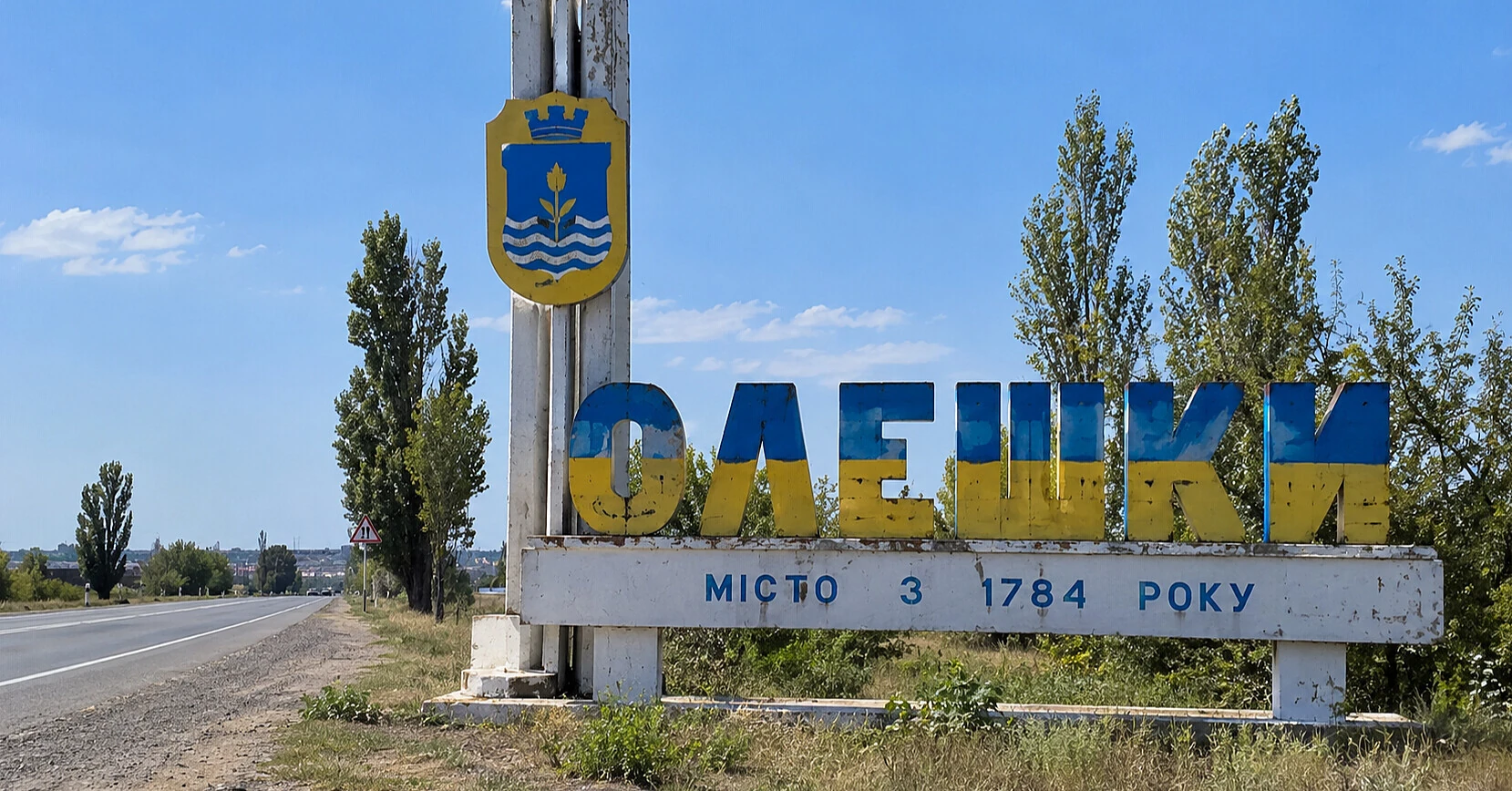
Residents of temporarily occupied Oleshky in Kherson Oblast who agree to evacuation during the local ceasefire are first planned to be taken to annexed Crimea or Russia. Only after that will they be able to return to Ukraine-controlled territory.
This is reported by Financial Times, citing sources familiar with the terms of the humanitarian operation.
According to the outlet, the evacuation of civilians is scheduled for Thursday, October 29. Buses are expected to be used for the evacuation. Residents who decide to remain in the city will receive food, medicines, and other humanitarian aid.
At the same time, the route through Crimea or Russia has not yet been publicly confirmed by the Ukrainian side. It is not specified how the subsequent return of evacuees to Ukraine-controlled territory will be organized, who will accompany people, and what guarantees will be provided to citizens wishing to return to Ukraine.
Vladimir Saldo, the Russia-appointed head of the occupation administration of Kherson Oblast, has also announced the possibility of transporting Oleshky residents to Crimea or Rostov-on-Don. According to him, temporary accommodation centers have been prepared for evacuees. There is no independent confirmation of the readiness of these facilities.
Earlier, President of Ukraine Volodymyr Zelenskyy warned that the Russian side might try to direct the evacuation exclusively toward territories under its control.
In an interview with TSN Tyzhden on October 25, the president suggested that Russian forces might organize demining of roads in such a way that Oleshky residents leave toward Russia and remain there. At the same time, Zelenskyy expressed confidence that at least some citizens will be able to reach territory controlled by the Ukrainian government.
The question of the final destination of evacuees is of particular importance, since initially the U.S. side stated the possibility of free choice. In the White House statement of October 23, it was said that civilians wishing to leave the city would be provided with transportation to a location of their choice.
First Lady of the United States Melania Trump then suggested that some residents might want to go to Russia, while others would prefer Ukraine. To monitor compliance with the families' wishes, the American side agreed to involve an independent American media organization that should document the implementation of the humanitarian mission.
Thus, the information published by Financial Times about the preliminary evacuation of people through Crimea or Russia reveals additional terms of the operation that were not detailed in the initial White House statement.
As previously reported by Kurs Ukrainy, the ceasefire in the Oleshky area came into effect on October 27 at 03:00 Kyiv time. The Russian side also announced a cessation of hostilities on certain sections to prepare for the humanitarian operation.
Dmytro Lubinets, the Ukrainian Parliament Commissioner for Human Rights, said that the agreements provide for the cessation of hostilities, delivery of humanitarian supplies, and ensuring free exit for the civilian population.
The Ukrainian negotiating group is led by Lubinets, the Russian one—by Human Rights Commissioner Yana Lantratova. Mediation and coordination of negotiations are provided by U.S. First Lady Melania Trump.
According to David Arakhamia, head of the parliamentary faction "Servant of the People", the ceasefire should remain in effect until 22:59 on November 1. The main stage of the humanitarian mission, including delivery of aid and organization of evacuation, is scheduled for October 29.
Before the evacuation begins, safe conditions for civilian transport movement must be created, including demining. The General Staff of the Armed Forces of Ukraine called for not spreading unverified information about specific routes, times, and locations of movement of civilian and humanitarian convoys.
Oleshky has been under Russian occupation since the first days of the full-scale invasion in February 2022. The city is located on the left bank of the Dnipro River opposite Kherson and is effectively cut off from Ukraine-controlled territory by the front line.
According to White House estimates, before the full-scale war the city had a population of about 24,000. Now there may be between 1,700 and 2,000 residents remaining, mostly elderly. Among them are approximately 50 children. No precise population count has been conducted since 2022.
The humanitarian situation in Oleshky remains critical. Residents are experiencing shortages of food, drinking water, and medicines. The city has almost no essential utilities, and mined roads, constant drone attack threats, and hostilities significantly limit the ability to leave independently.
After the destruction of the Kakhovka Hydroelectric Power Plant in 2023, much of the city was flooded, which further complicated living conditions for the population.
Ukrainian authorities have repeatedly sought to organize a humanitarian corridor for evacuating civilians. Ukrainian forces have also delivered food and medicine to residents using drones, as regular ground communication was extremely dangerous.
It is currently unknown how many residents have agreed to evacuation, how many intend to return to Ukraine-controlled territory, and when such departure might take place. The agreed silence regime has a local humanitarian nature and does not mean an overall cessation of hostilities between Ukraine and Russia.
Sources: Financial Times, White House, Office of the Ombudsman of Ukraine, Radio Svoboda, hromadske
