
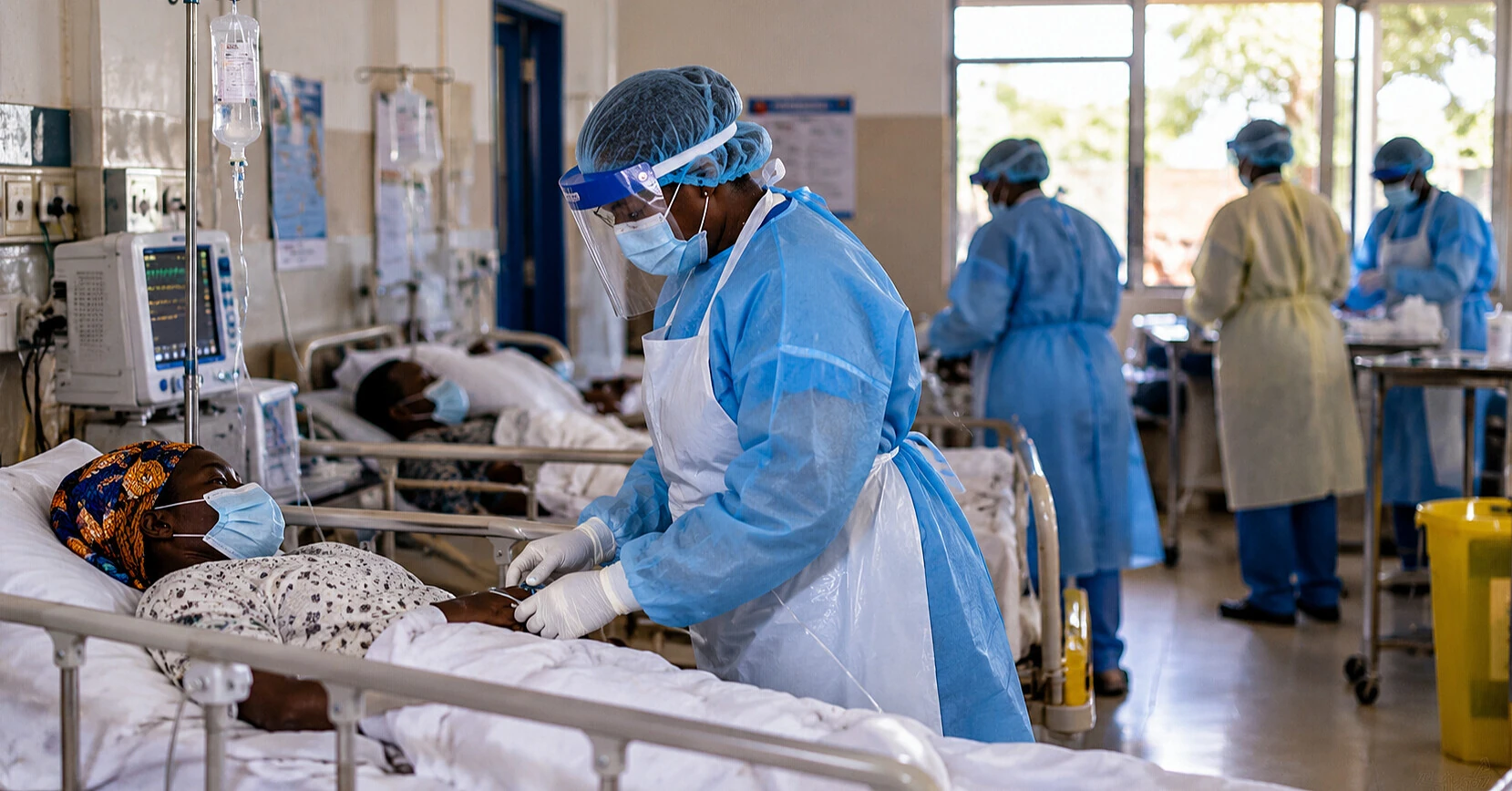
In the Democratic Republic of the Congo, a large-scale outbreak of Ebola fever continues. The number of confirmed infections has exceeded 10,000, and the death toll has approached almost five thousand. The epidemic has already become the largest in the country's history.
This was reported on October 27 by The Watchers, citing data from Congolese health authorities. Current figures are also published on the World Health Organization website.
As of October 25, the country has registered 10,060 confirmed cases and 4,887 deaths. Thus, the proportion of deaths among confirmed patients is about 49%. 2,684 people have recovered.
On October 25 alone, doctors recorded 96 new infections and 46 deaths. Of these, 40 people died outside specialized healthcare facilities, indicating serious problems with the population's access to medical care.
The outbreak has affected 66 health districts in eight provinces of Congo. The most severe situation is in Ituri province, where 7,211 infections and 3,370 deaths have been recorded since the start of the epidemic. North Kivu remains another major hotspot.
According to WHO, inadequate detection of new patients, difficulties with contact tracing, and limited access to healthcare facilities hamper the spread of infection. Armed conflicts and threats against healthcare workers further complicate the situation.
In certain areas, health service staff are unable to fully conduct population screenings. In particular, threats and attacks on medical teams have led to disruptions in epidemiological data collection.
The current outbreak is caused by the Bundibugyo strain of the Ebola virus. No approved vaccine or specific treatment for this strain is currently available. Meanwhile, on October 23, clinical trials of experimental vaccines began in the city of Bunia, which may help protect the population during future outbreaks.
The disease has already been detected outside Congo. In Kenya, as of October 26, nine infections have been confirmed, and two patients have died. All identified cases are linked to a single outbreak cluster. An imported case has also been reported in Nigeria.
Previously, cases were recorded in Uganda and France, but outbreaks in those countries were brought under control.
Ebola is transmitted through direct contact with the blood or other bodily fluids of an infected person, as well as through contaminated objects. The disease can cause high fever, severe weakness, vomiting, and diarrhea. Seeking medical attention early increases the chances of survival.
Despite the scale of the epidemic, the European Centre for Disease Prevention and Control (ECDC) assesses the risk of infection for residents of the European Union and the European Economic Area as very low.
WHO also does not currently recommend general restrictions on international travel to or trade with the affected countries. Instead, the organization urges strengthening epidemiological surveillance, timely identification of patients, and ensuring access to treatment.
