
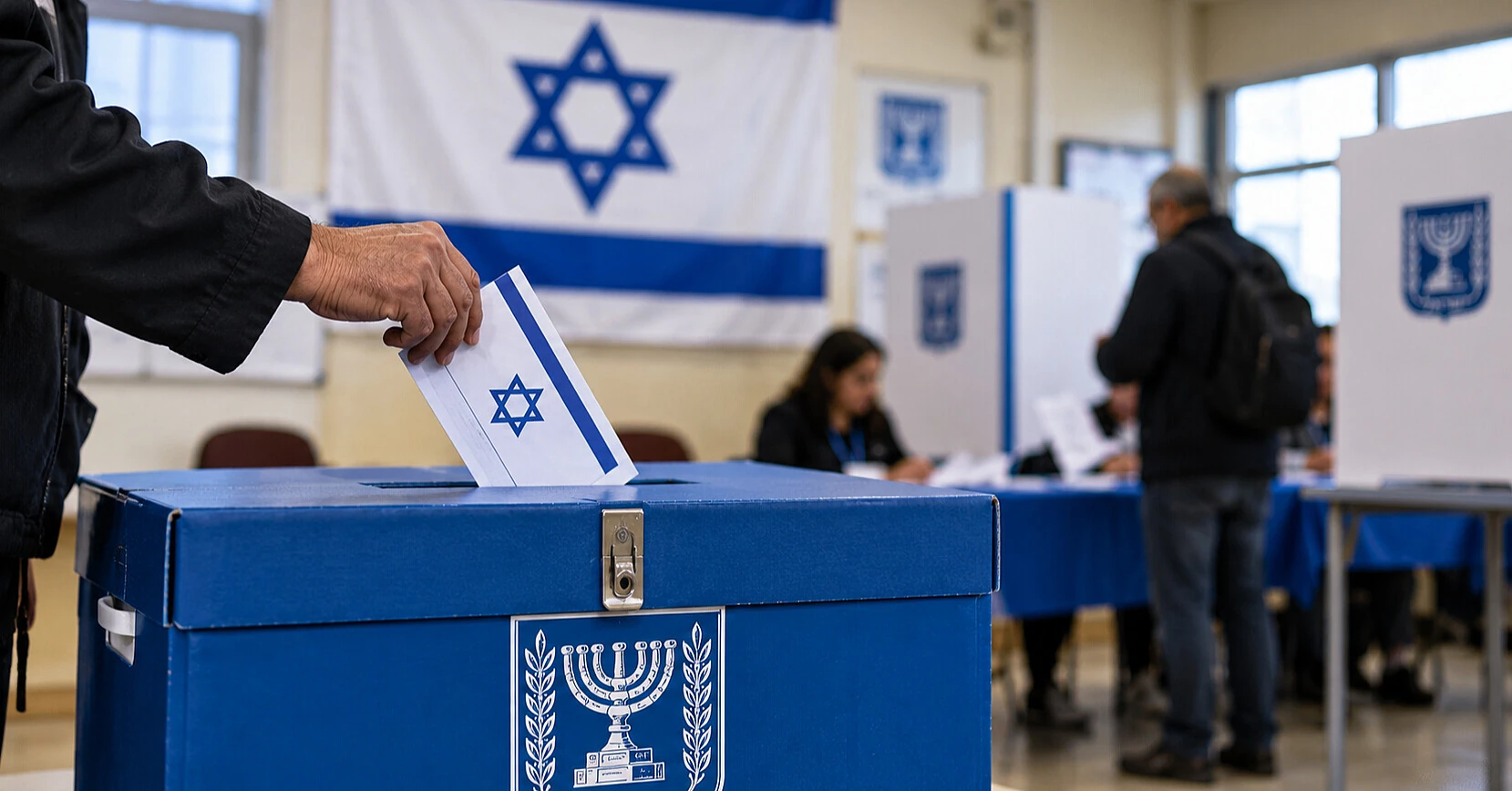
Voting in Israel's parliamentary elections concluded on the evening of October 27. According to the first exit polls, the opposition bloc won more seats than the political allies of incumbent Prime Minister Benjamin Netanyahu. Nevertheless, his Likud party remains the largest political force in the country.
This was reported by The Times of Israel, citing exit polls from Israeli television channels Channel 12, Channel 13, and the public broadcaster Kan.
According to preliminary estimates, neither of the two main political blocs obtains a majority required to form a government. This requires support from at least 61 of the 120 Knesset members.
Channel 12's exit poll projects 52 Knesset seats for the opposition bloc led by Gadi Eisenkot, and 50 for the alliance of parties supporting Netanyahu. Another 18 seats may go to predominantly Arab parties that oppose the incumbent prime minister but are not part of the main opposition bloc.
Similar results were shown by Channel 13 and Kan polls. According to their estimates, the opposition can count on 53 seats, Netanyahu's supporters on 50, and Arab political forces on 17.
Likud is projected to receive the largest number of seats among individual parties. According to the three television channels, Netanyahu's political force could win between 24 and 25 seats.
The centrist Yesh Atid party of former Israeli army Chief of Staff Gadi Eisenkot is in second place with 21 to 23 seats.
The third-largest parliamentary force may become the Beyahad party of former Prime Minister Naftali Bennett, which is projected to win 12 to 14 seats.
Arab parties could play a significant role in forming the next government. According to exit polls, their combined result is between 17 and 18 seats—a figure that Israeli media call a record.
However, the fact that opposition and Arab parties together hold a majority does not automatically lead to a coalition. There are fundamental disagreements between the political forces, and some opposition leaders have previously ruled out the possibility of participating in a government together.
After the votes are counted, Israeli President Isaac Herzog will hold consultations with representatives of parliamentary parties and will task the politician who, in his assessment, has the best chance of gaining majority support, with forming a government.
According to the Central Election Committee, voter turnout by 20:00 reached 74.3%, exceeding the final figure of the previous parliamentary elections in 2022. Voting ended at 22:00 local time.
The counting of ballots has already begun. Official results will be published as votes are processed and may differ from exit poll estimates.
Earlier Kurs Ukraine reported that the parliamentary elections on October 27 became the first nationwide vote in Israel after the Hamas attack on October 7, 2023. Among the main campaign themes were national security, the leadership's responsibility for the events of 2023, and the future of the current government coalition.
Based on materials from: The Times of Israel, ANSA.
