
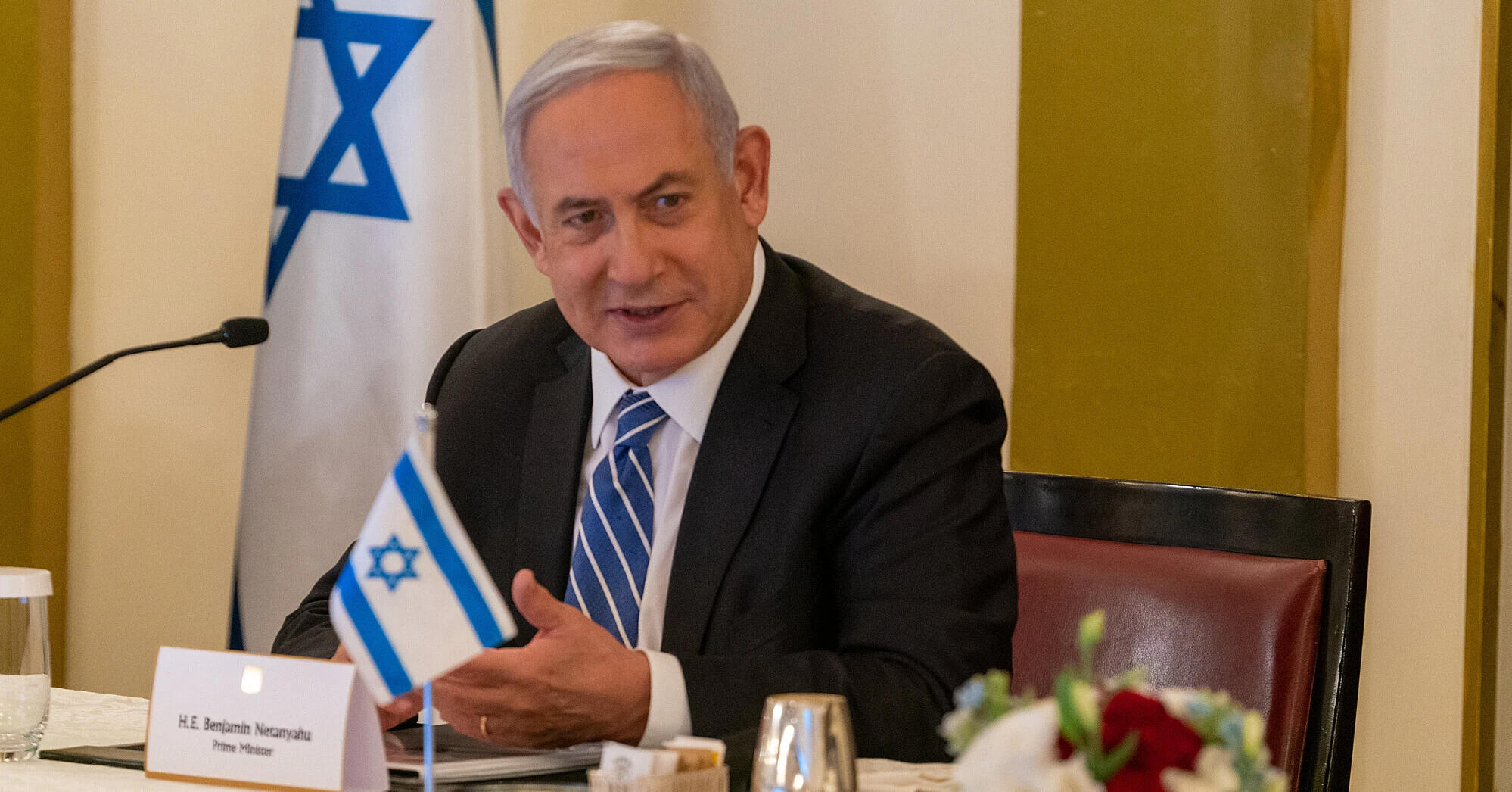
The Israeli parliamentary elections held on October 27 have not yet determined a political force capable of forming a government coalition on its own. According to preliminary vote count results, the bloc of incumbent Prime Minister Benjamin Netanyahu is ahead of the opposition, but does not obtain the necessary parliamentary majority.
The Times of Israel and The Guardian reported this on October 28, citing data from Israel's Central Elections Committee.
According to The Times of Israel, as of 10:58 a.m. local time, results had been counted at 76.8% of polling stations. According to the preliminary seat distribution, Netanyahu's bloc could win 54 seats in the 120-seat Knesset, while the opposition bloc led by former Chief of General Staff Gadi Eizenkot - 47 seats.
Another 19 seats, according to current calculations, would be won by two political forces representing Israel's Arab population - the Joint List and Ra'am.
To form a parliamentary majority, at least 61 seats are required. Neither of the two main political blocs currently reaches this threshold, so post-election coalition negotiations may be decisive.
One of the main features of the vote was a significant increase in support for Arab parties. In the previous parliament, they had a total of ten seats, while their representation could now increase substantially.
This creates an opportunity for the opposition to negotiate with Arab political forces for support of a future government. At the same time, such a scenario remains politically complex, since some parties in the opposition bloc have previously opposed forming a coalition with their participation.
After polling stations closed, Netanyahu declared his intention to form a new right-wing government. He also opposed creating a coalition that would depend on support from Arab parties.
For his part, Eizenkot said that the election results reflect a public demand for a change of government. His political camp also intends to participate in negotiations on forming a new government.
Post-election uncertainty has already affected Israel's financial markets. On the morning of October 28, the Israeli shekel weakened by about 1% against the dollar, and the TA-125 stock index fell by 1.7%. The TA-35 index of largest companies lost about 1.5%.
According to Mizrahi Tefahot bank economist Ronen Menachem, investors are waiting for final election results and greater clarity on the future economic policy of the government.
Voter turnout was 77.7% - the highest figure since 1999. The vote took place against the backdrop of the consequences of prolonged military conflicts in the region and sharp disputes over the incumbent prime minister's policies.
Vote counting is ongoing. Ballots of military personnel and citizens who voted by special procedure will be counted separately. Therefore, the preliminary seat distribution may still change.
Once final results are established, Israeli President Isaac Herzog will hold consultations with parliamentary parties and task the formation of the government to the candidate most likely to secure the support of a majority of lawmakers.
If political forces fail to reach a coalition agreement, negotiations may drag on for several weeks. Until a new government is formed, Netanyahu will continue to serve as acting prime minister.
Based on: The Times of Israel, The Guardian
