
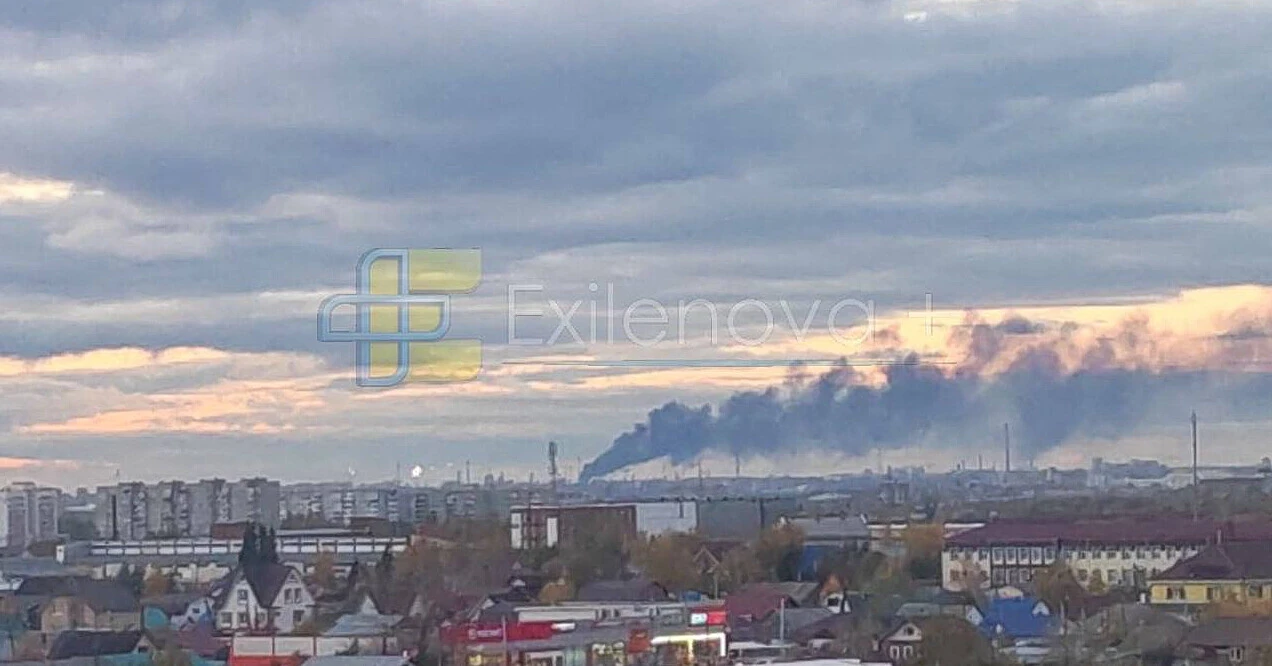
The overwhelming majority of Ukrainians support continuing strikes on Russian oil refineries, even if the United States threatens to halt or limit aid to Ukraine. Respondents base their view on the condition that Russia does not stop attacks on Ukrainian energy infrastructure and civilian facilities.
These are the findings of a survey by the Kyiv International Institute of Sociology (KIIS), conducted October 16-25, 2026.
According to the study, 80% of respondents believe Ukraine should continue strikes on Russian refineries even at the risk of losing American support. 11% of respondents support halting such attacks, and 8% were undecided.
Sociologists presented participants with a specific scenario: the United States demands Ukraine cease strikes on Russian refineries and threatens to limit access to intelligence, Starlink satellite communications, and other forms of aid.
However, under the terms of the question, Russia does not undertake similar commitments and retains the ability to continue striking Ukrainian power plants, residential buildings, and other civilian targets.
Thus, the results reflect Ukrainians' attitude specifically to a unilateral cessation of strikes without reciprocal guarantees from Russia. They do not mean that respondents reject any agreements on mutual cessation of attacks.
KIIS conducted the survey amid US-Russia agreements on diesel fuel supplies, discussions of possible restrictions on Ukrainian strikes against Russian refining infrastructure, and intensified Russian attacks on Ukrainian energy.
Ukrainians have not changed their position on continuing resistance even under the threat of a harsh winter.
A separate question concerned possible situations where Russia tries to leave Ukrainians without electricity, heating, and sanitation in winter.
Under such conditions, 76% of respondents believe Ukraine should still continue armed resistance. Another 15% would accept any Russian demands, even if they look like capitulation. 9% were undecided.
In August-September, 77% of respondents supported continuing resistance in a similar scenario. KIIS notes the difference is within statistical error, so no significant change in public sentiment was recorded.
Also, 63% of respondents said they are ready to endure the war as long as necessary. Another 5% named one year, and 21% - from a few months to six months. The remaining 11% were undecided.
As previously reported by "Kurs Ukrainy", in a mid-October study, 62% of Ukrainians expressed readiness to endure the war without time limits. Thus, this indicator also remained virtually unchanged.
The survey was conducted via telephone interviews among 828 adult citizens of Ukraine living in government-controlled territory. The study did not cover residents of temporarily occupied territories and Ukrainians who left abroad after February 24, 2022.
The formal statistical error is up to 4.4 percentage points for indicators close to 50%. Sociologists also caution about additional limitations on the representativeness of polls in wartime conditions.
