
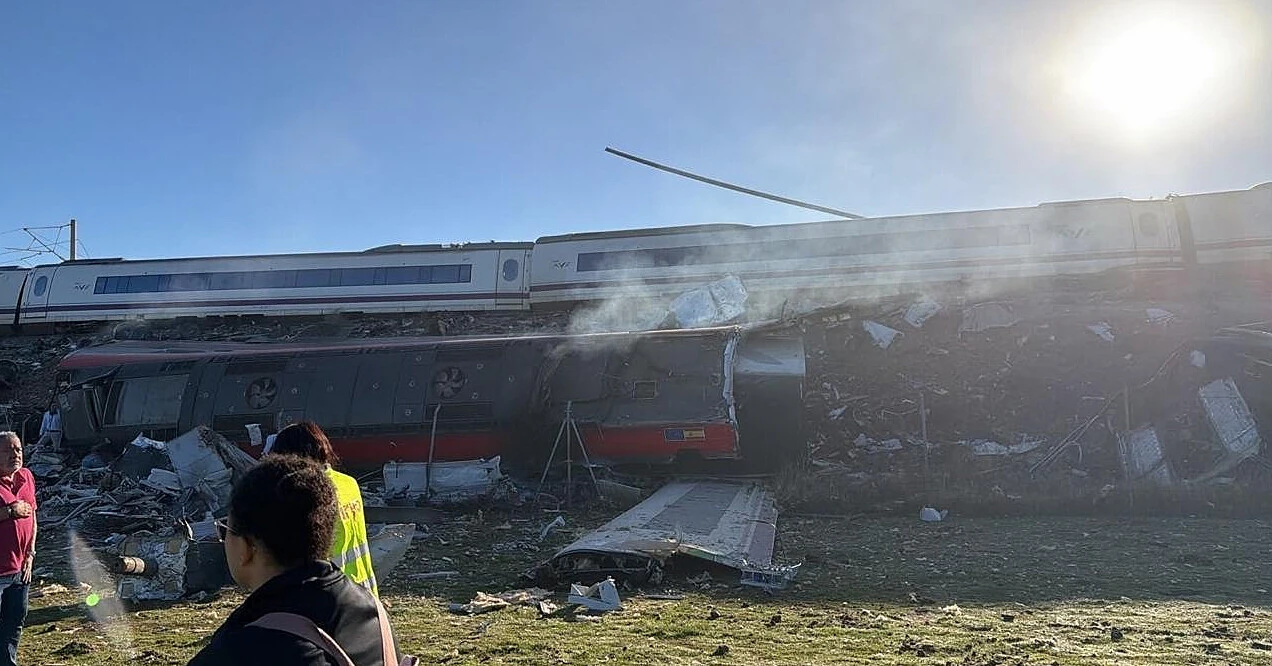
The death toll from a collision of two high-speed trains in Spain has risen to at least 68. According to Spanish media, more than 180 people were injured. The search and rescue operation is ongoing, so the final number of victims may still change.
Updated figures were confirmed by the government of the autonomous community of Castilla-La Mancha. According to regional authorities, 44 of the dead were on a train of private operator Iryo, and another 24 on a train of state company Renfe.
As of the morning of October 29, 53 injured remained in Castilla-La Mancha hospitals, and 56 patients had already been discharged. Some of the wounded are in serious condition. Rescuers continue to dismantle damaged carriages, as people may still be under the debris.
The accident occurred on the morning of October 28 near Urda station in the province of Toledo, on the Madrid-Seville high-speed rail line. An AVE train operated by Renfe rear-ended an Iryo train that had stopped on the track. Several carriages derailed, and some fell from the embankment.
A train collision in Spain today has killed at least 46 people, according to local media. This is the second train collision in Spain this year, with another crash occurring in January on the same line between Madrid and Andalusia. https://t.co/R30KmSqTYA pic.twitter.com/JS9a3EoygC
— euronews (@euronews) October 28, 2026
Investigators are examining the actions of the control center after a railway safety system failure. According to Spain's Minister of Transport Óscar Puente, at around 08:30 a malfunction occurred in the LZB automatic control system on a 63 km section. This caused several trains to be stopped, and dispatchers switched to manual operation.
Subsequently, the control center of infrastructure operator Adif allowed the Renfe train to proceed, although the stationary Iryo train remained ahead on the same track. The minister called the decision inexplicable and said the investigation must determine the circumstances of its adoption. The final cause of the disaster has not yet been determined.
Firefighters, medics, the Civil Guard, and military emergency response units are involved in dealing with the aftermath. Law enforcement is also identifying the dead, including through DNA samples obtained from relatives.
Due to the disaster, high-speed rail traffic between Madrid and Andalusia remains suspended. Renfe announced that from October 30 it will introduce an alternative transportation plan. Passengers on cancelled services can refund tickets or change travel dates free of charge.
Spanish Prime Minister Pedro Sánchez declared three days of national mourning from October 29 to 31. He promised to determine the causes of the disaster and take additional measures to improve railway safety.
This is the second major disaster on the Madrid-Andalusia high-speed line in 2026. In January, two trains collided near Adamuz in the province of Córdoba, killing 46 people.
