
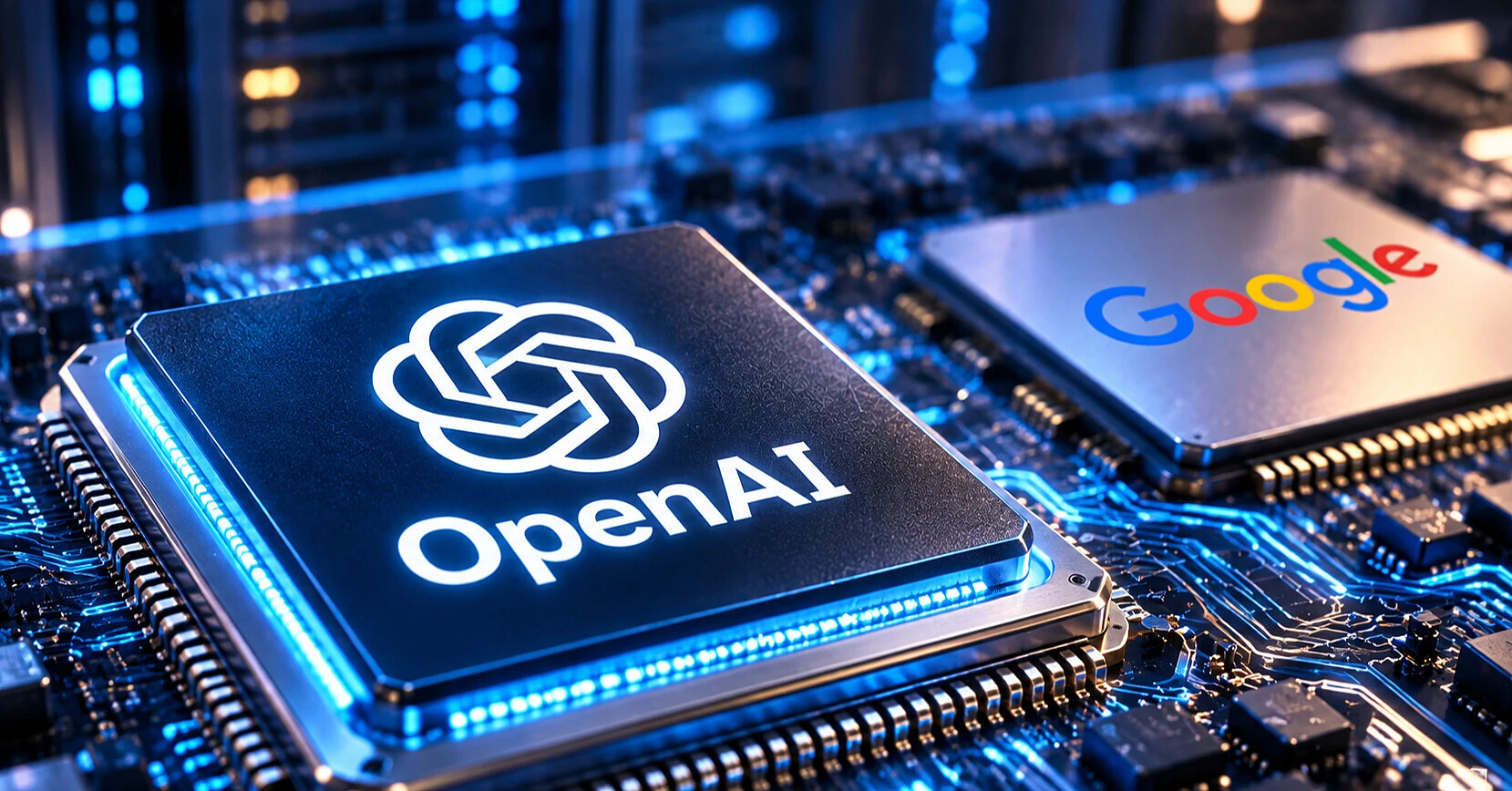
American company OpenAI, the developer of ChatGPT, plans to purchase specialized processors for artificial intelligence from Google. The potential deal could be an important step in diversifying OpenAI's computing infrastructure and intensify competition in the AI chip market, where Nvidia dominates.
On October 27, The Information reported, citing a source familiar with the company's plans. Later, the purchasing intentions were confirmed by Bloomberg agency, which also cited its own source.
This refers to Tensor Processing Units (TPUs), which Google developed specifically for machine learning operations and running artificial intelligence models.
The cost, purchase volumes, and possible delivery dates are still unknown. According to Bloomberg, the final terms of the potential deal have not yet been determined. Representatives of OpenAI and Google declined to comment on the reports.
Currently, Nvidia remains one of the key suppliers of computing equipment for OpenAI. Its graphics processing units GPUs are used for training large language models and their subsequent operation.
At the same time, the rapid growth in demand for computing power is forcing artificial intelligence developers to seek alternative solutions. Using processors from different manufacturers can reduce dependence on a single supplier and give companies more opportunities to optimize costs.
OpenAI is already preparing software to work with TPUs. On the company's official website, a vacancy for an engineer has been posted, who will be responsible for optimizing OpenAI's advanced models for Google processors.
Among the tasks of the future specialist are increasing request processing speed, equipment utilization efficiency, and reducing latency during computations.
The existence of such a vacancy indicates technical preparation for using the TPU architecture, but is not confirmation of a contract for processor purchase.
Google intensifies competition with Nvidia
Google began developing its own TPUs over ten years ago. Initially, the company used them primarily in its own services, and later opened access to such processors to customers of the Google Cloud platform.
Recently, Google has begun expanding TPU sales beyond its own infrastructure. In particular, on October 27, it became known about an agreement with Oracle, which plans to offer Google processors to customers of its cloud platform.
For Google, a potential deal with OpenAI would be particularly significant, since the companies directly compete in the generative artificial intelligence market. Despite this, they are developing commercial cooperation in the field of cloud services and computing infrastructure.
In parallel, OpenAI is working on its own specialized Jalapeno processors together with Broadcom. According to Bloomberg, the company plans to start using these solutions to support its models before the end of 2026.
Thus, OpenAI is forming an infrastructure that potentially combines Nvidia hardware, Google processors, and its own developments.
Plans to purchase TPUs do not yet mean OpenAI is abandoning Nvidia. The company continues large-scale cooperation with the graphics processor manufacturer, and possible expansion of suppliers is primarily linked to growing needs for artificial intelligence power.
