
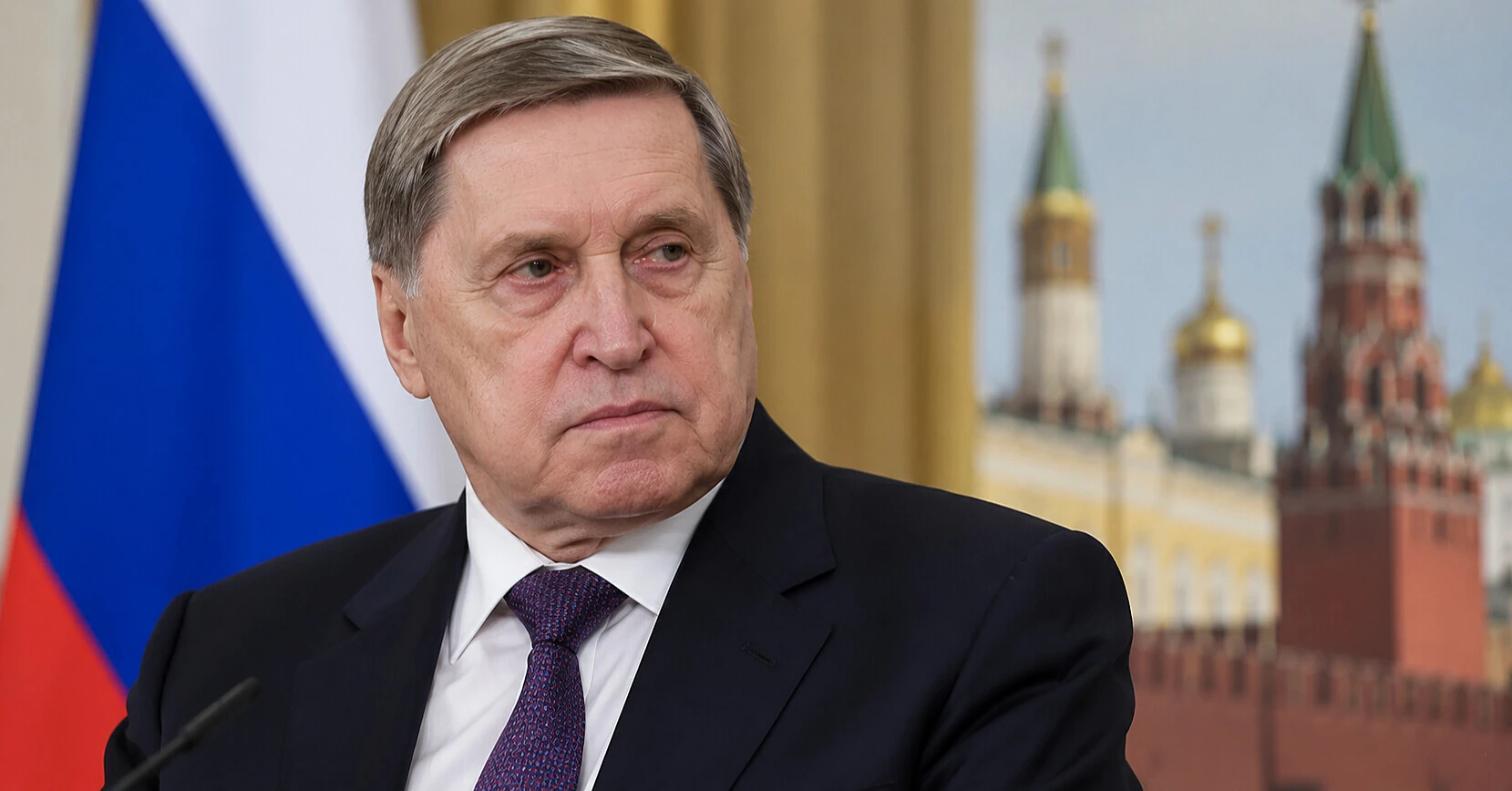
Russia does not intend to allow representatives of European countries to the upcoming trilateral talks on ending the war in Ukraine, which are planned to be held in November in Abu Dhabi. Moscow insists on maintaining the format involving only Russian, American and Ukrainian delegations, despite the European Union's desire to join the diplomatic process.
This was stated on October 28 by Russian presidential aide Yuri Ushakov in a commentary to the information service Vesti.
According to the Kremlin representative, the agreement to resume negotiations applies exclusively to the three states. The Russian side is not yet considering expanding the list of participants to include European representatives.
“They can get there if they buy tickets,” Ushakov said, adding that no one is going to invite Europeans to the negotiating table.
Earlier, on October 27, the Russian presidential aide said in an interview with Izvestia that the issue of possible European representation could be discussed at a later stage. For now, he said, the matter is solely about resuming the trilateral dialogue.
The exact date of the meeting also remains uncoordinated. Ushakov said Moscow is aiming for mid-November, but no specific day for the negotiations has been officially named. The Kremlin expects to decide on the timing in the near future.
The Russian representative also warned that no major agreements should be expected after the first meeting. After a long pause, the negotiations, in his assessment, will be preliminary in nature.
The resumption of the diplomatic process was discussed on October 21 during a meeting between US President's special envoy Steve Witkoff and Vladimir Putin in Saint Petersburg. After those contacts, the sides announced their readiness to continue negotiations at a technical level. The venue for the meeting was tentatively set as the capital of the United Arab Emirates.
Previous rounds of trilateral consultations between representatives of Ukraine, the United States and Russia were held in January and February 2026 in Abu Dhabi and Geneva.
Europe seeks participation in negotiations
Moscow's position differs from the plans of European institutions, which are trying to secure direct EU representation in discussing the future peace agreement.
As Euronews reported, the European Commission and the European Council are preparing a joint group of high-ranking officials to participate in the upcoming diplomatic consultations. One possible head of the delegation is Bjorn Seibert, head of cabinet of European Commission President Ursula von der Leyen.
Brussels expects a multilateral format that will allow European representatives to participate directly in discussing the terms of a ceasefire and future security guarantees.
On October 23, a European Commission spokesperson confirmed expectations of multilateral consultations at the level of high-ranking officials with joint representation from the European Commission and the European Council. However, the specific composition of participants and the procedure for their interaction with the Russian delegation were not specified.
Already on October 28, during a European Commission briefing, its spokesperson said there was still no new information about possible European participation in the Abu Dhabi talks.
The European Commission emphasized that European countries continue to seek a just and sustainable peace in Ukraine. At the same time, Brussels insists on maintaining pressure on Russia and further military support for Kyiv.
Contacts of European leaders with Putin
Discussion of Europe's participation intensified after a phone call between Finnish President Alexander Stubb and Norwegian Prime Minister Jonas Gahr Støre with Vladimir Putin on October 27.
According to an official statement from the Office of the President of Finland, the initiative was coordinated with Ukraine and became a continuation of negotiations held on October 20 in Oslo.
Stubb and Støre intended to convey directly to the Russian leadership their position on ending the war and resuming negotiations. They also emphasized that the outcome of the war would have direct consequences for the security of Finland, Norway and the European continent as a whole.
The conversation lasted about an hour and a half. The leaders of the two countries also separately clarified that they spoke on behalf of Finland and Norway, not representing the whole of Europe.
According to Finnish public broadcaster Yle, after the conversation Stubb considered participation of representatives of European states in the November talks possible. However, subsequent statements from the Kremlin showed that Moscow's consent to such an expansion of the format is not yet there.
What issues Ukraine intends to discuss in Abu Dhabi
Ukrainian President Volodymyr Zelenskyy said on October 28 that Kyiv and Moscow positively assess the possibility of resuming trilateral consultations. At the same time, the final decision on the timing of the meeting, according to him, now depends primarily on Washington.
As Kurs.com.ua previously reported, the American administration is focused on the situation in the Middle East, which may affect the schedule of diplomatic meetings.
According to Zelenskyy, Kyiv has already discussed with American and European partners the expected agenda of the talks. The Ukrainian side intends to focus on concrete steps to reduce the intensity of hostilities.
Among the priority issues are stopping Russian strikes on Ukraine's energy infrastructure, de-escalation at sea, prisoner-of-war exchanges and the return of detained individuals.
In addition, the negotiating groups should discuss the possible organization of a trilateral meeting at the level of the presidents of Ukraine, the United States and Russia.
A separate place on the agenda is held by security guarantees after a possible end to the war. Zelenskyy said Ukraine is discussing this issue with the United States and European states. Russia is also putting forward its own demands regarding future security mechanisms.
Thus, as of October 28, the parties confirm their readiness to return to technical negotiations in November, but the final date of the meeting, the personal composition of the delegations and the possibility of European representatives' participation remain uncoordinated.
