
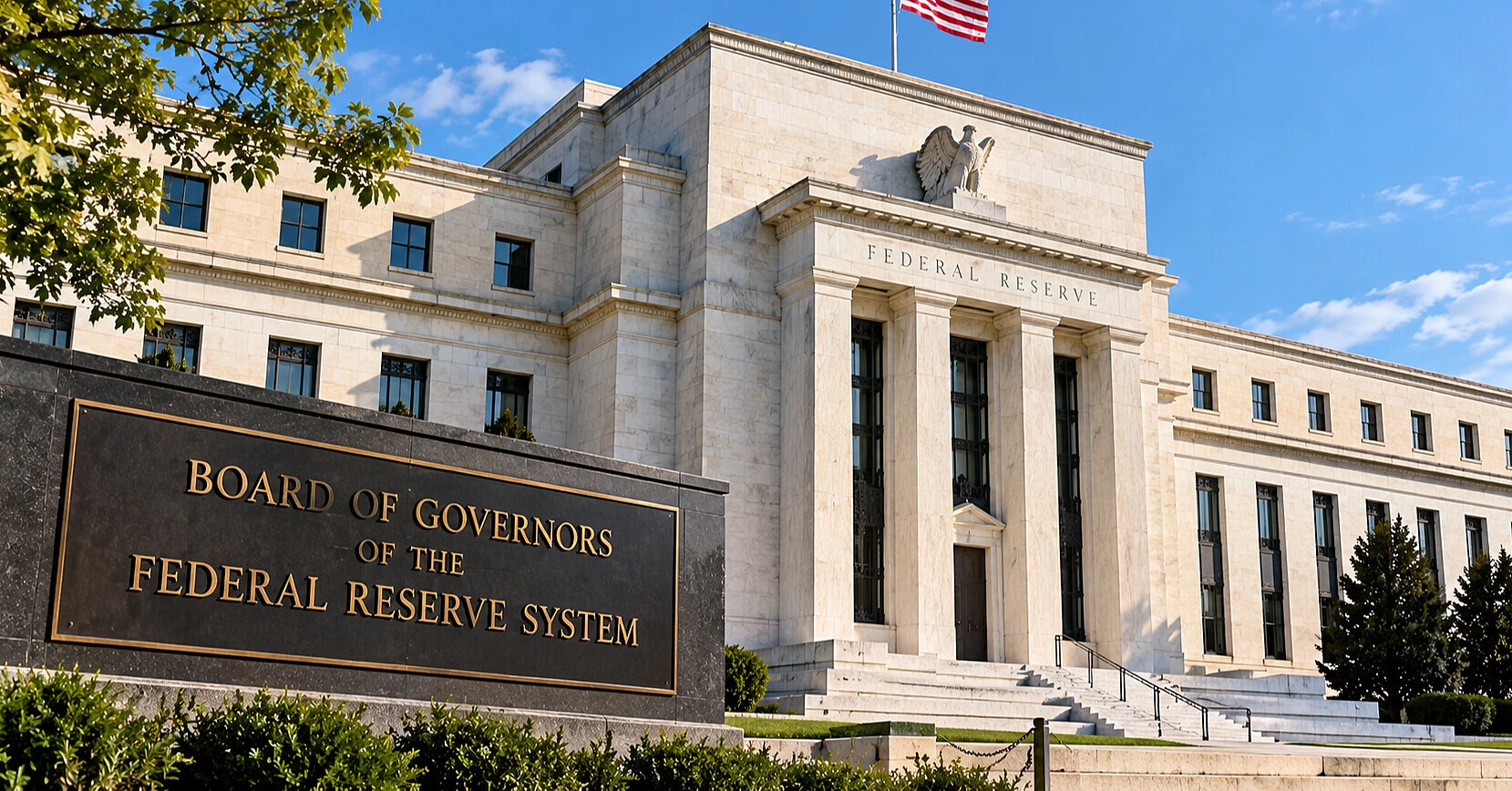
The US Federal Reserve, following its meeting on October 27–28, kept its benchmark interest rate in the range of 3.75–4.00% per annum. The decision was expected by financial markets, but disagreements arose within the American central bank regarding further monetary policy tightening.
This is stated in the official statement of the Federal Open Market Committee (FOMC), published on October 28.
Ten committee members supported the decision, two opposed. Fed Governor Lisa Cook and Cleveland Fed President Beth Hammack insisted on raising the rate by 0.25 percentage point.
For Cook, this was the first time she voted against the majority decision during her tenure in Fed leadership. Hammack already advocated for a rate hike in July, when the US regulator also decided to leave borrowing costs unchanged.
Recall that at the previous meeting on September 16, the Fed raised the rate by 0.25 percentage point—the first time in more than three years. That decision was unanimous. The current vote showed a lack of full consensus within the regulator on the need for further rate hikes.
Fed improved its assessment of the US economy
In the published statement, the committee noted that economic activity in the US continues to grow at a rapid pace. At the same time, domestic consumer demand remains resilient, labor productivity is increasing, and investment activity remains high.
The labor market situation also remains relatively stable. According to the Fed's assessment, employment growth corresponds to the growth of the labor force, and the unemployment rate has not changed significantly.
At the same time, the American central bank acknowledged that elevated inflation persists, still exceeding the regulator's 2% target.
According to Yahoo Finance data, US consumer prices rose by 3.7% year-over-year in September compared to 3.4% in August. The acceleration of inflation strengthened the arguments of proponents of tighter monetary policy.
The Fed emphasized that the accumulation of additional economic data will help determine further actions needed to return inflation to the target level in a timely manner.
Prospects for further rate hikes
Holding the rate in October does not mean the end of the monetary tightening cycle. The American regulator left the door open for further changes without specifying a concrete timeline for the next increase.
The next FOMC meeting is scheduled for December 8–9. By then, Fed leadership will receive additional data on inflation, employment, and the state of the US economy. Updated economic projections from committee members are also expected to be published in December.
The Fed's decision has significant implications for international financial markets. The level of US interest rates affects dollar asset yields, borrowing costs, and the dollar's attractiveness relative to other major currencies.
As Kurs.com.ua previously reported, the euro was under pressure from the US currency ahead of the Fed meeting. On the morning of October 28, EUR/USD was trading around $1.1121, and market participants were awaiting signals about the American regulator's future decisions.
On Thursday, October 29, currency investors' attention will shift to the European Central Bank meeting. The interplay between future Fed and ECB decisions will be one of the factors driving the euro-dollar exchange rate.
