
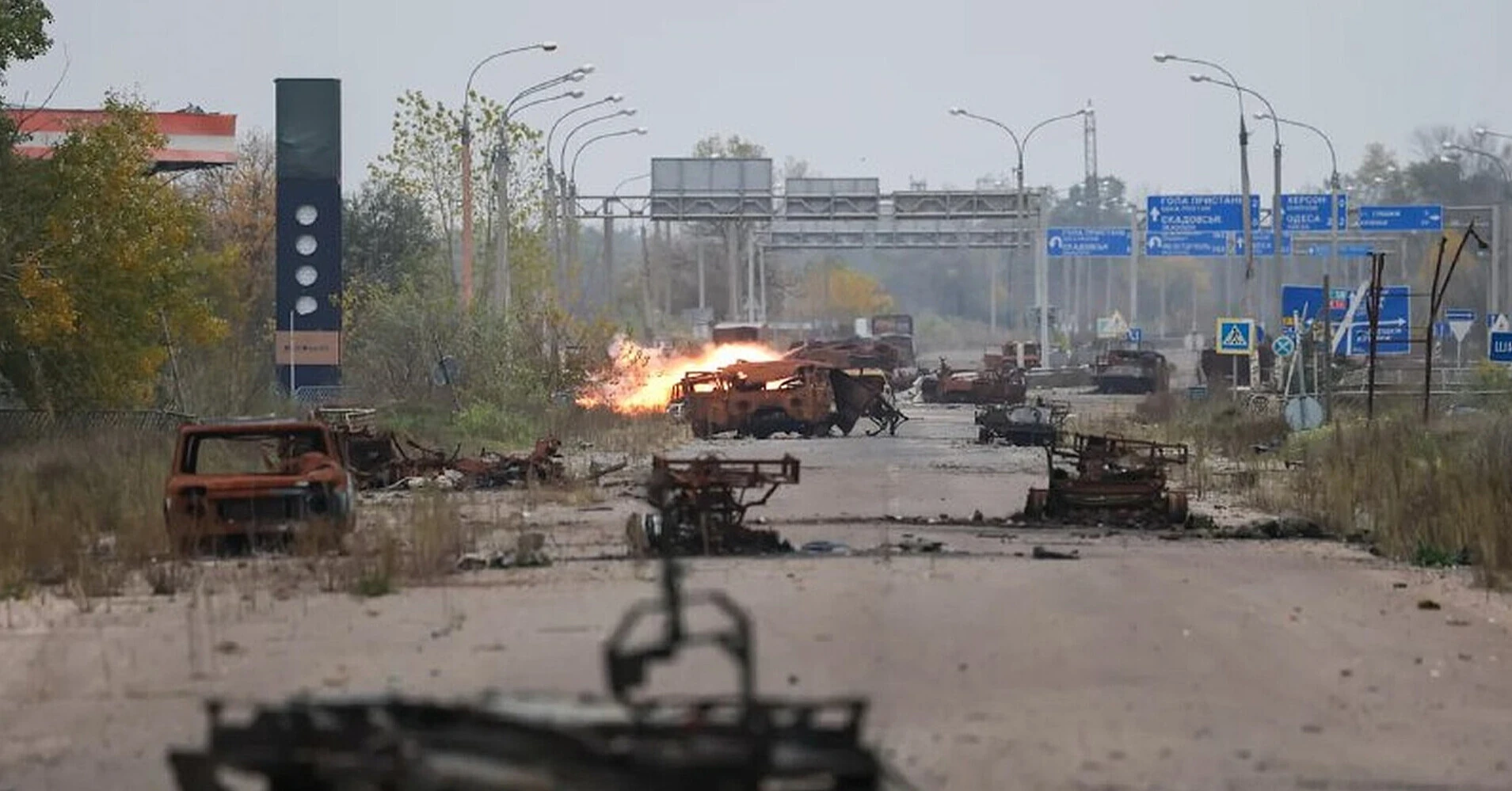
Russian troops may use the temporary ceasefire in the area of occupied Oleshky in Kherson Oblast to regroup and prepare new attacks on Kherson. Despite observing the humanitarian truce, Ukrainian military and independent observers report movements of Russian units. However, there is no confirmation yet of preparations for a large-scale offensive directly on the city.
On October 29, BILD reported on the possible risks. The German publication cites assessments by security experts who warn that the local ceasefire should not be perceived as a sign of a change in Moscow's military plans.
Former U.S. National Security Advisor John Bolton expressed concern in a comment to BILD that Russia might use the temporary pause in its own interests. He urged not to consider the humanitarian truce a diplomatic success until it becomes clear what advantages the Russian side could have gained.
German security expert Nico Lange also emphasized that the agreement on Oleshky remains a separate humanitarian case and does not indicate an end to the war as a whole.
Ukrainian military reported movements of Russian forces
Information about movements of Russian units in the temporarily occupied territory of Kherson Oblast also comes from the Ukrainian side.
As Latvian Public Broadcasting reported, Maksym Kravchuk, a spokesperson for the Ukrainian military group "South", confirmed that as of October 28, Ukrainian forces had observed movements of Russian forces in the occupied territory.
According to him, Russian units carried out logistical operations, including the evacuation of wounded servicemen and the removal of bodies of the dead. At the same time, no shelling was recorded in the area of the agreed ceasefire at that moment.
Separate reports of possible regrouping of Russian troops have also appeared in open sources. According to "Donbass News" information, military observer Igal Levin drew attention to reports from the OSINT community about the rotation of Russian units and the movement of military equipment.
Observers suggest that after the ceasefire ends, the Russian army may intensify attacks on the part of Kherson Oblast controlled by Ukraine. However, these assessments have not yet received independent confirmation and do not allow a conclusion about the preparation of a full-scale offensive operation.
The movement of Russian military personnel during the ceasefire also does not necessarily mean a violation of agreements: part of the logistical operations may be related to humanitarian activities and the evacuation of the wounded.
Residents of Kherson fear intensified shelling
The ceasefire, which began on October 27, brought Kherson an unusual silence for recent years. Russian drone attacks and artillery shelling in the area of the agreement stopped, allowing residents to move around the city relatively safely.
However, as Ukrainska Pravda writes, many citizens fear that after the ceasefire ends, the Russian army will resume strikes with greater intensity.
Such fears are related to the fact that Oleshky is located on the opposite bank of the Dnipro River from Kherson. Russian troops use the occupied part of the region for attacks on the regional center and other settlements on the right bank.
Local residents fear that the temporary cessation of hostilities will allow Russian units to restore their forces and replenish supplies. At the same time, the Ukrainian command has not released any official data on the inevitability of a new offensive.
Ceasefire is in effect until November 1
Ukraine and Russia, with the mediation of U.S. First Lady Melania Trump, agreed on a temporary ceasefire to conduct a humanitarian operation in occupied Oleshky.
The silence regime began on October 27 at 03:00 Kyiv time and is to last until 22:59 on November 1. Its purpose is the delivery of food, medicine, and drinking water to the civilian population, as well as the organization of voluntary evacuation of residents.
According to preliminary estimates from the Ukrainian side, about two thousand people remain in Oleshky. The city has long experienced serious problems with the supply of food, medicine, and other necessary resources.
On October 29, Ukrainian Parliament Commissioner for Human Rights Dmytro Lubinets reported that during the first 54 hours of the ceasefire, the parties had not recorded violations of the agreed terms.
According to the ombudsman, preparations continue for humanitarian cargo, which is planned to be delivered to Oleshky on October 30. Measures are also being taken to ensure safe access for the humanitarian mission.
On the same day, a Ukrainian delegation headed by Lubinets departed to participate in the operation. The Ukrainian ombudsman maintains contact with Russian Commissioner for Human Rights Yana Lantratova, coordinating the implementation of the agreements.
As previously reported by Kurs.com.ua, the mission involves not only the delivery of aid but also creating conditions for the safe departure of civilians from the temporarily occupied city.
Thus, as of October 29, compliance with the ceasefire is officially confirmed, while there are reports of movements of Russian units. Preparations for a new offensive on Kherson remain an unconfirmed scenario, not an established fact.
