
The American newspaper The Wall Street Journal reported on October 29 that Ukraine had unofficially suspended strikes on Russian oil refineries under pressure from the Donald Trump administration. According to the publication, the pause was to last at least until the midterm elections to the US Congress on November 3, and possibly longer. However, already on the morning of October 30, reports appeared about a new attack on a Russian refinery.
The Wall Street Journal wrote about the suspension of operations The Wall Street Journal citing sources familiar with Ukrainian military operations and the negotiations between Kyiv and Washington.
According to the newspaper, as early as mid-October, Ukrainian units carrying out long-range strikes were informed of an actual suspension of the campaign against Russian refineries after the completion of already planned operations.
The unofficial pause was linked to a deterioration of relations between Ukraine and the US. Donald Trump had been demanding for several weeks to stop attacks on Russia's oil refinery infrastructure, accusing Kyiv of causing a rise in global fuel prices.
For the American administration, this issue became especially sensitive ahead of the midterm congressional elections. High prices for gasoline and diesel could negatively affect support for Republican Party candidates. Meanwhile, experts attribute the main increase in global fuel prices to the war of the US and Israel against Iran.
According to WSJ, during negotiations on October 20 in Oslo, the representative of the US President Jared Kushner again raised the issue of halting Ukrainian strikes on refineries. The American side proposed a 30-day pause, viewing it as a goodwill gesture amid Washington's diplomatic efforts to end the war.
Some of Ukraine's European allies were also advising Kyiv to take into account the political sensitivity of energy prices in the US and to refrain from attacks at least until the end of the American elections.
According to the publication's sources, Ukrainian Defense Minister Yevhen Khmara informed President Volodymyr Zelensky that the military believes it is advisable to temporarily suspend strikes due to the difficult diplomatic situation. The president did not object, but left the military the ability to resume operations at their own discretion.
At the same time, Ukrainian authorities have not officially announced the cessation of attacks on Russian refineries. In conversations with journalists, Zelensky admitted that Ukrainian forces had been acting more cautiously recently, but stressed that there is no order not to attack oil refineries.
According to WSJ, Kyiv had previously offered Washington several options of agreements in exchange for ending the strikes. Among them are a mutual energy truce with Russia, additional missiles for Patriot systems, or permission to use Starlink on the territory of Russia for strikes against Russian missile launch sites.
However, no significant progress was made on these proposals. Russia continued to attack Ukrainian energy facilities, and relations between Kyiv and Washington were further complicated by restrictions on Starlink satellite communication in mid-October.
Full operation of Starlink was restored on October 24 after Trump's intervention. American officials denied that this decision was related to the suspension of Ukrainian strikes on Russian refineries.
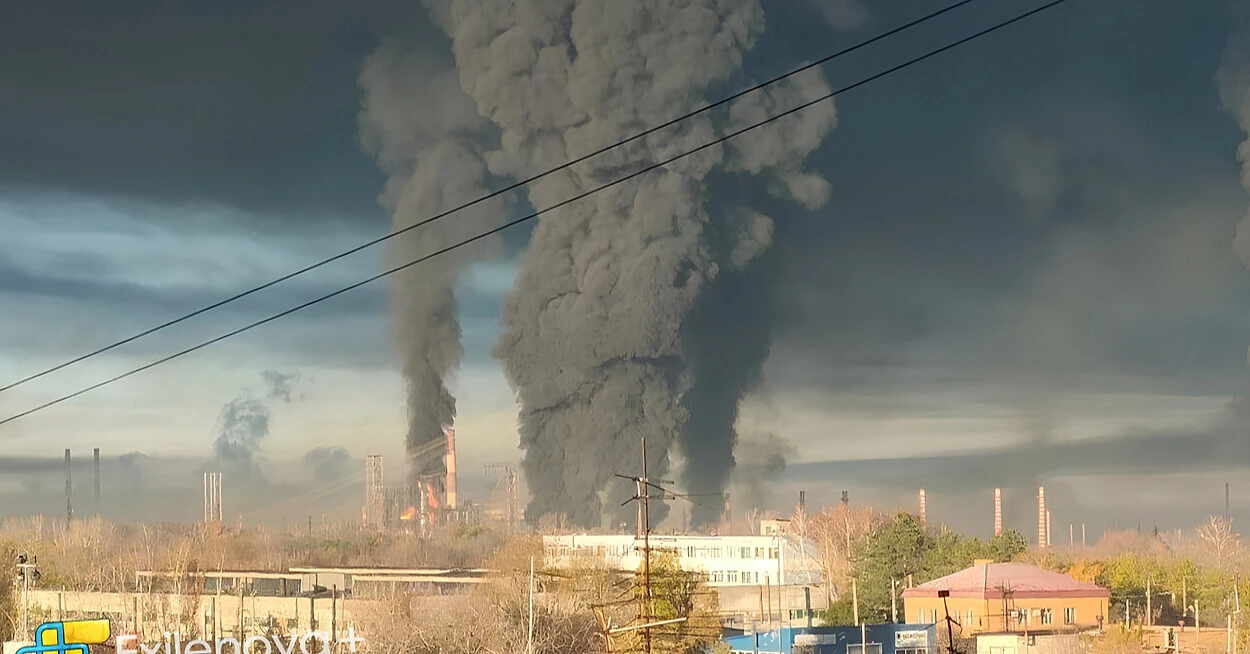
However, just a few hours after the WSJ publication, reports emerged about a new attack on Russian oil refining infrastructure. On the morning of October 30, drones attacked the Novokuybyshevsk refinery in Russia's Samara region. A large-scale fire broke out at the facility.
«Kurs Ukrainy» previously reported on the attack on the Novokuybyshevsk refinery and its consequences. At the time of the initial reports, there was no official confirmation of the involvement of the Ukrainian military in the strike. Therefore, it is not yet possible to definitively assert that Ukraine prematurely ended the unofficial pause.
Reminder: as early as October 15, it became known that the US had asked Ukraine about six times to stop strikes on Russian refineries. The current WSJ publication contains new information about an actual suspension of some of these operations.
