
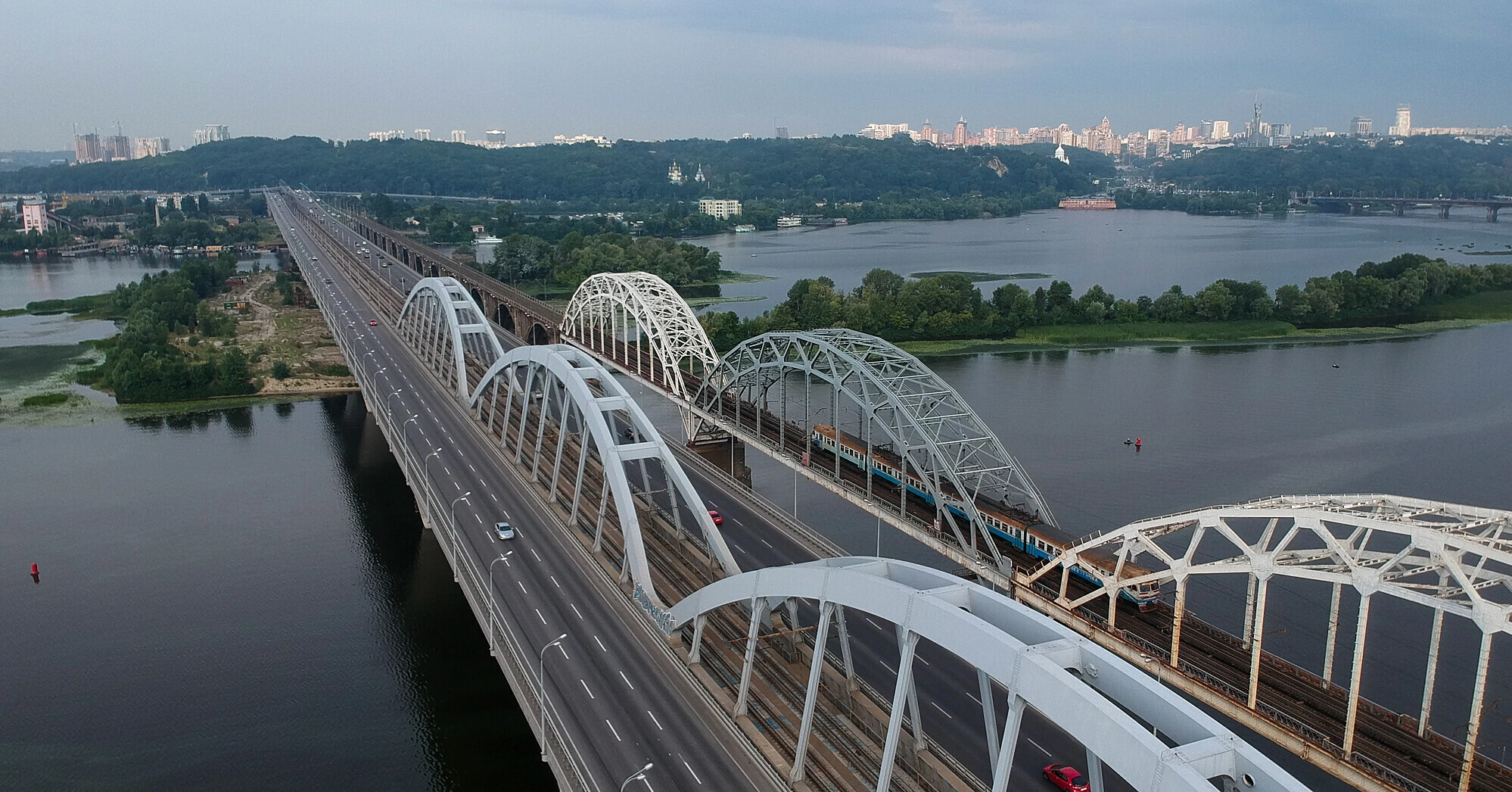
Ukraine plans to build 21 reserve bridge crossings to maintain transport connectivity in case bridges are damaged by Russian strikes. In Kyiv, work on alternative crossings has already begun, and the first facilities are expected to become operational in early 2027.
This was announced on October 30 by Mykola Kalashnyk, Minister of Restoration, Infrastructure and Transport, during the question hour to the government in the Verkhovna Rada.
According to the minister, the state plans to implement a total of 21 alternative bridge crossings. These are facilities in various regions of Ukraine, not just in the capital.
Kalashnyk confirmed that work in Kyiv is already underway. The first crossings, according to government plans, should begin operating early next year. At the same time, the minister did not specify exactly how many facilities will be put into operation in the first phase.
The need to create reserve transport crossings is linked to Russian attacks on bridge infrastructure. Throughout October, bridges in Kyiv were repeatedly targeted, leading to closures and complications in connectivity between the banks of the Dnipro.
Back in early October, Kalashnyk said that one of the fastest ways to ensure alternative passage in the capital is the construction of embankment dams with pontoon crossings.
According to the minister's preliminary estimates, implementation of such projects may take up to three months. The reserve structures are expected to provide at least half the capacity of existing bridges. Moreover, they are considered as additional routes in case damage to the main transport crossings, not as a full replacement.
On October 15, the Cabinet of Ministers adopted Resolution No. 1295, which provides for the implementation of an experimental project to build combined water crossings and access roads to them. Relevant state agencies, the military, and local authorities are involved.
Earlier, "Kurs Ukrainy" reported that Kyiv plans to allocate UAH 1 billion for the construction of reserve crossings across the Dnipro and the necessary road infrastructure. Mayor Vitali Klitschko announced the decision on October 27.
The issue of alternative connectivity became especially urgent after another Russian strike on the Pivdennyi Bridge on October 27. Due to damage to transport infrastructure, traffic over the crossing was completely stopped.
Only on October 30, vehicular traffic partially resumed on the Pivdennyi Bridge. Passage was allowed in one lane in the direction from the left to the right bank for vehicles weighing up to 10 tons. Traffic in the opposite direction remains closed.
No exact deadlines for completion of construction of all 21 reserve crossings have been announced yet.
