
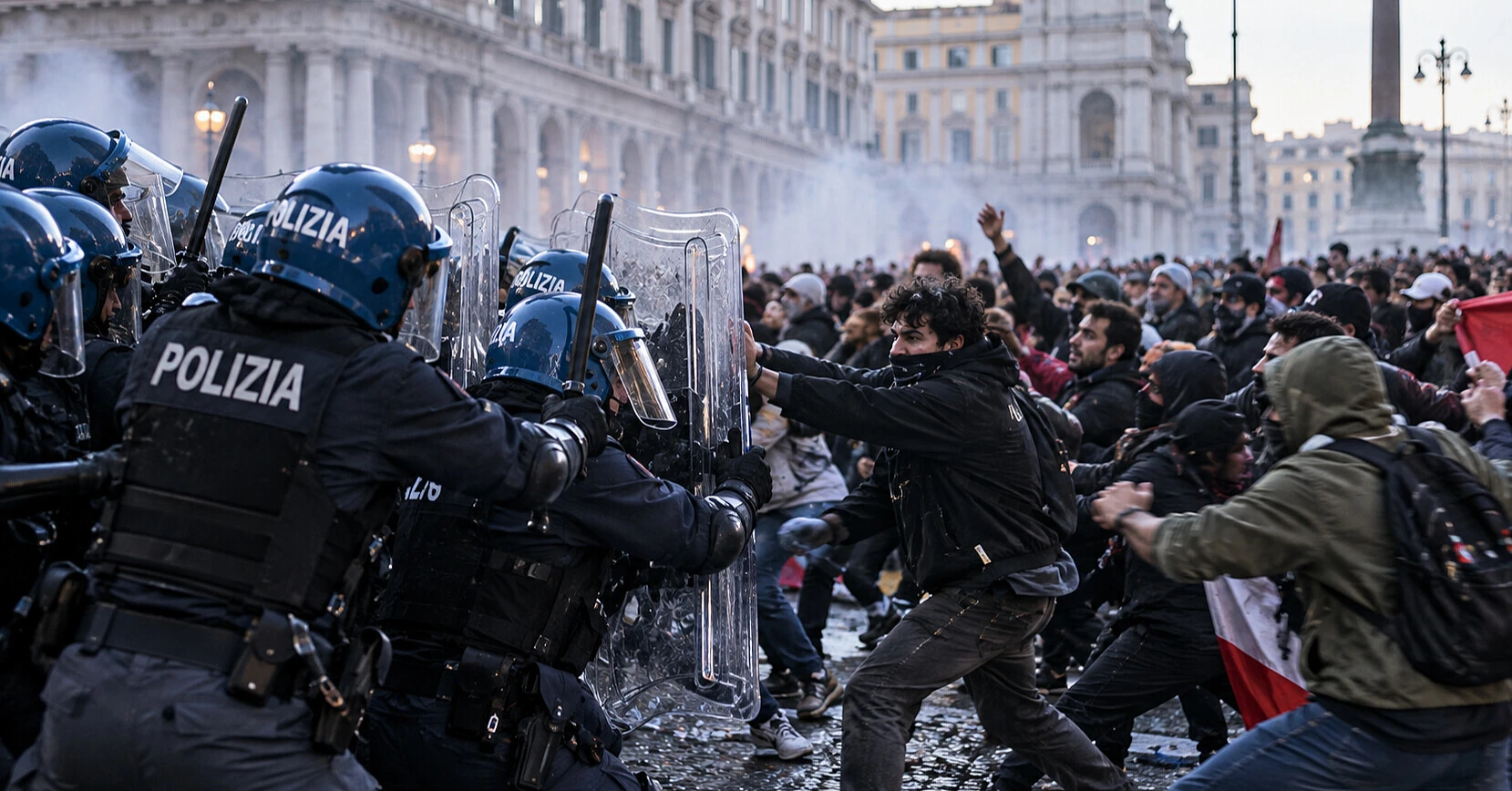
On October 30, a nationwide strike is taking place in Italy, accompanied by mass demonstrations and clashes with police. The protests covered more than 60 cities, including Rome, Milan, Turin, Bologna and Naples. In some cities roads are blocked, port operations are disrupted, and there are injuries.
This is reported by the Italian news agency ANSA.
The nationwide action was organized by the USB union (Unione Sindacale di Base), joined by other trade unions, student associations and social movements.
Participants are protesting against the rising cost of living, low wages, and increased military spending. They demand wage increases in line with inflation, lower utility and housing costs, and increased funding for healthcare and education.
The most tense situation developed in Rome and Turin. In the Italian capital, a group of about 300 protesters broke away from the main procession and headed to the Colosseum. There, the demonstrators set fire to garbage containers and electric scooters, erected makeshift barricades and began throwing objects at police officers.
Later, clashes continued in the Testaccio embankment area. Bottles, firecrackers and other objects were thrown at police officers. Law enforcement used water cannons to push back the rioters.
In Turin, clashes occurred in Piazza Castello near the prefecture building. Police used water cannons and carried out several brief forceful actions against demonstrators trying to approach the police cordon.
According to ANSA, after the clashes, five people were detained to establish the circumstances of the incident. Two injured protesters were taken to hospital.
Another serious incident took place in Vicenza, where protesters tried to get onto the city bypass road. Police blocked the column's movement, after which clashes ensued. Four police officers and three demonstrators were injured.
The mass actions affected transport infrastructure. In Milan, about 30,000 marchers took to the city's eastern bypass road. Traffic on that section was blocked for about an hour and a half, after which the column returned to the city.
The protests also affected Italy's largest ports. In Ravenna, unions reported blocking port activity and traffic. Actions also took place near the ports of Genoa, Trieste and Livorno. Participants also opposed arms shipments.
Initially, the strike was expected to cover almost all sectors of the public and private sectors, including rail, urban and maritime transport. However, Italian Infrastructure and Transport Minister Matteo Salvini ordered to limit transport workers' participation in the action after an appeal from the commission for strike guarantees.
As reported by Rai News, the USB union called the order illegal and urged transport workers to continue the strike despite possible sanctions. At the same time, the expected scale of transport disruptions has been significantly reduced.
Organizers claimed about two million people participated in the nationwide mobilization. There is no independent confirmation of this estimate yet.
The Italian Ministry of the Interior had previously stepped up security measures in the largest cities, seeking to prevent a repeat of the riots that accompanied previous mass demonstrations. As of the evening of October 30, protest activity in some cities was ongoing.
