
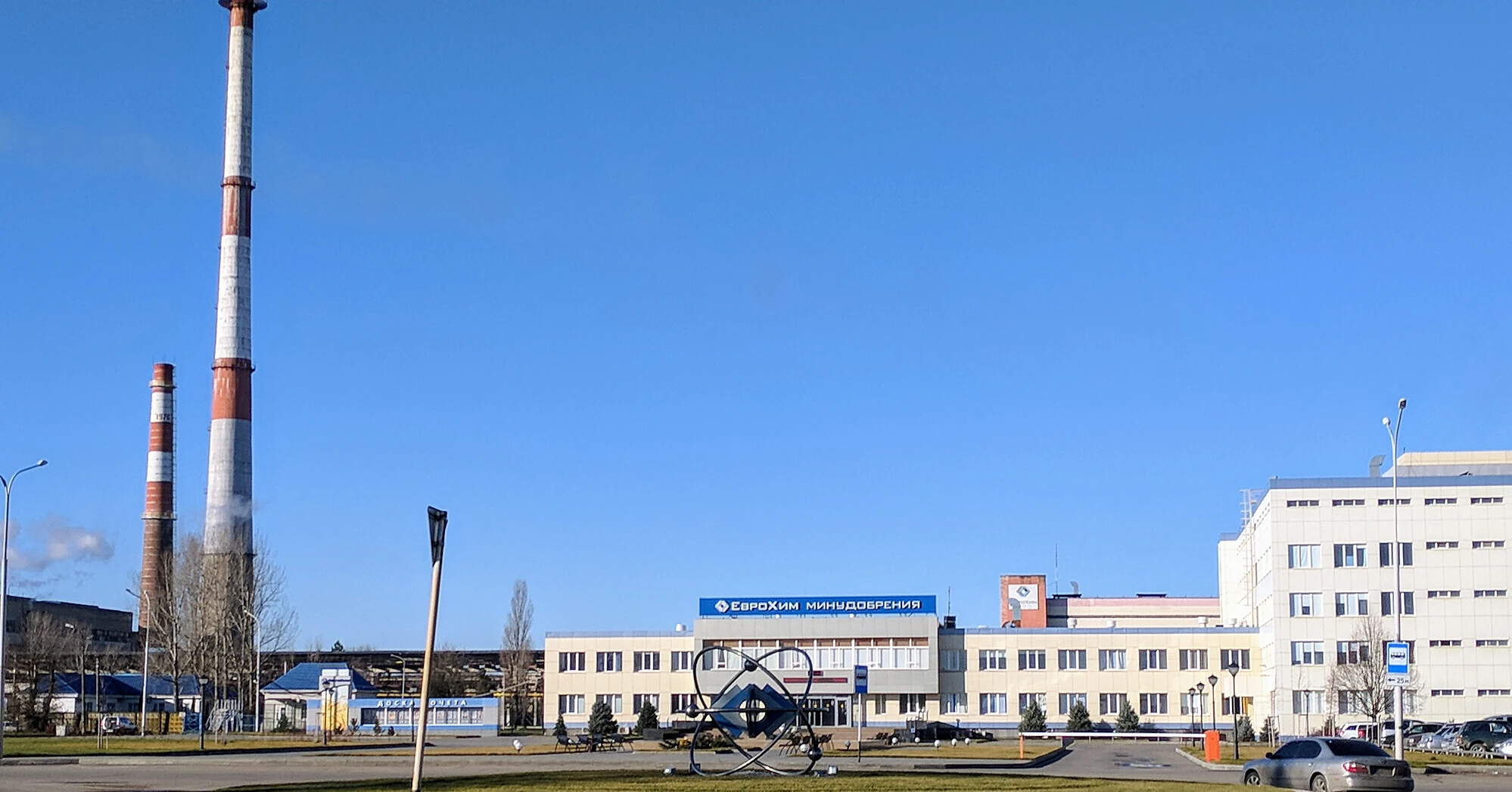
The European Union continues to import Russian ammonia from EuroChem, which simultaneously supplies raw materials to enterprises of the Russian military industry. Despite sanctions against the company's founder, EuroChem itself remains outside the EU sanctions list and can legally sell its products to European buyers.
This is stated in an investigation by German public broadcaster SWR, published on November 2 on the Tagesschau portal. Journalists examined ammonia transportation routes, the manufacturer's financial documentation, and materials from Estonian intelligence.
In particular, on October 5, the tanker Eco Sorcerer arrived at the chemical port of Antwerp in Belgium with more than 20 thousand tons of Russian ammonia. Ten days earlier, the vessel was loaded at the EuroChem terminal in the Russian port of Ust-Luga.
Using satellite data, journalists established that such transports occur regularly. At the Belgian port, the tanker docked at a site jointly used by chemical concern BASF and EuroChem.
Import of Russian ammonia to the EU remains permitted within a special quota of 700 thousand tons per year. This decision was a compromise following discussions on tightening trade restrictions in 2025.
Ammonia is primarily used for the production of nitrogen fertilizers. It is made from natural gas, so exporting this product allows Russia to generate revenue from its energy resources even amid reduced direct gas supplies to Europe.
EuroChem is one of the world's largest producers of raw materials for fertilizers. Its founder, Russian billionaire Andrey Melnichenko, has been under EU sanctions since 2022. After the restrictions were imposed, he transferred his share in the business to his wife. At the same time, as SWR notes, Melnichenko continues to appear in Russian publications as a person associated with the company's management and development.
The most important part of the investigation was EuroChem's connections to the Russian defense industry. According to the journalists, the company's financial records show supplies of nitric acid to ammunition manufacturers in Russia.
This information is supplemented by a 2026 report released by the Estonian Foreign Intelligence Service. According to intelligence assessments, the EuroChem plant in Novomoskovsk is one of Russia's key producers of concentrated nitric acid needed for manufacturing explosives.
Estonian intelligence notes that significant disruptions at this enterprise and the Uralchem chemical plant in Berezniki could seriously impair supply chains of raw materials for Russian ammunition production.
However, the journalists did not establish a direct link between specific batches of ammonia arriving in the EU and explosives production. It concerns different lines of activity of the same company, which earns income from the European market while simultaneously providing the Russian military industry with necessary chemical components.
Sanctions expert at the Kyiv School of Economics, Benjamin Hilgenstock, views the situation as evidence of gaps in European restrictions. In his opinion, companies that play an important role in supporting the Russian war economy should be sanctioned regardless of their civilian activities.
Luxembourg Member of the European Parliament Isabel Wiseler-Lima also criticized maintaining trade with Russian enterprises linked to military production. She stressed the need to reduce the EU's economic dependence on Russia.
At the time of publication of the investigation, the European Commission had not responded to SWR's request regarding EuroChem's activities and sanction restrictions. The company's main office in Russia also left journalists' questions unanswered.
Sources: Tagesschau / SWR, Estonian Foreign Intelligence Service, European Commission
