
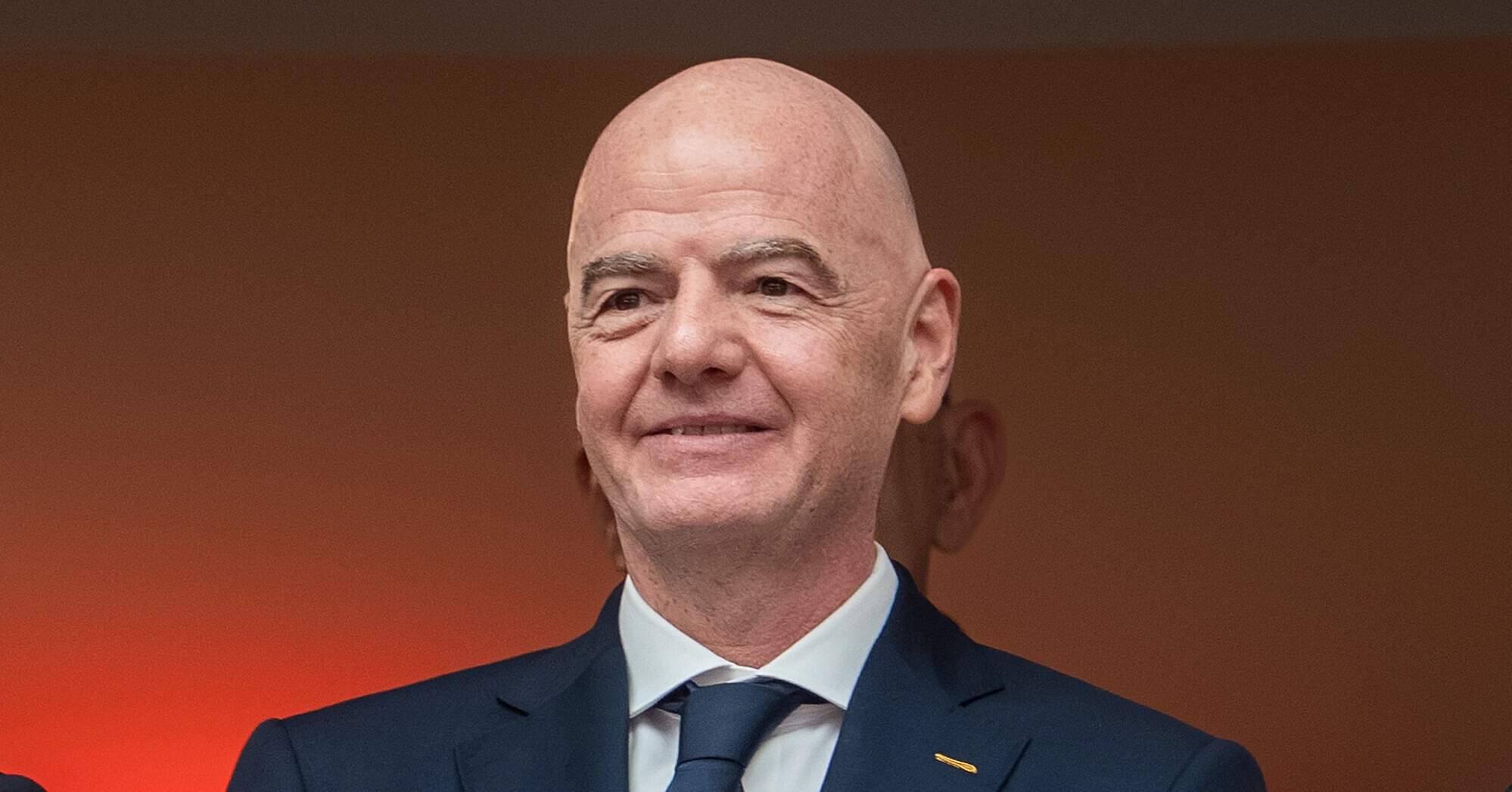
The International Federation of Football (FIFA) took on the payment of US taxes for its president, Gianni Infantino. The total amount of tax liabilities the organization agreed to cover for 2024-2026 is about $4 million. Moreover, these compensations were not separately disclosed in FIFA's financial statements.
This was reported on November 2 by The New York Times and the French publication Le Monde, which obtained access to the federation's internal documents and spoke with people familiar with the financial arrangements.
According to journalists, the decision to compensate Infantino's US taxes was made in May 2024 during a meeting of FIFA's Compensation Committee in Bangkok.
The initiator was Swiss financier Bruno Chiomento, who heads FIFA's Governance, Audit and Compliance Committee. He proposed extending to the federation president the tax compensation mechanism previously introduced for employees temporarily transferred from Switzerland to the USA.
This mechanism provides that the organization covers the additional tax burden arising from working abroad. It was introduced ahead of the 2025 Club World Cup and the 2026 World Cup, a significant part of whose matches took place in the United States.
Infantino had been living in Miami for a long time, preparing international tournaments. At the same time, his status differs from that of ordinary federation employees, as he holds an elected position.
According to Le Monde, calculations of Infantino's tax liabilities were prepared by two hired specialists, one of whom was his personal lawyer David Zollinger. The experts concluded that FIFA should fully compensate the additional US taxes of the FIFA president.
Inside FIFA, this decision caused objections. Some officials doubted the justification for compensating all of Infantino's US taxes and drew attention to a potential conflict of interest due to the involvement of his personal lawyer in the calculations.
According to the investigation, tax compensations were not separately included in the disclosed compensation figures for the FIFA president for 2024 and 2025. The organization's financial managers raised questions about the need to clarify the reporting and disclosure of these payments.
According to US tax documentation, the total value of Infantino's compensation to FIFA in 2024 was $6.13 million. This amount included base salary, bonuses, other compensation, and deferred payments.
Journalists also found that the federation paid for the additional expenses of its president, including housing in Miami and personal security services. According to The New York Times, rent for Infantino's housing in the USA cost FIFA about $600,000 per year.
Separate questions were raised by expenses for the security of the federation president and his wife. Internal documents show that the services of a security company cost $1,300 per day per employee, excluding transportation and other costs.
Against the backdrop of these reports, the Union of European Football Associations (UEFA) demanded detailed explanations from FIFA regarding Infantino's compensation and related tax expenses. In a letter dated October 19, UEFA set a deadline for providing the relevant information by November 2.
FIFA denies violations of internal rules and legislation. Representatives of the organization stated that all decisions regarding compensation and additional payments to management are made by an independent committee, and financial statements and tax liabilities are prepared in accordance with current requirements.
The federation also emphasized that its accounts undergo independent audit, and tax compensation mechanisms apply to organization representatives who have been working abroad for a long time.
The new investigation concerns exactly tax compensations and other financial privileges. It is not a repetition of the October report by the British newspaper The Times about an alleged second salary for Infantino. On October 21, the publication corrected those claims and apologized to FIFA and its president.
Based on materials from: The New York Times, Le Monde, FIFA
