
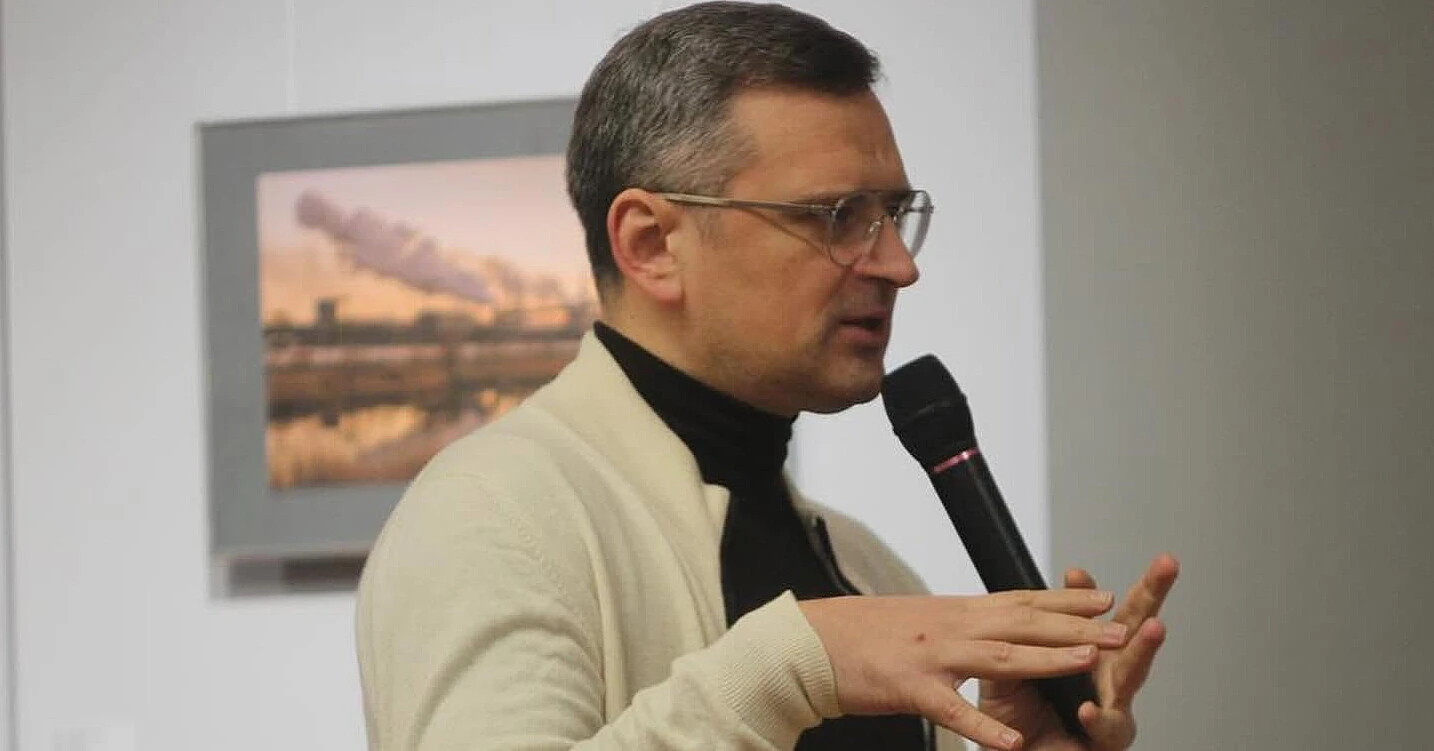
During peace talks in spring 2022, Russia demanded not only a reduction in the size of the Ukrainian army, but also the transfer of missiles and long-range weapons to depots, access to which Russian military personnel would receive. According to former Ukrainian Foreign Minister Dmytro Kuleba, the conditions proposed by Moscow effectively envisaged establishing control over Ukraine's defense capabilities.
Kuleba said this in an interview with "Ukrainska Pravda", published on November 2.
The ex-minister noted that he does not possess all the details of the negotiations, which initially took place in Belarus and later continued in Istanbul. At the same time, he cited specific demands of the Russian side, which, in his opinion, made the proposed agreement unacceptable for Ukraine.
In particular, Moscow insisted on limiting the size of the Ukrainian Armed Forces to 50,000 service members. The Ukrainian side, instead, proposed to keep an army of 250,000 personnel - in line with the peacetime figures set at that time.
Kuleba stressed that agreeing to any restrictions on one's own army imposed by another state would pose a serious threat to Ukrainian sovereignty.
Another demand of Russia was the transfer of all missiles and long-range weapons to depots with access for Russian military personnel. According to the former minister, this effectively meant the presence of Russian servicemen at Ukrainian weapons storage facilities.
Kuleba compared such demands to historical cases of Moscow garrisons being stationed on Ukrainian lands. In his conviction, such a mechanism could become a tool for gradually limiting the independence of the state.
Assessing the 2022 negotiations, the ex-minister called the Russian proposals effectively capitulatory. He noted that by the time of the meeting in Istanbul, the situation had already changed significantly: Ukrainian forces had liberated Kyiv Oblast, and after the discovery of crimes by the Russian army in Bucha, the possibility of deals on the terms proposed by Moscow became even less acceptable.
At the same time, Kuleba acknowledged that in the fall of 2022, Ukraine could theoretically have tried to resume talks to end the war. In his opinion, that option could have been considered in September-October, when the Ukrainian army had achieved significant successes on the front.
However, public sentiment at that time, according to the diplomat, did not favor discussion of compromises. After Ukrainian military victories, a significant part of society expected further liberation of territories and a return to the internationally recognized borders of 1991.
Kuleba admitted that he himself shared these expectations, although he understood that even restoring territorial integrity would not guarantee an automatic end to Russian aggression.
Under such circumstances, it would have been difficult for the Ukrainian leadership to propose to the public a cessation of hostilities with the freezing of the then front line.
At the same time, the ex-minister does not believe that Ukraine lost a real opportunity to end the war in the fall of 2022. He is convinced that even in the event of a new attempt at negotiations, an agreement would not have been reached due to the position of the Russian leadership.
Kuleba also noted that after the unsuccessful counteroffensive for Ukraine in 2023, Western partners began more actively raising the question of returning to negotiations. However, in his assessment, by that time Moscow was no longer interested in ceasing hostilities.
The former head of the Foreign Ministry emphasized that, analyzing the events of previous years, he does not see a period when Russian President Vladimir Putin was truly ready to end the war on mutually acceptable terms.
Earlier, President Volodymyr Zelensky also spoke about Russian ultimatums at the Istanbul negotiations. According to him, the Kremlin's demands included reducing the Ukrainian army, giving up part of its weapons, fixing Ukraine's neutral status, and recognizing the occupied territories as Russian.
