
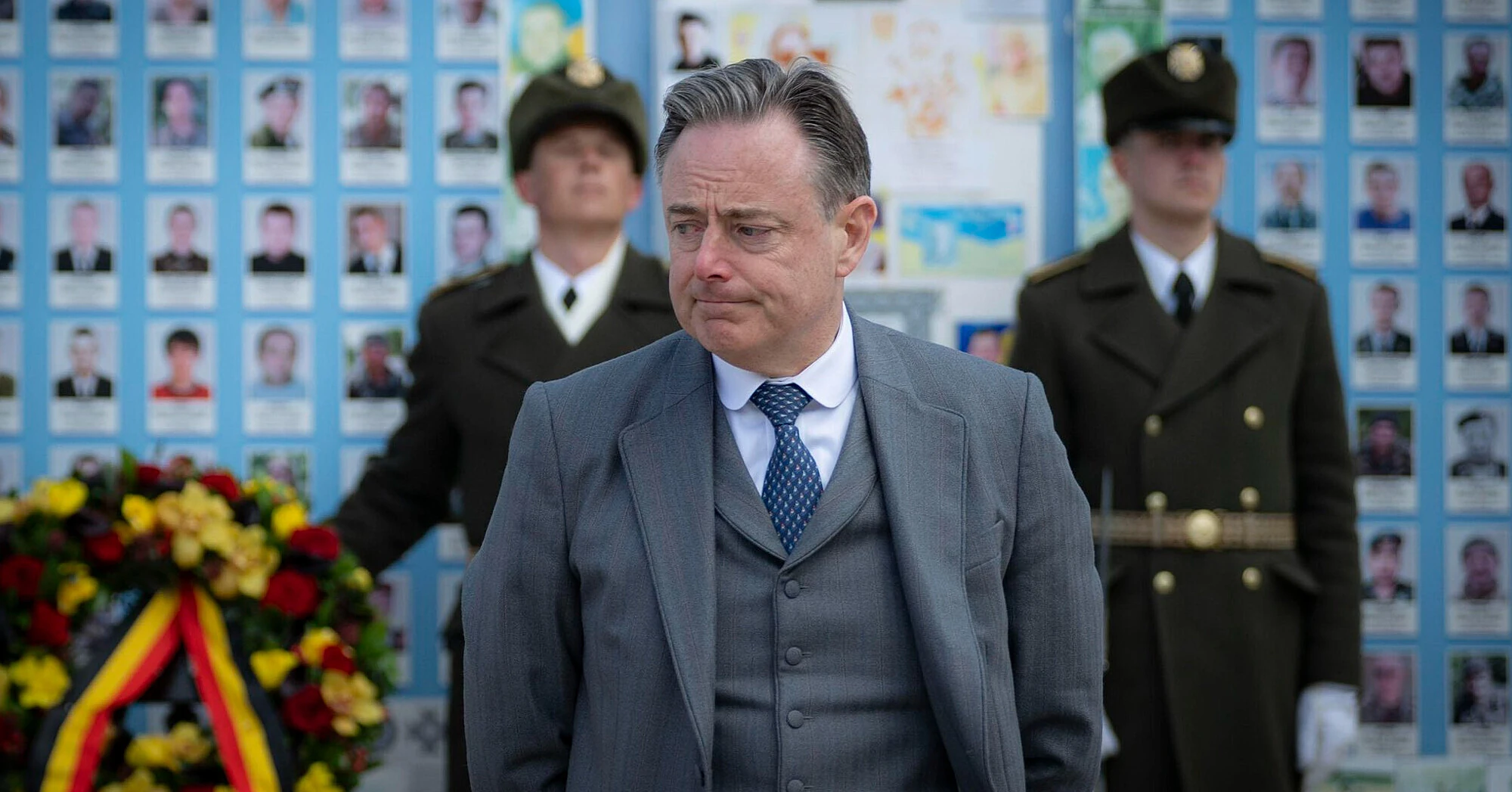
Belgian Prime Minister Bart De Wever submitted a resignation request to King Philippe on November 2 after the ruling coalition parties failed to agree on the 2027 federal budget. The King has not yet accepted the resignation and decided to hold additional consultations with political forces.
This was reported by the Belgian Royal Palace and local media, including The Brussels Times.
De Wever arrived at the Royal Palace in Brussels on the morning of November 2. The meeting with the monarch lasted over an hour and a half.
After the talks, the Royal Palace confirmed that the Prime Minister had formally requested resignation due to the failure of budget negotiations.
However, King Philippe postponed a decision on the government's resignation. On November 3, he will start consultations with the leaders of the parliamentary majority parties to find a way out of the political crisis.
The Royal Palace expressed concern about the lack of agreement on the budget, which must respond to the country's economic challenges.
The monarch called on coalition participants to act responsibly and compromise, emphasizing that amid international instability and economic difficulties, Belgium cannot afford a prolonged political crisis.
The cause of the conflict was disputes over reducing the budget deficit. De Wever's government is trying to agree on measures that would allow cutting spending or increasing budget revenues by a total of €10 billion by 2029.
Negotiations between the five coalition parties lasted several weeks. On the evening of November 1, ministers met again to seek a compromise, but the overnight meeting ended without result.
The main disagreements concern the distribution of the budget burden between the population and businesses, as well as possible cuts in public spending.
Flemish socialists Vooruit and French-speaking centrists Les Engagés insist on increasing the tax burden on wealthy citizens and maintaining funding for social programs.
In contrast, French-speaking liberals from the Reformist Movement (MR) oppose significant tax increases and propose focusing on spending cuts. The Prime Minister's party "New Flemish Alliance" (N-VA) holds a similar position.
A separate point of contention was limiting the growth of healthcare spending, which some coalition partners oppose.
According to Belgian media reports, during the last round of negotiations additional tax revenues of €2 billion to over €3 billion were discussed. However, the parties could not agree even on the basic allocation of future budget measures.
Belgium's budget problems are worsening due to high public debt. According to The Brussels Times, the public finance deficit is about 5.2% of GDP, and public debt exceeds 110% of GDP.
The government is trying to reduce the deficit to avoid further increases in government borrowing costs. De Wever previously warned that rising debt burdens could force the country to take on new loans to service existing debts.
The Prime Minister also opposed adopting a provisional budget for early 2027. This mechanism allows government agencies to spend about one twelfth of the funds provided in the previous budget each month.
The lack of agreement by the government's November 3 deadline increases the risk of shifting to provisional budget financing.
Does the resignation request mean the government's fall
Currently, the resignation of De Wever's government has not taken effect, as the King has not accepted the request.
In the Belgian political system, the monarch can postpone a decision to give coalition parties additional time for negotiations.
If the resignation is accepted, the government will be able to temporarily exercise duties with limited powers until a new cabinet is formed. And if forming a new parliamentary majority proves impossible, conditions for early elections may arise.
However, no decision to hold new elections has been made so far.
A similar situation occurred in autumn 2025. Then De Wever also failed to agree on the budget on time and asked the King for additional time. After extended negotiations, the coalition eventually reached a compromise.
Implications for Ukraine
The political situation in Belgium matters for Ukraine, as the country plays an important role in European discussions on the use of frozen Russian assets.
A significant portion of Russian assets frozen in Europe after the full-scale invasion is held in the Belgian depository Euroclear.
De Wever previously opposed mechanisms for using these assets without sufficient legal and financial guarantees for Belgium. His position has become one of the important factors in EU negotiations on further financing for Ukraine.
However, the current budget conflict primarily concerns Belgium's internal public finances. There is no confirmation that the PM's resignation request is directly related to the issue of aid to Ukraine or frozen Russian assets.
Based on materials from: The Brussels Times, The Intelligent
