
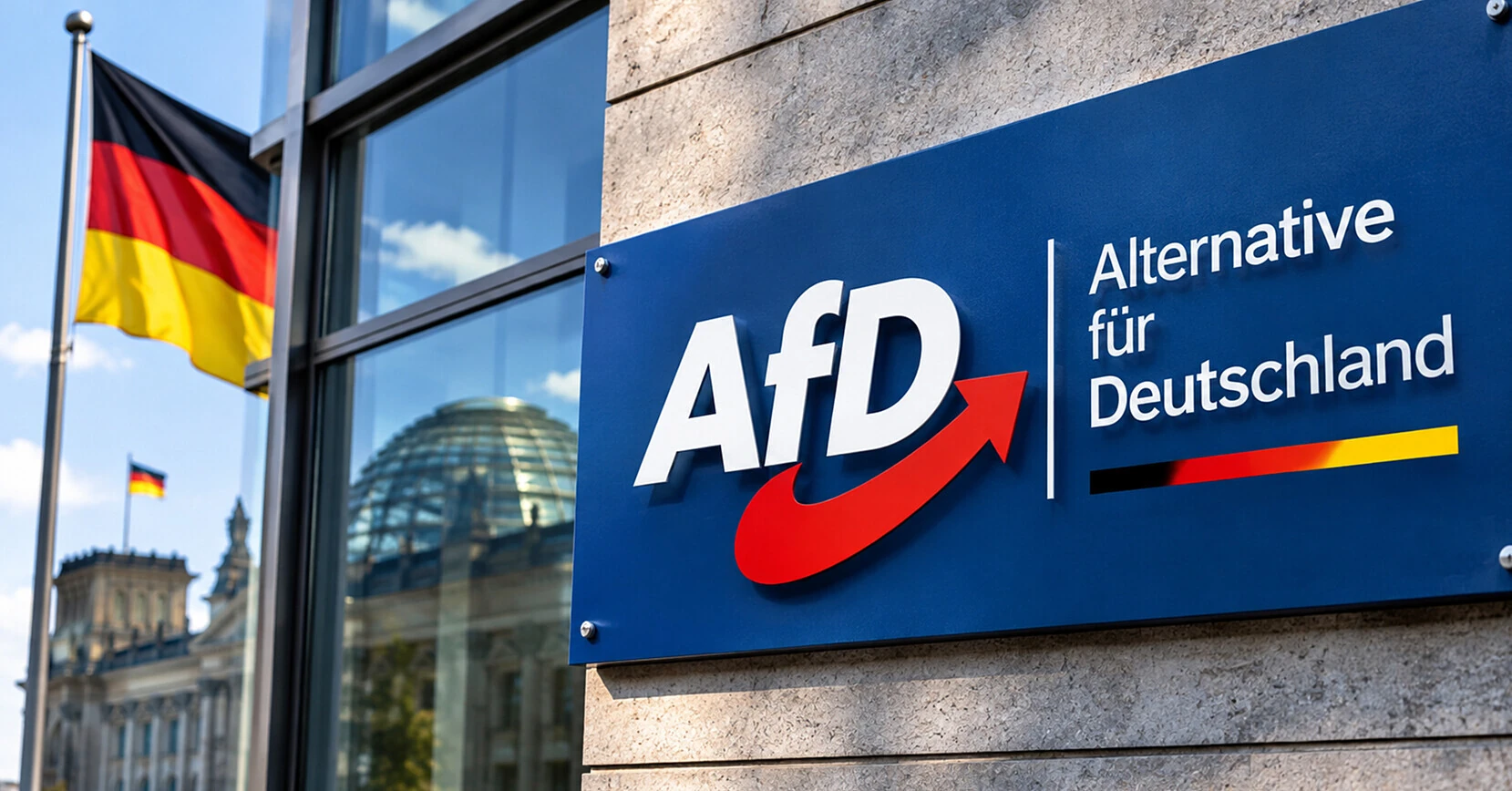
Representatives of the German party "Alternative for Germany" (AfD) have called for an end to military aid to Ukraine, restoration of economic relations with Russia, and expanded cooperation with the administration of U.S. President Donald Trump. These proposals are outlined in two position papers on Germany's foreign policy.
The documents were presented on November 2 in Berlin by Deputy Chairs of the AfD parliamentary group Markus Frohnmaier and Stefan Keuter, as well as Deputy Head of the Working Group on Foreign Affairs Gerold Otten. This was reported by Welt and Handelsblatt.
In the document on German-Russian relations, AfD politicians demand a halt to arms supplies to Ukraine and using German aid as a lever to pressure Kyiv into a peace agreement with Moscow.
The authors consider Ukraine's return of all occupied territories, including Crimea, unrealistic. At the same time, they advocate preserving Ukrainian statehood, which, according to the document, Russia should recognize.
One of the conditions of the proposed settlement is Ukraine renouncing NATO and European Union membership. AfD representatives believe Germany should block relevant initiatives and work toward Ukraine's neutral status.
As security guarantors after a ceasefire, it is proposed to involve states not directly participating in the war. Possible participants in such a mechanism include India, Brazil, South Africa, and Indonesia.
The politicians also allow deployment of UN peacekeeping forces but oppose sending German military personnel to Ukraine and Berlin providing its own military guarantees.
A separate proposal concerns Ukrainian natural resources. AfD members believe Germany should gain access to Ukrainian deposits of rare earth metals, other minerals, and gas in exchange for previously provided assistance.
In relations with Russia, party representatives propose lifting economic sanctions, restoring energy cooperation, and resuming imports of Russian oil and gas.
In particular, they support launching the still-operational branch of the "Nord Stream 2" gas pipeline and repairing damaged sections of the "Nord Stream 1" and "Nord Stream 2" pipelines.
The document's authors also propose restoring diplomatic, scientific, and cultural contacts with Moscow, including the full functioning of diplomatic missions.
At the same time, the presented document does not characterize Russia's full-scale invasion of Ukraine in February 2022 as a violation of international law. It also does not mention Russian war crimes or strikes on civilian targets.
The second document is devoted to Germany's relations with the United States. AfD representatives welcome certain directions of Donald Trump's foreign policy and propose developing pragmatic cooperation with Washington.
In particular, they positively assess the American administration's efforts to strengthen U.S. influence in the Western Hemisphere, as well as its actions regarding Venezuela, Cuba, the Panama Canal, and China.
AfD politicians support a possible reduction of American military presence in Germany and refusal to deploy new American missiles on German territory.
Regarding Greenland, they propose cooperating with the U.S. and other partners in security and natural resource development, including through joint ventures.
The presented initiatives reflect the foreign policy proposals of leading representatives of the AfD parliamentary group, but are not decisions of the German government and do not provide for immediate changes to German aid to Ukraine.
The party has previously made some of these demands. In particular, on September 24 the Bundestag considered an AfD proposal against Ukraine's accession to the European Union and provision of military security guarantees. The deputies then referred the document for further consideration to parliamentary committees.
