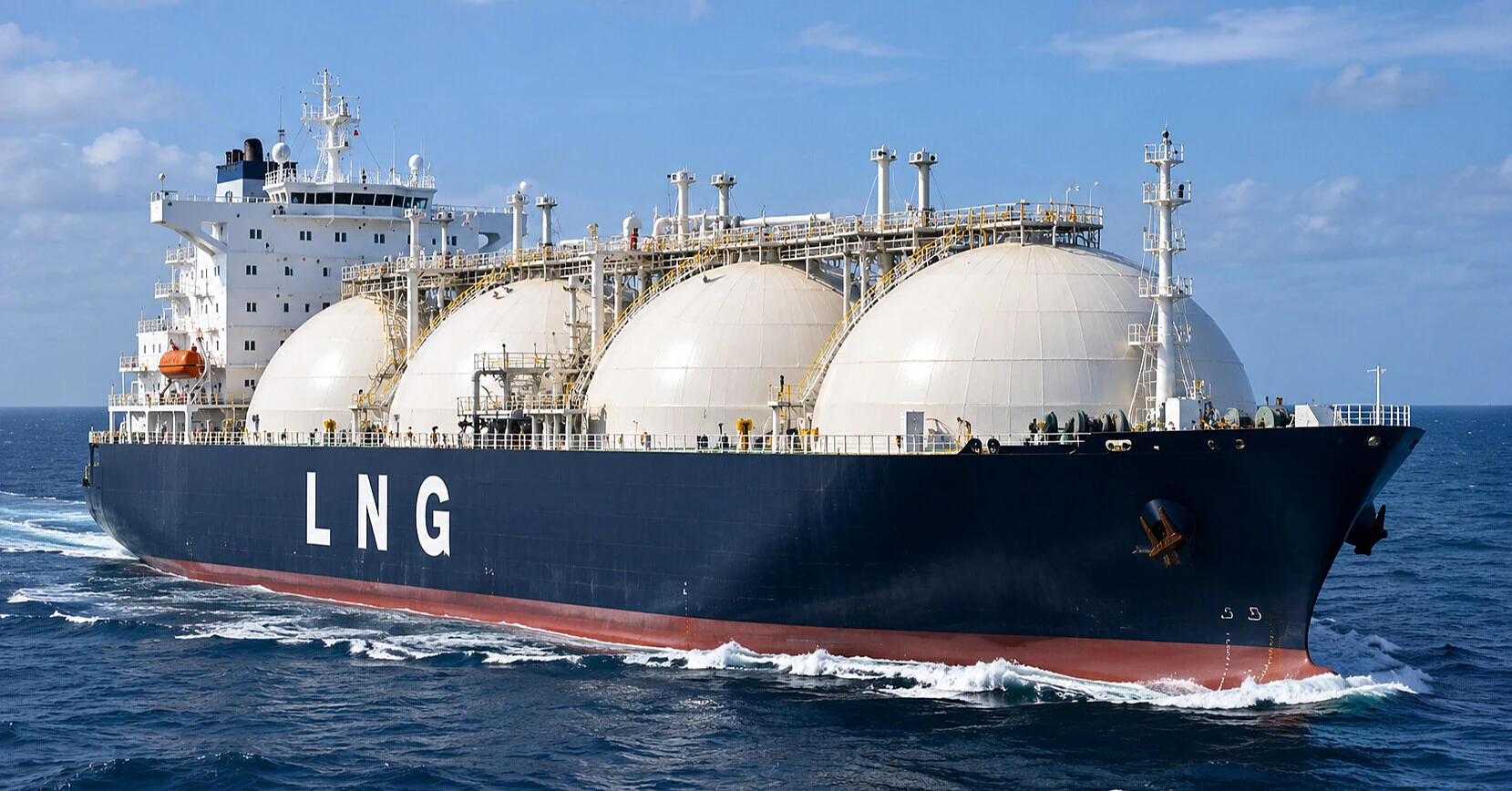
Exports of liquefied natural gas (LNG) from the US in October 2026 reached the second-highest monthly level on record. The key factor behind the high supply level was growing demand from European buyers seeking to secure gas ahead of the winter heating season.
This was reported by Reuters on November 2, citing preliminary data on US LNG exports.
The United States remains the world's largest exporter of liquefied natural gas. American companies are ramping up production and deliveries thanks to the expansion of export terminals and steady demand on the international market.
European countries are especially active in purchasing American gas. Amid limited underground storage inventories and uncertainty over supplies from other regions, Europe seeks to attract additional LNG cargoes before the onset of winter cold.
The European market remains one of the most attractive destinations for American exporters. High regional gas prices allow suppliers to send cargoes there that under other market conditions could have gone to Asia or Latin America.
For comparison, in September the US exported 10.9 million tonnes of LNG, versus 10.7 million tonnes in August. According to data from analytics firm LSEG, about 5.91 million tonnes, or 54% of US exports, were sent to the European market then.
The expansion of American production capacity plays an important role in increasing supplies. In particular, additional gas volumes are provided by the Plaquemines LNG project of Venture Global and the Corpus Christi Stage 3 project of Cheniere Energy.
According to the US Energy Information Administration (EIA), in the first half of 2026, average daily LNG exports rose by 23% compared to the same period last year, reaching 17.4 billion cubic feet per day.
The US agency attributes the export growth to the commissioning of new production trains and the expansion of existing LNG liquefaction capacity.
An additional factor in demand growth was the disruption to LNG supplies from Persian Gulf countries following the outbreak of the military conflict with Iran. Shipping constraints through the Strait of Hormuz have significantly reduced the availability of Qatari gas on the global market.
As a result, European and Asian buyers are forced to compete more actively for available cargoes, maintaining high prices on international gas hubs.
The situation in Europe is complicated by insufficient gas storage levels. According to Gas Infrastructure Europe, at the end of October European underground gas storage inventories were well below average seasonal levels.
In particular, as of October 20, storage facilities were approximately 74.6% full, while the five-year average for that period was around 89.3%.
This gap increases the need for additional gas purchases before winter and makes the European market more dependent on regular LNG supplies.
At the same time, the increase in US exports does not automatically mean lower prices for European consumers. The cost of imported fuel depends on global prices, transportation costs, competition with Asian buyers, and the availability of production capacity.
For Ukraine, the situation on the European gas market is also significant, as prices and availability of imported fuel affect the terms of its purchase in European countries. However, the immediate consequences of the October increase in US LNG supplies for the Ukrainian market remain unclear.
Based on materials from: Reuters, US Energy Information Administration, S&P Global Energy.