
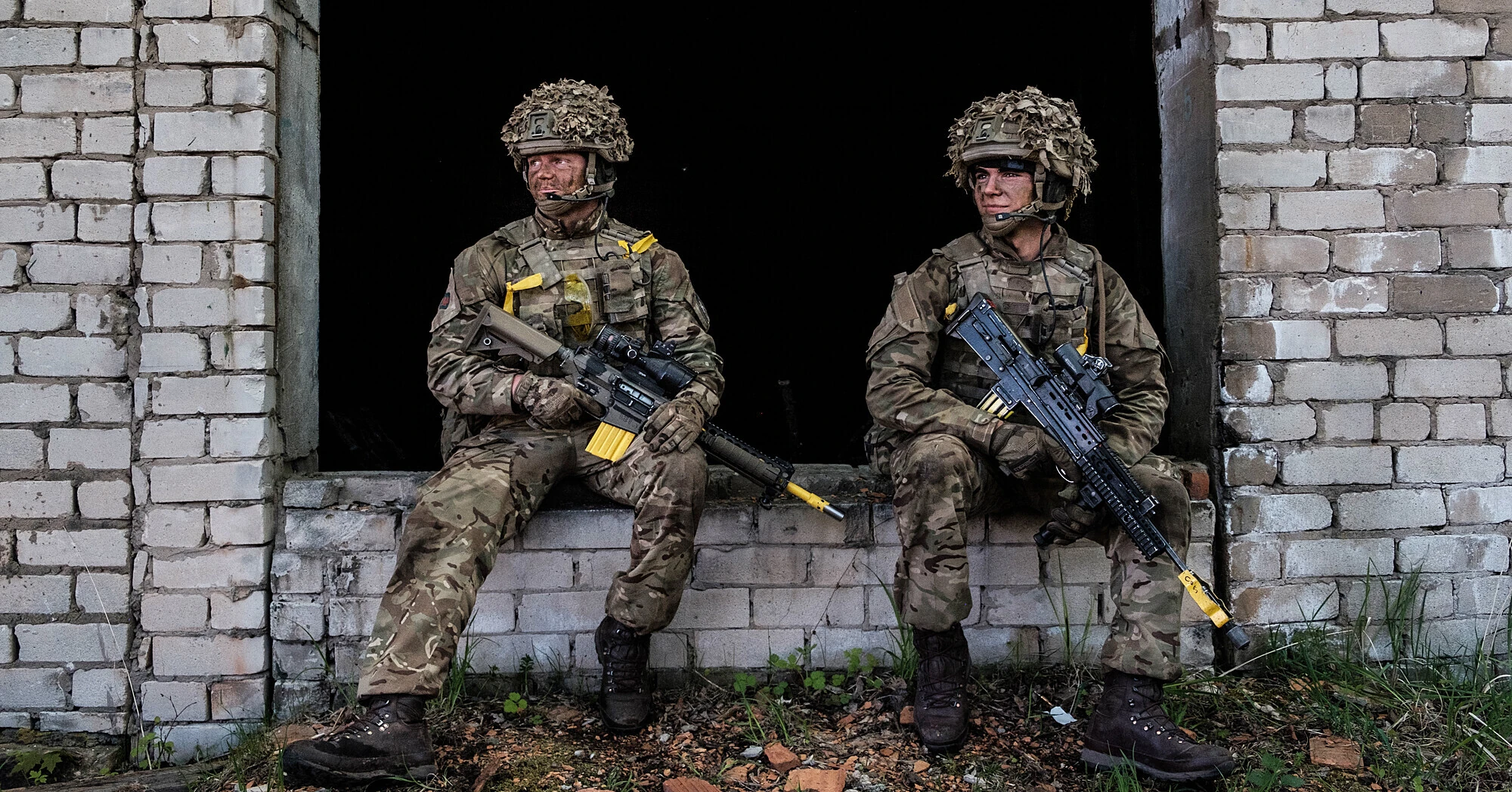
British and other European service members, who could be deployed to Ukraine after the cessation of hostilities, will have the right to return fire in the event of an attack by Russian forces. Such an order is provided for in the plans of a future international mission being prepared by the United Kingdom and France.
This was reported on November 3 by Sky News and The Guardian, citing Western officials familiar with the preparation of the operation.
According to the sources, members of the international contingent will be able to use weapons for self-defense, including in response to attacks by Russian drones. At the same time, representatives of Western countries emphasize that this concerns exclusively defensive actions, not participation in offensive operations against Russia.
One official familiar with the mission planning told The Guardian that the participating countries intend to ensure the protection of their service members from any aggression.
The possibility of armed clashes with Russian forces remains one of the main risks of the future operation. Even after a ceasefire, the international contingent could be under threat of missile strikes or drone attacks.
The article refers to the multinational forces Multinational Force Ukraine (MNF-U), which are being created by the United Kingdom and France within the "coalition of the willing". Their main task is to contribute to the strengthening of the Ukrainian army and ensuring the long-term security of the country after the end of the active phase of the war.
According to the allies' plan, foreign service members are to be stationed at a considerable distance from the front line. They will assist in training Ukrainian troops, restoring the combat capability of the Armed Forces of Ukraine, and organizing the necessary logistical support.
A separate area of work will be supporting the security of Ukraine's airspace. It is planned that fighters from participating countries will be able to conduct patrols, creating additional conditions for the resumption of civilian air transportation.
At sea, international forces may assist in demining the Black Sea area and ensuring the safe passage of commercial vessels to Ukrainian ports. Turkey is expected to play a leading role in this area.
At the same time, the future operation will not be conducted under NATO command and does not provide for a classic peacekeeping mission to monitor compliance with the ceasefire. This was emphasized by the Ministry of Defence of the United Kingdom.
According to The Guardian, European countries are also preparing for the possible deployment of the contingent without the use of American communication systems and other technologies, in particular Starlink.
British officials said that during the upcoming exercises in Poland, international forces will not rely on American systems. The United States is not part of this contingent, although the issue of American security guarantees for Ukraine remains the subject of separate negotiations.
The preparation of the multinational forces will be tested during Exercise Koalicja, scheduled for November 9–22 in Poland. About 2,800 service members from 11 countries will participate, including 1,500 French and 300 British troops.
As previously reported by "Kurs Ukrainy", these maneuvers are to be the first large-scale test of the readiness of European countries for joint deployment of forces in Ukraine after a possible peace settlement.
The commander of the multinational forces, British Lieutenant General Tom Bateman, said that the United Kingdom, France and other partners are working to ensure credible security guarantees for Ukraine. According to him, the exercises should demonstrate the participants' ability to quickly deploy units and act effectively together.
The decision to actually send foreign troops to Ukraine has not yet been made. According to the official position of the British government, deployment is possible only after the cessation of hostilities and at the invitation of the Ukrainian authorities.
The Russian leadership has repeatedly opposed the presence of NATO countries' military on the territory of Ukraine. Therefore, the final conditions, number and timing of the possible deployment of the international contingent remain uncertain.
Sources: Sky News, The Guardian, Ministry of Defence of the United Kingdom
