
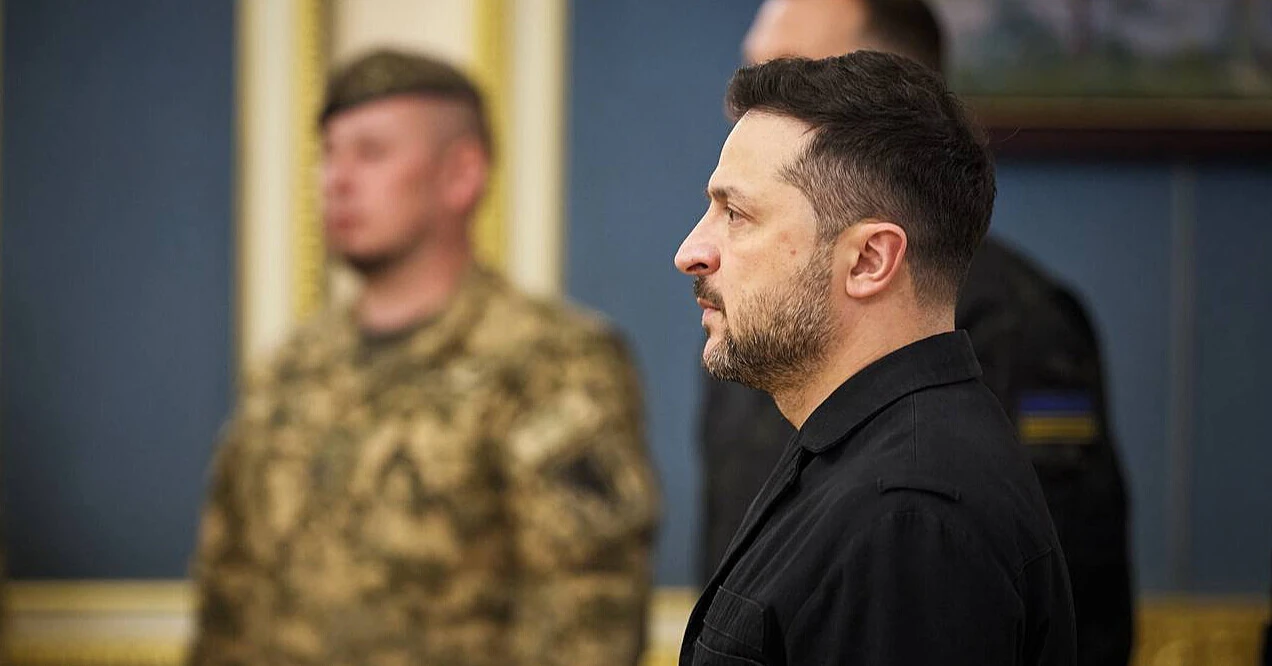
President of Ukraine Volodymyr Zelenskyy confirmed that Ukraine carried out a corresponding cyber operation after the hacking of the "Air Alert" app. It concerns an attack on the Russian Ministry of Emergency Situations app, whose users were sent false messages about an alleged nuclear threat.
This was stated by the head of state in an interview with the American TV channel PBS, published on November 2.
During the conversation, journalist Amna Nawaz recalled two cyber incidents that occurred within a few hours of each other. First, the app for air threat alerts was hacked in Ukraine, and then Russian authorities reported a similar attack on their own emergency notification service.
The journalist asked Zelenskyy whether Russia indeed carried out the first cyberattack and Ukraine responded by hacking the Russian system.
The President confirmed that, according to Ukrainian side's information, Russia was behind the attack on the "Air Alert" app, after which Ukraine took corresponding actions.
According to Zelenskyy, Ukrainian specialists and intelligence established that the cyberattack was directed against the civilian population. The President regarded it as another attempt by Russia to create panic and chaos in Ukrainian cities.
He noted that Russian hackers had previously repeatedly attacked Ukrainian banking systems, pension services, social payments, and other informational resources important to the population.
To a clarifying question from the journalist whether his answer confirms the Ukrainian hacking of the Russian app, Zelenskyy replied affirmatively.
"Yes, absolutely. We simply responded to the attack", the president stated.
At the same time, Zelenskyy did not specify which Ukrainian unit or group carried out the cyber operation. He also did not disclose technical details of the hack and did not report on other possible targets.
Recap, on the evening of November 1, users of the Ukrainian "Air Alert" app began receiving false notifications about radiation and chemical danger, street fighting, and also the threat of using the Russian missile "Oreshnik".
After detecting unauthorized intervention, developers temporarily suspended the app's operation. On the night of November 2, part of the functions was restored, including sending air alert messages.
As previously reported by "Kurs Ukrainy", developers introduced additional protection measures. At the same time, display of air targets on the map remained temporarily unavailable.
On the night against November 2, a similar incident occurred in Russia. Unknown at that time individuals gained access to the Russian Ministry of Emergency Situations app and spread false warnings about an alleged launch of nuclear warheads over the country's territory.
The messages claimed that nuclear ammunition on P1-SUN carriers was approaching Russia. In fact, this name belongs to a Ukrainian interceptor drone designed to combat air targets.
Users of the Russian app were urged to stock up on food and hide in basements. Similar false warnings appeared in separate regional informational channels of the Ministry of Emergency Situations.
The Russian agency confirmed the fact of the cyberattack, stating that third parties gained the ability to send messages to users of the mobile service.
At the same time, the Russian Ministry of Emergency Situations claimed that the main state system of public notification was not affected. According to the agency, sirens, loudspeakers, SMS mailings, and notifications through television and radio continued to operate in normal mode.
Before Zelenskyy's interview, there was no official confirmation of Ukraine's involvement in the attack on the Russian app. Despite the proximity of the two incidents in time, their direct connection remained unconfirmed.
Now the President of Ukraine has effectively admitted that the cyber operation against the Russian service was a response to the attack that the Ukrainian side attributes to Russia.
