
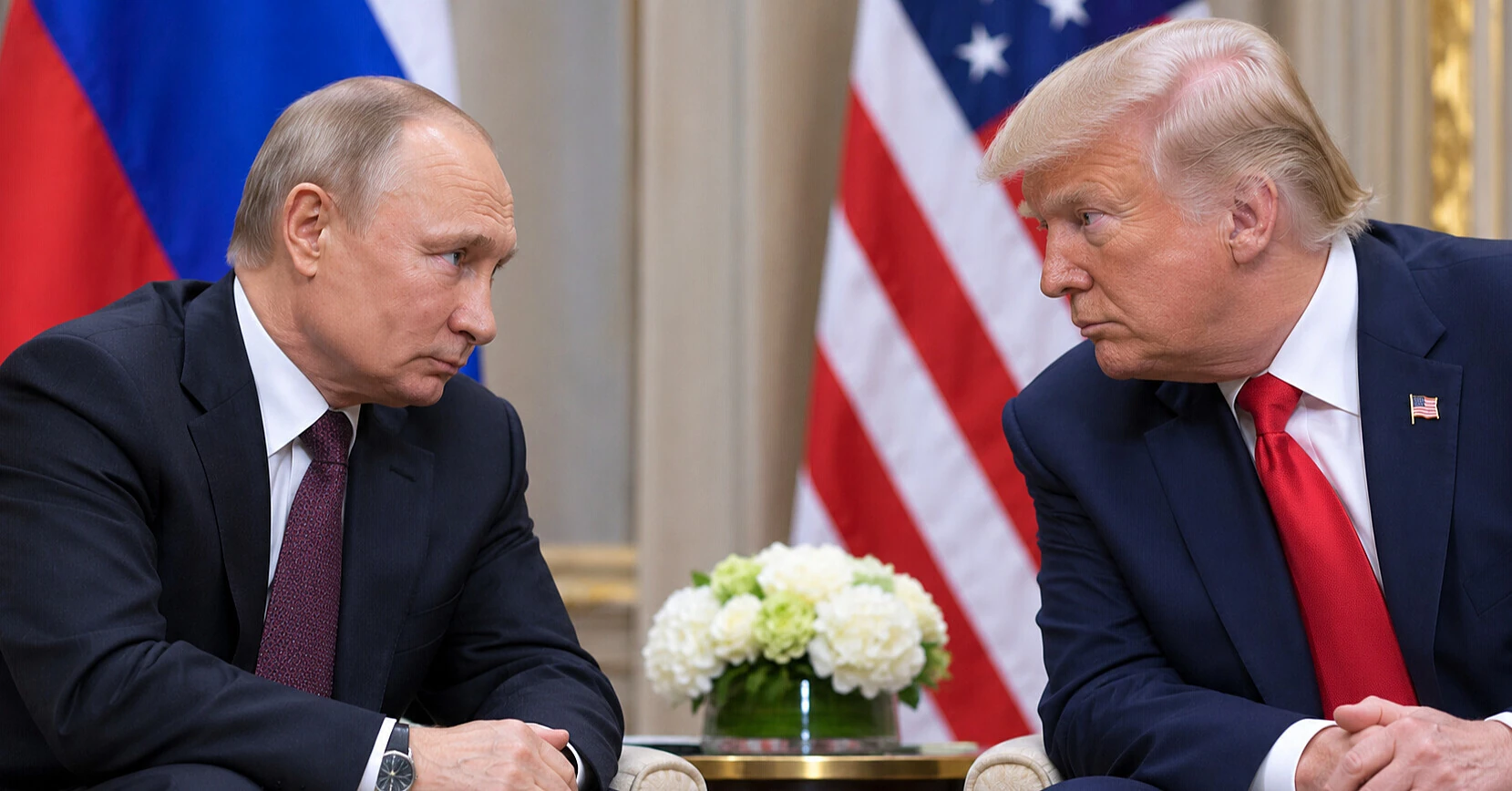
Russia intends to use the possible weakening of the political positions of US President Donald Trump after the midterm congressional elections to achieve further easing of American sanctions. Moscow hopes to convince Washington to expand economic cooperation without a preliminary agreement to end the war against Ukraine.
This was reported on November 3 by Bloomberg citing a source close to the Kremlin.
According to the agency, the Russian leadership views the possible loss of the Republican majority in Congress as an opportunity to obtain additional economic concessions from Trump. Moscow believes that a US president facing increased domestic political pressure may be more interested in concluding new international agreements.
In particular, the Kremlin intends to promote the idea that the United States and Russia can develop mutually beneficial economic cooperation without waiting for the end of hostilities in Ukraine.
This contradicts the approach previously proposed by American negotiators Steve Witkoff and Jared Kushner. They tried to persuade Russian President Vladimir Putin to compromise on ending the war by offering in return the prospect of large-scale commercial projects with American companies after a peace agreement is concluded.
However, as Bloomberg notes, the situation began to change after the October agreement between Trump and Putin on supplies of Russian diesel fuel to the American market.
On October 9, the American president announced an agreement providing for the return of significant volumes of Russian diesel fuel to world markets. Subsequently, the US Treasury Department issued a temporary authorization for certain operations with Russian oil products that were previously subject to restrictions.
Now Moscow hopes to use this precedent to further weaken the sanctions regime. According to the agency, the American administration is considering the possibility of easing restrictions against the Russian Direct Investment Fund, which plays an important role in the Kremlin's international economic contacts.
In addition, US representatives have discussed potential commercial arrangements with the Russian oil company Lukoil, the participation of Russian business in a gas project in Alaska, and the prospects for resuming purchases of Russian gas by European countries.
At the same time, these are initiatives under consideration, not concluded agreements. The implementation of many projects will require the cancellation or modification of existing sanctions.
Earlier, the French newspaper Le Monde also reported that Moscow and Washington are discussing broader economic cooperation. Possible areas mentioned included oil and gas projects, the aviation industry, titanium supplies, and the return of American companies to the Russian market.
The Kremlin's new plans come amid the midterm elections to the US Congress held on November 3. They determine the composition of the entire House of Representatives and part of the Senate. Until the vote count is completed, it is unknown whether the Republicans will maintain control of both chambers.
If the Democrats gain a majority in at least one of them, Trump's ability to advance legislative initiatives may diminish. At the same time, Congress will be able to strengthen oversight of the administration's actions, including in the areas of foreign policy and economic relations with Russia.
Nevertheless, the Bloomberg source believes that the Kremlin may try to take advantage of just such a situation to promote new agreements.
For Ukraine, the key risk is the possible easing of economic pressure on Moscow without reciprocal steps by Russia to end the war.
In October, Trump's decision to suspend the application of new anti-Russian sanctions already drew criticism from representatives of both American parties. Lawmakers expressed concerns that easing restrictions would allow Russia to increase revenues from energy exports, which could be used to finance the war.
At the same time, Associated Press noted that Congress currently has limited ability to quickly review the president's actions, since lawmakers were in recess before the elections.
The White House did not provide an immediate comment on Moscow's plans as outlined by Bloomberg. No official decision on new sanctions easing as part of the alleged agreements has yet been announced.
