
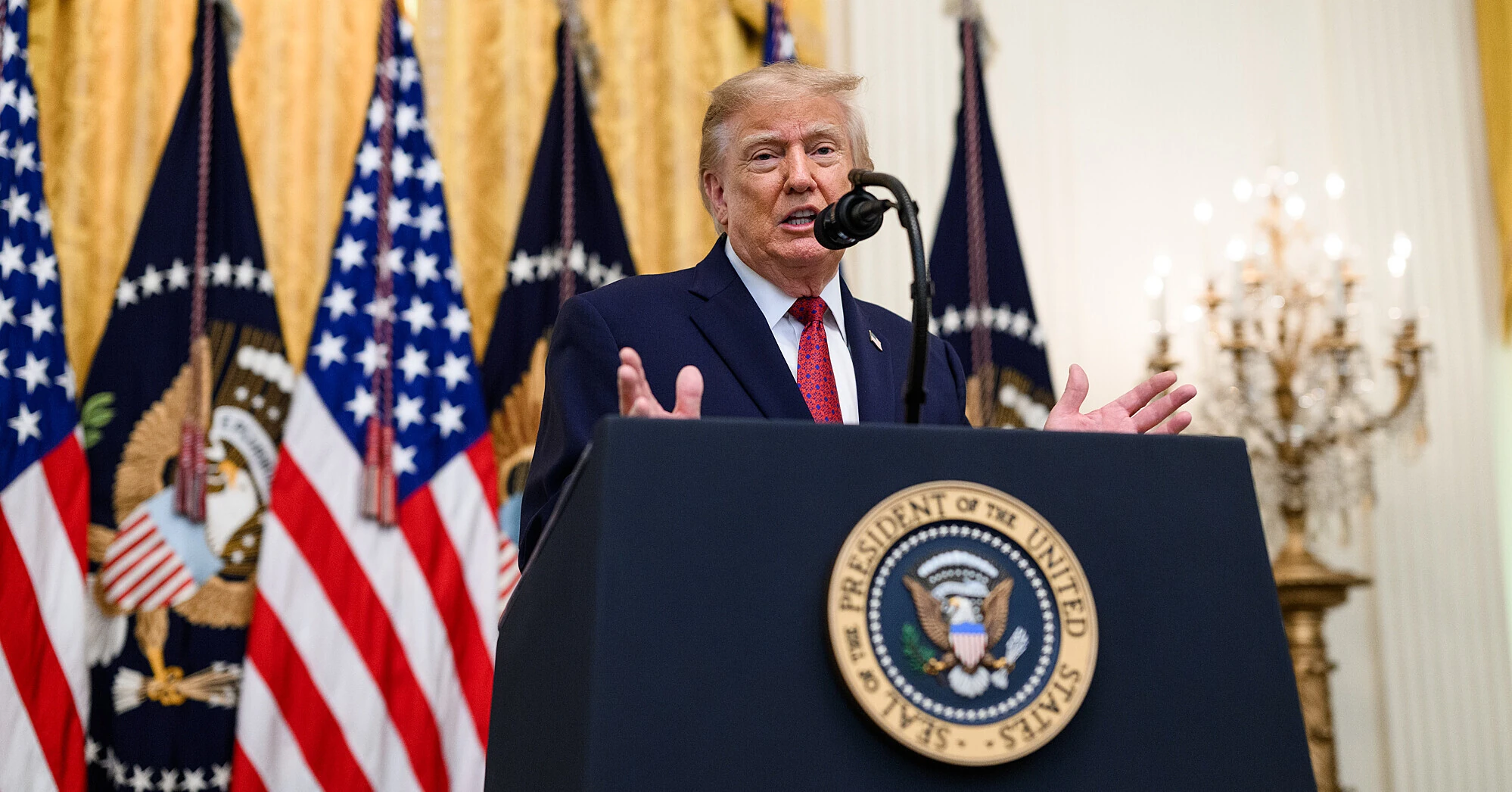
US President Donald Trump has acknowledged that the war against Iran led to higher gasoline prices in the United States and partly contributed to the Republican Party's losses in the midterm congressional elections. Previously, the US president repeatedly blamed Ukraine for rising fuel prices because of strikes on Russian oil refineries.
Trump spoke about the impact of the Iranian conflict on November 3 in a phone interview with The Wall Street Journal after the election results became known.
When asked by a journalist whether the war with Iran contributed to Republican losses in the elections, the president responded that the conflict was one of the factors in the party's defeat.
"Iran was a part of it", - said Trump.
According to the American president, the main political problem was not the war itself, but the resulting rise in oil and fuel prices. The increase in gasoline and diesel prices caused discontent among American voters.
At the same time, Trump emphasized that he does not regret the decision to start the military operation against Iran.
"I did the right thing. I would do it again", - he stated.
A similar position was expressed by Trump in an interview with Fox News, which he also gave after the elections. When asked about the reasons for the Republicans' failure, the president directly pointed to high gasoline prices.
"I think it's the gasoline prices. People agree with what I'm doing on Iran, but they probably weren't ready for the short-term consequences of higher gasoline prices", - said Trump.
He called the rise in fuel prices a temporary problem for the long-term results of the military operation. Later in the same interview, the president again directly linked the increase in gasoline prices with Iran and assured that fuel would soon become cheaper.
According to Trump, before the start of the military operation, he saw gasoline at $1.85-1.95 per gallon at gas stations in Iowa. But later, as the president explained, Washington was forced to act against Iran because of the threat of that country developing nuclear weapons.
These statements differ from Trump's previous explanations of the causes of high fuel prices. In particular, on October 5, the president wrote on Truth Social that the main reason for the rise in gasoline prices was no longer the situation in the Strait of Hormuz. Instead, he blamed Ukrainian strikes on Russian refineries and the closure of oil refineries in US states controlled by Democrats.
At that time, Trump claimed that significant oil volumes were again passing through the Strait of Hormuz, so refining problems were the main factor in the price increase.
On October 16, in an interview with Newsmax, the US president again criticized Ukrainian strikes on Russian oil refining facilities. He said that such attacks raise global oil prices and called on Kyiv to choose other military targets.
Now, after the midterm elections, Trump has directly acknowledged the impact of the Iranian war on gasoline prices and the mood of American voters. However, he did not say that he was abandoning his previous assessments of the impact of Ukrainian strikes on the oil market.
In the November 3 elections, Republicans suffered significant losses, particularly in states that traditionally supported the party. Democrats won a majority in the Senate and, according to projections by US television networks, are regaining control of the House of Representatives.
Trump himself refused to view the election results as a personal defeat. He attributed the Republican failure primarily to the fact that he was not personally running, and some party candidates failed to mobilize enough voters. The president also stated his readiness to cooperate with Democrats and use his veto power if necessary.
Sources: The Wall Street Journal, Fox News, The Guardian
