
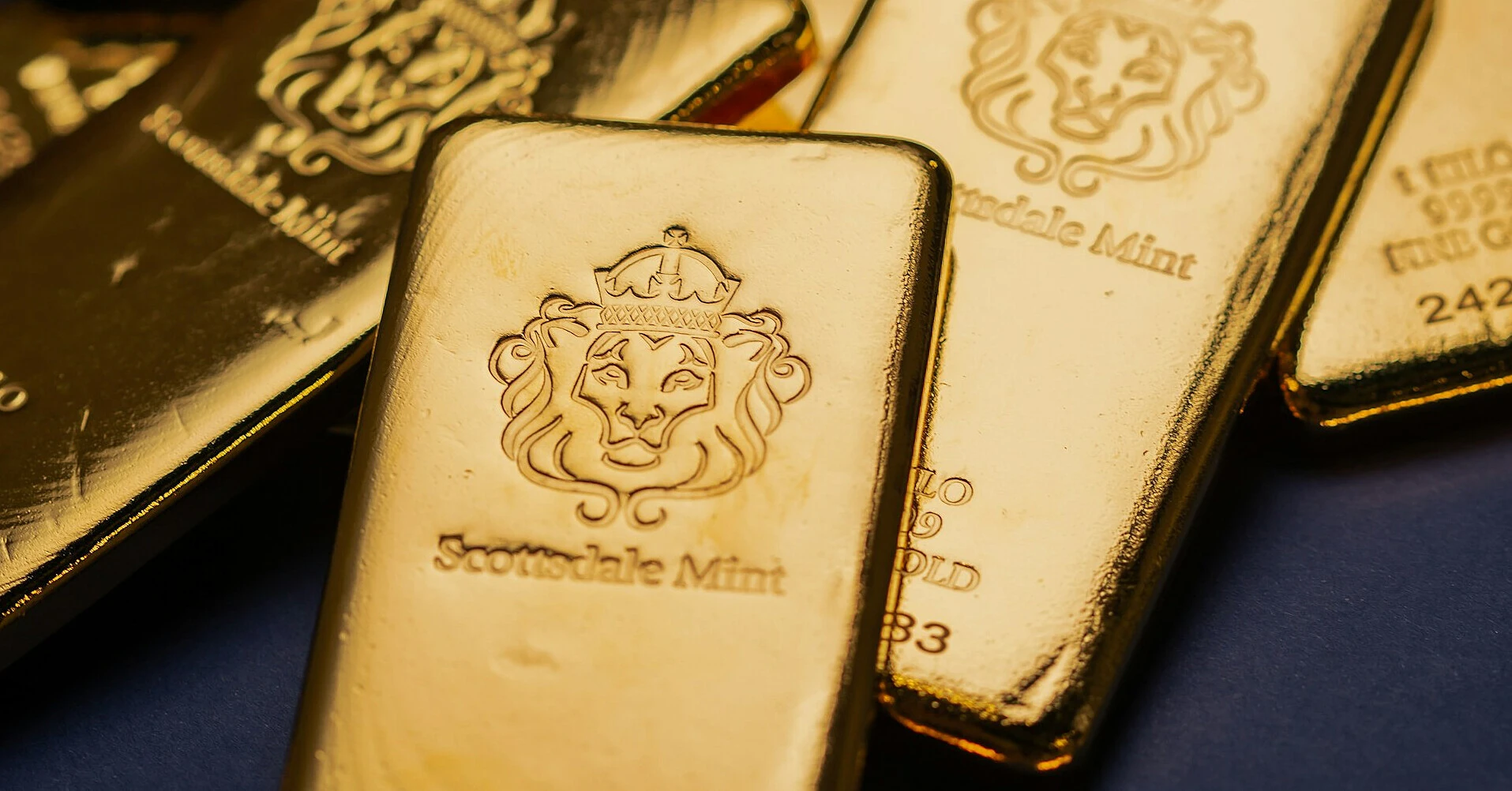
The global bank metals market remains under the influence of several factors at once: expectations regarding U.S. Federal Reserve interest rate policy, the dynamics of the American dollar, geopolitical tensions, and the results of the U.S. midterm congressional elections.
On November 4, 2026, investors' main attention was focused on the Democratic victory, which gave them a majority in both chambers of the U.S. Congress. This was unexpected for the markets and triggered a weakening of the dollar, a decline in U.S. government bond yields, and increased interest in safe-haven assets.
However, the reaction of different precious metals turned out to be uneven.
Gold: rekindled investor interest
Gold remains the primary safe-haven asset in the precious metals market. Recently, its prices had been under significant pressure due to the strengthening dollar and revisions in expectations regarding future Fed policy.
Against the backdrop of the elections, the situation changed. After news of Democratic victories emerged, the dollar started to weaken, and U.S. bond yields headed downward. This created favorable conditions for a recovery in the price of gold.
According to Reuters, on November 4, the spot price of gold rose to around $3,947.49 per troy ounce, gaining about 0.5%.
At the same time, an important psychological level remains the $4,000 mark. Breaking through this level could signal a further market recovery.
Silver: pressure persists
Silver has shown weaker performance. Unlike gold, it depends not only on investment demand but also on industrial conditions, as it is widely used in electronics, solar energy, and equipment manufacturing.
On November 4, silver fell by about 0.8%, to around $49.5–50 per ounce.
Additional pressure on prices comes from concerns over a global economic slowdown and declining industrial demand.
Thus, even the weakening of the dollar after the Democratic victory has not yet been able to provide silver with sustainable growth.
Platinum: industrial factor comes to the fore
Platinum also came under pressure. On the global market on November 4, its price declined by about 1.2%, to $1,390–1,420 per troy ounce.
The main drivers of platinum prices are demand from the automotive industry, production of catalysts, the development of hydrogen energy, and the supply situation from South Africa.
The weakening dollar could support platinum, but concerns about industrial demand prospects are currently outweighing this positive factor.
Palladium: the most vulnerable of the four metals
Palladium remains the most automotive-dependent metal among the four discussed. It is used primarily in automotive catalytic converters, so its price prospects are closely tied to vehicle production and the transition to electric vehicles.
On November 4, palladium also declined, losing about 0.2% and falling to $925–930 per ounce.
Additional uncertainty stems from industrial consumption prospects and potential changes in demand for traditional cars.
How did the U.S. elections affect bank metals?
The election results were most favorable, above all, for gold.
The impact mechanism looks as follows:
- The Democratic victory increased political uncertainty in the U.S.
- Investors began selling the U.S. currency more actively.
- Treasury bond yields declined.
- Interest in safe-haven assets, including gold, increased.
At the same time, it is important to note that the initial market reaction was mixed. On November 3, the actual day of voting, gold fell by 0.5%, silver by 1.9%, platinum by 1.9%, and palladium by 3.4%. After the results were announced, the situation improved for gold, but the other metals failed to show a similar recovery.
Market outlook: what will happen to prices next?
In the near term, the dynamics of bank metals will depend on several factors:
- further weakening or strengthening of the U.S. dollar;
- Federal Reserve decisions on the interest rate;
- the development of political confrontation between the White House and Congress;
- the situation around military conflicts and global commodity supplies;
- industrial demand for silver, platinum, and palladium.
Conclusion: the Democratic victory in the midterm elections has created an additional positive foundation for gold, which has again approached the psychological mark of $4,000 per ounce. However, it is too early to talk about sustainable growth in the entire precious metals market.
Among the four major bank metals, gold currently looks most attractive from a safe-haven standpoint. Silver, platinum, and palladium remain more dependent on global industrial prospects.
