
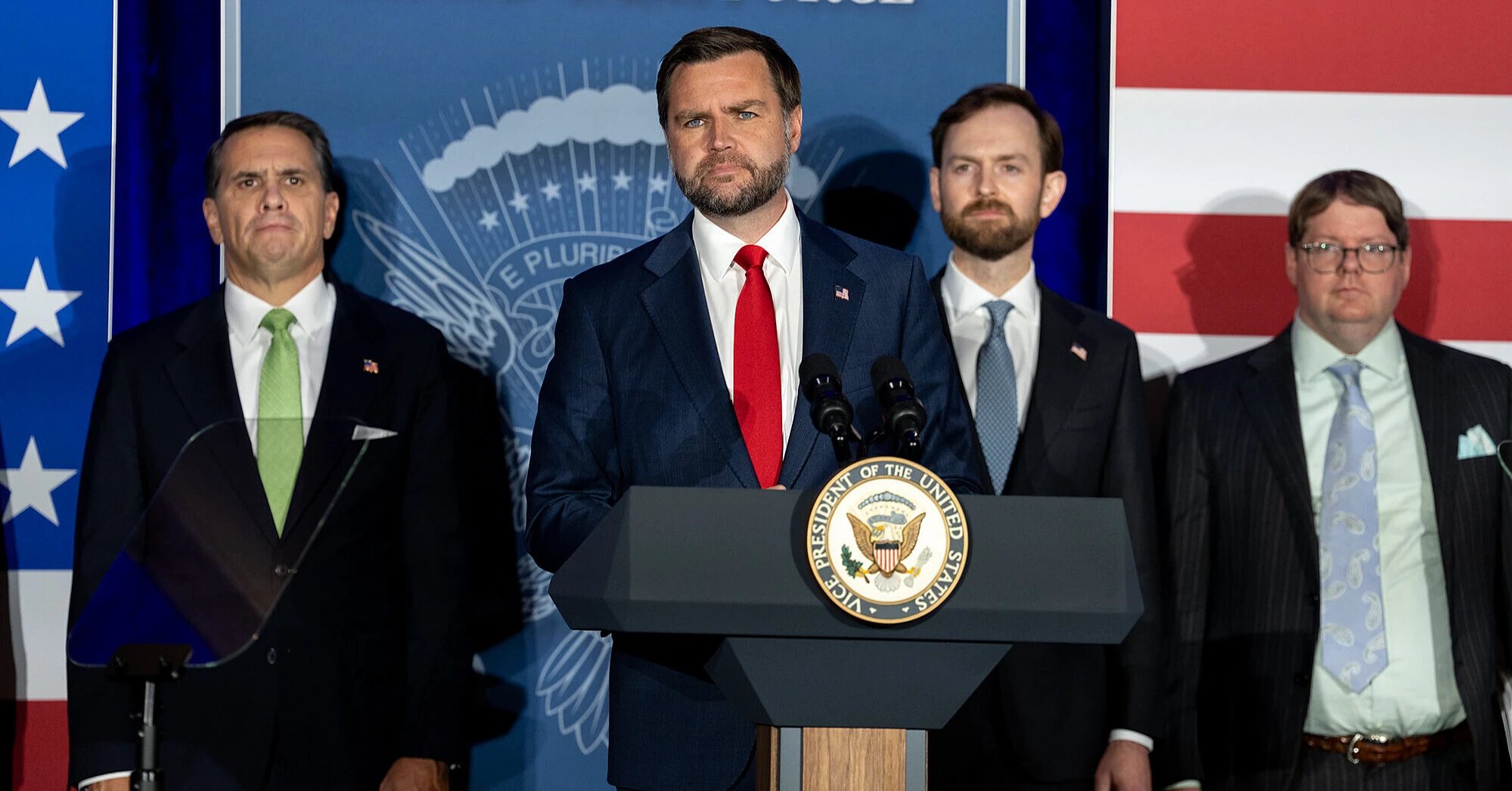
US Vice President J.D. Vance is attempting to form a new political coalition of Republicans and supporters of Donald Trump dissatisfied with the White House's foreign policy. After the massive defeat of the Republican Party in the midterm congressional elections, he seeks to gain the support of voters who oppose war with Iran and Washington's rapprochement with Israel.
Fox News reported this on November 4, citing sources in the US administration. Meanwhile, Bloomberg writes about the intensification of intra-party rivalry among Republicans, who have already begun to define their positions ahead of the 2028 presidential election.
According to Fox News, Vance seeks to unite the so-called "new right" - supporters of the original principles of the America First movement, who oppose US involvement in foreign wars, advocate for curbing inflation and strengthening immigration restrictions. Some of these voters support Trump's domestic policy course, but consider his policy towards Israel too closely tied to the interests of the Israeli leadership.
The impetus for Vance's activation was the results of the November 3 election, in which Democrats gained control of both houses of Congress. The next morning, the vice president publicly linked his party's defeat primarily to the war against Iran.
"The reason for our defeat is the war", Vance wrote on the social network X.
He also cited an assessment by one of the sociologists, according to which some voters who supported Trump in 2024 were turned away from Republicans by four issues: the continuation of the war with Iran, the high cost of living, a departure from the America First principle, and US policy towards Israel.
A Fox News source in the Trump administration stressed that Vance is not trying to completely distance himself from the president. His task is to convince voters who remain Trump supporters but have become disillusioned with certain White House decisions that the vice president can represent their interests. Officially, Vance has not yet announced his participation in the 2028 presidential election.
Meanwhile, the struggle for the future course of the Republican Party is not limited to the vice president. As Bloomberg notes, Florida Governor Ron DeSantis emphasized after the election the relatively successful results of Republicans in his state. He also proposed banning stock trading for members of Congress and executive branch officials.
Senator Ted Cruz, also considered among possible contenders for the 2028 presidential nomination, linked the party's defeat to Americans' discontent with customs policy, the war in the Middle East, and the development of large data centers. He called on Republicans to reconsider their economic program and pay more attention to everyday expenses of the population.
After the election, former presidential candidate Mitt Romney and Senator John Cornyn also criticized the party leadership. In their opinion, Republicans made a number of political mistakes that led to a loss of support even in traditionally conservative states.
Donald Trump himself publicly denies the existence of serious disagreements with Vance. The president said that he generally agrees with his assessment of the impact of the Iranian war on the voting results. At the same time, Trump did not unequivocally support the possible nomination of the vice president in 2028, noting that the composition of future candidates is still unknown.
According to Bloomberg's assessment, the results of the midterm elections have opened a new stage of rivalry within the Republican Party. Its potential future leaders are trying to determine which elements of Trump's policy to keep and which to abandon after losing control of Congress. However, so far it is about political positioning, not the official start of presidential campaigns.
